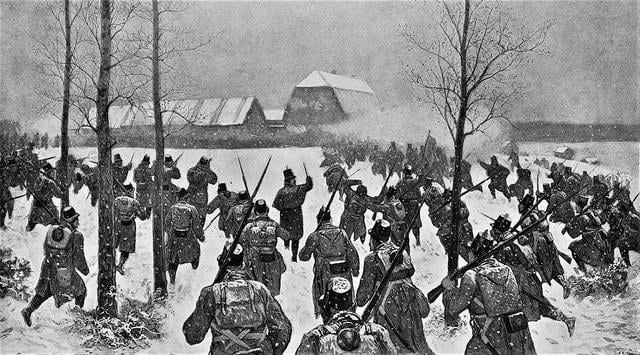
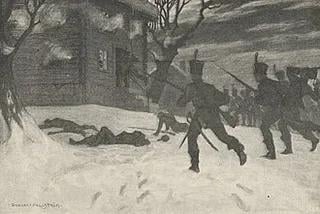
What percentage of soldiers were actually finnish? ive read about this war alot and to me it looked like every infantry unit was swedish or atleast had swedish leaders. I didnt see a single finnish division being mentioned anywhere on the wikipedia or on any battle wiki. The only finnish troops that looked like they were actively in the battles was the finnish artillery division. And there were 200 finnish peasants in the siege of sveaborg but thats about it. Can someone clear this up for me?
by ProfessionalLevel908
10 comments
Most finnish peasants did not have a surname at those times. So when they were drafted, they were given a swedish surname. Since the army command was swedish.
https://preview.redd.it/yuyxr01pxrag1.jpeg?width=1170&format=pjpg&auto=webp&s=2dc85a166a37486448ae9969b25ffbbed36d64d3
1808: 13k finns and 8k swedes 1809: just says 36k
The Finnish Wikipedia says that in 1808 there were 13,000 Swedish and 8,000 Finnish troops. The total number of soldiers was 36،000 by the next year. EDIT: it was the other way round – 13,000 were Finns
Probably most of the soldiers were Finnish. Commanders were often Swedish.
The Finnish-language article on Wikipedia has a lot more information, for starters (for obvious reasons) [https://fi.wikipedia.org/wiki/Suomen_sota](https://fi.wikipedia.org/wiki/Suomen_sota)
and there is also a separate article detailing the units involved:
[https://fi.wikipedia.org/wiki/Luettelo_Suomen_sodan_joukoista](https://fi.wikipedia.org/wiki/Luettelo_Suomen_sodan_joukoista)
The Swedish side had about 13,000 Finnish soldiers and 8,000 Swedish soldiers at the start of the war in 1808. The units were for the most part named after Finnish regions (Savo, Ostrobothnia, Uusimaa, Häme) or towns (Turku, Pori). Generally speaking they drew their recruits from the regions/towns whose names they bore. Some of these attained near-legendary status, thanks in part to the poetry collection by J.L. Runeberg extolling the heroics of Finnish soldiers in the war (*Fänrik Ståls sägner*, ‘Tales of Ensign Stål’). The *March of the Pori Regiment* was adopted as the honour march for the President of Finland in the late 20th century.
The officers in the war of 1808-1809 were for the large part Swedish, and even those who were Finnish often had Swedish names, so on the face of it is difficult to tell who is Finnish and who is Swedish unless you just know which families were from where.
https://preview.redd.it/9jlaumz40sag1.jpeg?width=960&format=pjpg&auto=webp&s=07eea761e25206343841d7514ef4931715ff6880
How did you manage not to stumble upon this painting? Björneborgarnas marsch/Porilaisten marssi by Albert Edelfelt.
If you find one picture of the Finnish War, it’s probably this one. Inspired by a song by our national poet Johan Ludvig Runeberg. He made Porin läänin jalkaväkirykmentti/Björneborgs läns infanteriregemente kind of superfamous. If you know of one unit that participated in the war, it’s probably this one. Even though it may not have been the most significant.
I’d imagine the companies were named after their commanders, so there would be many Swediah noble names and very few Finnish peasant names.
Translate this with translation service of your choice: [https://fi.wikipedia.org/wiki/Sotilasnimi](https://fi.wikipedia.org/wiki/Sotilasnimi)
Soldiers were commonly given “soldier name” – which often became there surname. They might get them from their equipment, looks, or just some random thing (animals, plants). Lång (long), Stålt (brave), Hammar (hammer)
I dunno, I wasn’t there.
Sweden was affraid of an invasion from Denmark too, which forced Sweden to keep a large proportion of the army in southern Sweden.
Comments are closed.