Published on
January 2, 2026
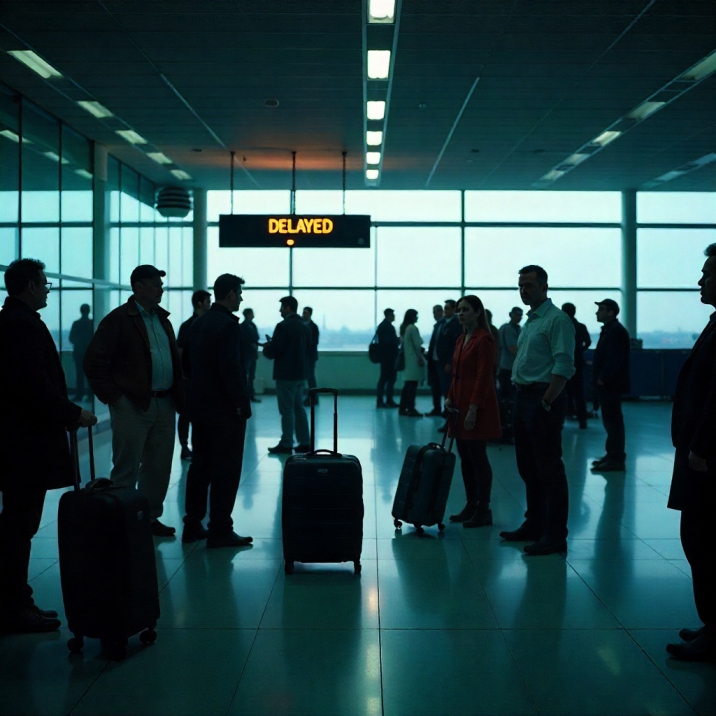
Travelers are currently facing a logistical nightmare as massive flight disruptions sweep across Europe. A wave of cancellations and delays has grounded thousands of passengers from the UK to Germany. Major transport hubs are feeling the strain. Intense pressure is building in London, Manchester and Birmingham. Meanwhile, schedules are collapsing in Edinburgh and Glasgow as well. This travel hell extends deep into mainland Europe, impacting travelers in Italy, Spain and France. Major carriers like KLM, Air France and easyJet are struggling to maintain their departures. Aviation hubs in Frankfurt, Berlin and Milan report significant backlogs. Furthermore, the situation remains critical in Madrid, Barcelona and Paris. Even coastal destinations like Nice are seeing a high volume of grounded flights. There’s a total of 55 flight cancellations and 1512 delays reported. This report examines the specific data behind these disruptions. We break down which airlines are failing their passengers. We also explore the regional impact on cities like London and Paris. Read on to understand the full scale of this aviation crisis.
The logistical crisis is most visible at the continent’s primary international hubs. In the UK, London Heathrow remains the hardest-hit facility, reporting 6 total cancellations and a massive 288 delays. This disruption is mirrored at other British gateways; Manchester Airport has seen 115 delays and 2 cancellations, while Birmingham International and Edinburgh have each recorded 2 cancellations alongside dozens of delayed services. London City Airport, typically favored for its efficiency, has been particularly hampered with 5 cancellations and 19 delays today.
The impact extends deeply into mainland Europe. In France, Paris Charles de Gaulle/Roissy is currently a focal point of the crisis, leading the region with 11 total cancellations and 277 delays. Nearby Paris Orly has also been heavily affected, reporting 8 cancellations and 106 delays. Further south, Nice Cote d’Azur is managing 4 cancellations and 49 delays.
In Germany, Frankfurt Airport has registered 4 cancellations and 142 delays, while Berlin-Brandenburg has seen 111 flights fall behind schedule. The Mediterranean region is not exempt; Italy’s Linate airport in Milan has recorded 3 cancellations and 25 delays. Meanwhile, in Spain, Adolfo Suárez Madrid-Barajas and Barcelona International have reported a combined 4 cancellations and over 250 delays, illustrating the broad geographical reach of today’s aviation challenges.
The current aviation crisis has not been restricted to a single operator; rather, it has permeated the schedules of flag carriers, low-cost giants and regional specialists alike. By examining the breakdown of today’s 1,512 delays and 55 cancellations, a clearer picture emerges of how specific airlines are struggling to navigate the current travel hell across Europe.
The British Airways Backlog
As the primary carrier at London Heathrow, British Airways has faced the most significant logistical hurdle. Of the 288 delays reported at the UK’s busiest hub, British Airways alone accounts for 145 instances where passengers were left waiting. When combined with its operations at Glasgow International—where 2 cancellations and 3 delays were recorded—the airline’s total impact exceeds 150 affected flights. This massive backlog has created a persistent congestion issue at Terminal 5, leaving thousands of travelers in the UK searching for alternative connections.
Air France and the French Hub Crisis
In France, the national carrier, Air France, is currently managing a severe operational deficit. At Paris Charles de Gaulle/Roissy, the airline reported 11 total cancellations and a staggering 130 delays. The disruption also extended across the border into Germany, where Air France was forced to cancel 2 flights at Berlin-Brandenburg, further contributing to the regional instability. These figures highlight a concentrated struggle for the carrier to maintain its hub-and-spoke efficiency during this period of high demand.
easyJet’s Low-Cost Gridlock
Budget travelers have not been spared, as easyJet faces widespread schedule collapses across Italy, Spain and France. The airline has emerged as a major contributor to the daily cancellation totals, with 8 flights grounded at Paris Orly and 4 at Nice Cote d’Azur. In the Mediterranean, easyJet’s operations at Milan Linate (3 cancellations, 11 delays) and Barcelona International (2 cancellations, 10 delays) have left passengers stranded at both ends of their journeys, illustrating the difficulty of maintaining high-frequency low-cost routes under current conditions.
KLM and the Transcontinental Ripple
The Dutch carrier KLM has shown the most diverse geographical impact, with flight disruptions spanning four different countries. In the UK, KLM recorded 2 cancellations at Heathrow, 5 at London City and 2 in Edinburgh. This pattern continued in Germany, where 2 cancellations and 2 delays were reported at Frankfurt International. The widespread nature of these irregularities suggests that the carrier’s entire European network is feeling the strain of the current operational environment.
Regional and Transatlantic Impacts
The crisis is further complicated by disruptions to secondary and long-haul carriers. Air Canada and American Airlines both reported cancellations and delays at Heathrow and Spain’s Madrid-Barajas, respectively, impacting those traveling between North America and Europe. Meanwhile, regional operators such as Finnair and Aer Lingus UK in Manchester, Emerald Airlines in Birmingham and German Airways in Frankfurt have all recorded cancellations, proving that no segment of the industry is immune to the ongoing travel hell.
The sheer volume of delays and cancellations is expected to have a tangible influence on the local tourism sectors within the affected cities. When hundreds of flights are delayed in hubs like London, Paris and Madrid, the immediate consequence is a “domino effect� on the wider travel ecosystem.
For cities in France and Spain, which rely heavily on timed arrivals for hotel check-ins and pre-booked tours, these disruptions can lead to shortened stays and significant financial losses for local hospitality providers. Business tourism is equally vulnerable; the high delay rates in Germany and Italy often result in missed corporate engagements and the postponement of international conferences. Furthermore, as passengers become abandoned in transit, the capacity of airport-adjacent hotels is often pushed to its limit. While this may provide a short-term spike in occupancy, the long-term sentiment toward travel within the UK and mainland Europe can be damaged by such systemic instability. Tourism hubs like Edinburgh and Nice, which thrive on seasonal visitors, may see a decline in visitor satisfaction as travelers navigate the stress of travel hell.
For those currently caught in the midst of this disruption across Europe, certain steps are recommended by aviation experts to manage the situation effectively.
Monitor Real-Time Updates: Passengers are advised to stay updated via their airline’s official mobile application or website. In a rapidly changing environment, digital notifications are often the fastest way to receive news of a rebooking or a further delay.
Know Your Rights: Depending on the jurisdiction, travelers may be entitled to “duty of care� from their airline. Under specific regulations in the UK and France, this typically includes the provision of food vouchers, communication facilities and overnight accommodation if a delay extends into the following day.
Document Everything: It is vital for passengers to keep all receipts for “reasonable� expenses incurred due to the disruption. This includes meals, refreshments and transport to hotels. These documents are essential for any subsequent claims for reimbursement.
Seek Rebooking Early: If a flight is cancelled, passengers should immediately seek alternative arrangements. While airlines are obligated to find the next available connection, the high volume of affected travelers today means that seats will fill quickly.
As the situation continues to evolve across the UK, Germany, Italy, Spain and France, the resilience of the European aviation network remains under heavy scrutiny.
-The information provided is sourced from FlightAware.
