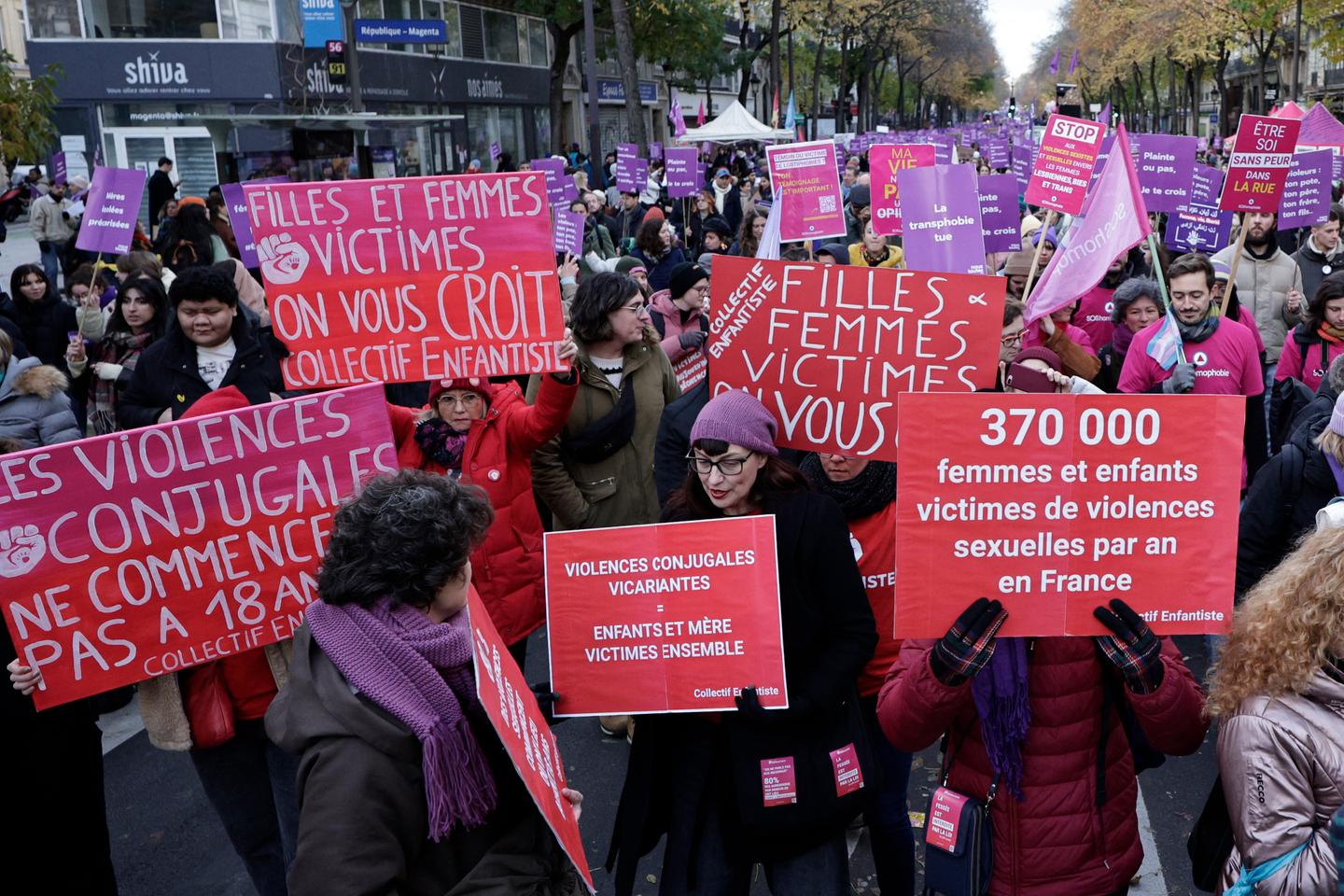
 During a demonstration against violence against women, in Paris, on November 23, 2024. STEPHANE DE SAKUTIN / AFP
“The complete elimination of violence against women.” That was the ambitious goal President Emmanuel Macron set in 2017. Two years later, his government launched the Grenelle on Domestic Violence, a series of round tables on the subject, aimed at better preventing, detecting and punishing violence within couples. The strategy included 54 concrete measures, including expanding the use of “serious danger phones” (mobile alert devices for victims), electronic restraining order bracelets, emergency universal aid for victims and financial support for specialized advocacy groups.
More than six years on, where does France stand? On paper, the authorities appear to have mobilized, with a “cumulative financial effort” of “€740.3 million over five years,” according to a report by the Sénat published in July. On the ground, however, the reality is very different. Police stations and victim support organizations – both central to these public policies – are struggling with a lack of resources and oversight, office closures and staff burnout. Why does the system still fail to protect women who are victims of domestic violence? Here’s a closer look at three major obstacles.
You have 83.14% of this article left to read. The rest is for subscribers only.