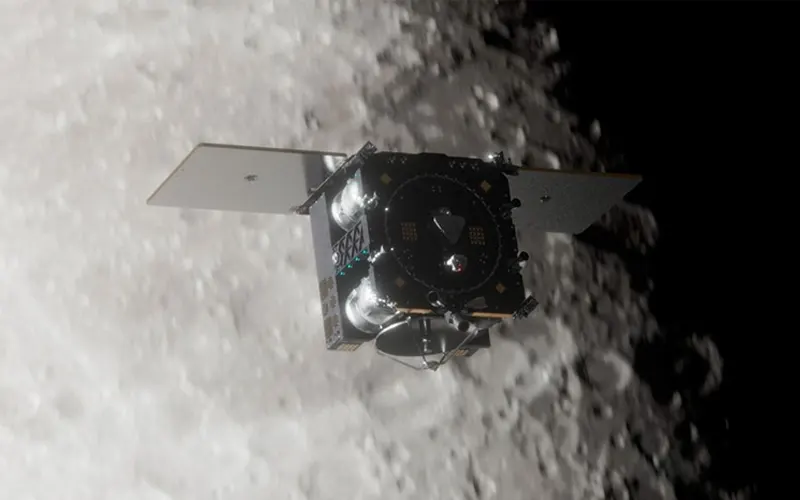
 Credit: Space Inventor
The European Space Agency has selected to proceed with a Danish-led satellite mission as one of a number of small, relatively inexpensive missions to the Moon. Called Máni, after the Norse personification of the Moon, the mission is expected to be launched in 2029 and will conduct high-resolution mapping of the lunar surface.
ESA published a call for ideas for small, cost-effective missions to the Moon in late 2023. The aim of the project was to enable more frequent and lower-risk lunar exploration by supporting missions that could be developed and launched quickly, allowing the agency to adapt to swiftly evolving scientific priorities and technological capabilities. Under this programme, proposed missions are required not to exceed a development cost of €50 million and to be ready to launch within four and a half years.
A total of eight proposals were selected, with all but one receiving €150,000 to mature their respective mission concepts. MAGPIE, the only proposal targeting a landing on the lunar surface, was instead selected for a direct implementation path, aiming for a Moon landing by the end of the decade. The remaining proposals completed the nine-month, ESA-funded mission studies and were presented for further selection to determine which would progress to the next phase of the programme.
While ESA has yet to announce the full list of mission proposals selected to proceed to the next round, the University of Copenhagen, which is leading the development of the Máni mission, stated on 17 December that the Danish-led mission to the Moon had been selected by ESA on 16 December to advance to the next phase of development. The decision was likely finalised on the first day of the agency’s 342nd Council meeting, held at its headquarters in Paris.
“With this decision, the largest Danish satellite mission ever is on its way to becoming reality. It’s the first time Denmark will lead an ESA mission and the first time a Danish-led satellite will leave Earth’s orbit. The journey truly begins now – it’s about to get exciting,” said the mission leader at the University of Copenhagen, Jens Frydenvang.
Frydenvang added that the data collected by the satellite will be used to assist in the identification of optimal sites for future crewed missions to the lunar surface, as well as the most suitable locations for building habitats to support a long-term human presence on the Moon.
According to an 18 December release from Space Inventor, the Aalborg-based small satellite manufacturer selected to design and build the Máni spacecraft, the Danish government has earmarked a budget of DKK 130 million (approximately €17 million) for the development of the mission.
Your donation will help European Spaceflight to continue digging into the stories others miss. Every euro keeps our reporting alive.