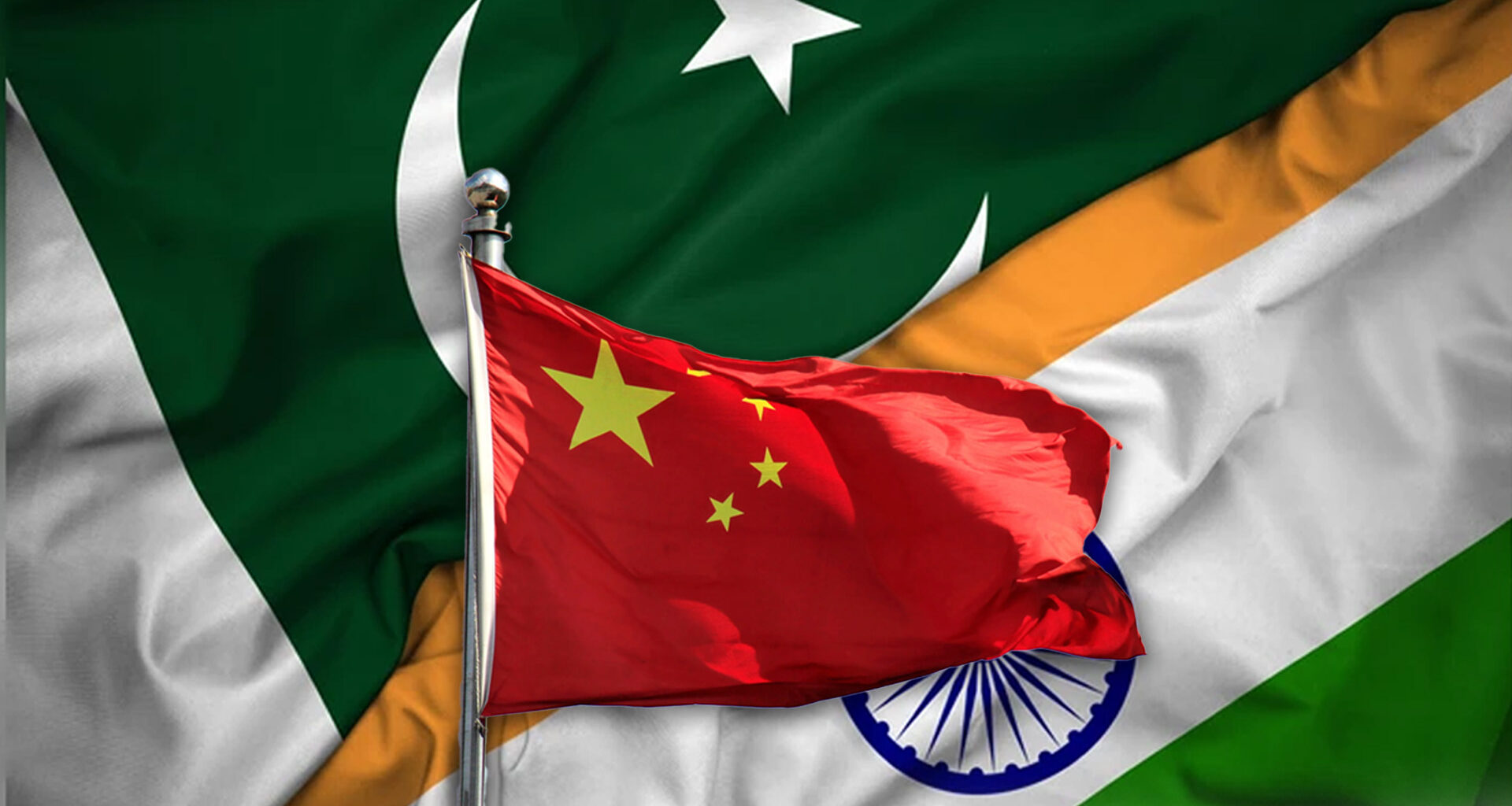
We spoke to KS. Dakshinamoorthy, Consulting Editor at The Federal, to unpack competing claims by the United States and China that they played a role in ending the brief India–Pakistan conflict following the Pahalgam terror attack. The discussion examines why these claims have surfaced, India’s consistent denial of third-party mediation, and what this means for regional and global diplomacy.
Why are the United States and now China insisting that they mediated peace talks between India and Pakistan?
Over the last seven months, Donald Trump has repeatedly claimed that the United States helped end the India–Pakistan conflict. Reports suggest he has made this claim more than 60 times across different forums, including as recently as last week. This can be understood in the context of Trump’s second term, where he appears keen to project himself as a peacemaker.
Trump has also claimed credit for intervening in or resolving multiple international conflicts, including those involving Israel and Palestine, Azerbaijan and Armenia, and Thailand and Cambodia. This pattern suggests an effort to portray the United States as a decisive global mediator.
China’s decision to make similar claims is more intriguing. Beijing has not limited its assertions to India and Pakistan. It has also claimed involvement in easing tensions involving Iran, Israel, the Israeli–Palestinian conflict, and even Cambodia and Thailand. These are largely the same theatres where Trump has also staked a claim.
This raises the possibility of a power play between China and the United States. It seems unlikely that both countries mediated the same conflicts simultaneously. China’s sudden assertiveness suggests it may no longer want to remain silent while the US claims diplomatic victories.
How credible are these claims, especially when it comes to India?
Historically, the United States has intervened during periods of heightened tension between India and Pakistan. There were notable instances during the Bill Clinton and George W. Bush administrations. Because of this history, US claims cannot be dismissed outright.
Also Read: What the India-Russia summit reveals about shifting global power
China’s claim, however, is more complicated. China is closely aligned with Pakistan, and much of Pakistan’s military equipment is of Chinese origin. In some ways, China was indirectly involved in the conflict through this alignment.
Given this background, it is difficult to understand how China could have acted as a neutral mediator for India. For China to mediate, it would have had to operate on two fronts: aligning with Pakistan while simultaneously advising India to reach some form of understanding with Pakistan. This creates ambiguity and confusion that is not easily resolved.
Why has India consistently denied any third-party mediation?
India’s position is shaped by its long-standing sensitivity over Kashmir. Historically, India has maintained that all issues related to Kashmir must be resolved bilaterally between India and Pakistan, without third-party involvement.
What the US and China are claiming is mediation to end a conflict, not mediation on the Kashmir issue itself. This distinction is important. It raises the possibility that the truth may lie somewhere between the competing claims.
India’s concern is that acknowledging mediation, even indirectly, could be interpreted as internationalising the Kashmir issue. This is something successive Indian governments have been careful to avoid.
Why has China suddenly chosen to assert itself on this issue now?
China is competing with the United States across multiple domains, including diplomacy and global influence. When Chinese Foreign Minister Wang Yi elaborated on China’s alleged role, it appeared aimed at projecting China as the dominant power in South Asia.
Over the past two decades, China has steadily expanded its influence in India’s neighbourhood. It has a significant presence in Sri Lanka, Bangladesh, Nepal, and maintains extremely close ties with Pakistan. This broader regional strategy provides context to China’s claims.
By asserting a mediating role, China may be signaling to the world—and particularly to its neighbours—that it has a decisive say in shaping regional outcomes. This can be seen as part of a broader attempt to position itself on par with the United States as a global power.
Pakistan has thanked the US, China, and Saudi Arabia for their role, while India has not. How should this be read?
The conflict itself lasted less than a week and ended abruptly. India’s official position is that the conflict ended following a request from Pakistan, after which India independently decided to stop hostilities.
Pakistan, unlike India, has fewer inhibitions about acknowledging external involvement. It has been open in thanking the US, China, and Saudi Arabia. Pakistan’s close alignment with China during the conflict also makes its position unsurprising.
In international diplomacy, when conflicts arise between neighbouring or strategically important countries, states with regional interests often engage in diplomatic efforts. This happens almost automatically. For example, India would naturally engage if there were tensions between Maldives and Sri Lanka.
In the India–Pakistan case, it is possible that diplomatic feelers were sent by the US, Saudi Arabia, and China, and that some form of back-channel communication took place. India’s stance appears to be that, regardless of such efforts, the decision to end the conflict was taken independently.
This difference in emphasis creates a nuanced divergence between India and Pakistan, which becomes evident when their respective statements are compared.
How important is the issue of mediation, and should it be taken seriously?
India’s primary concern is avoiding the internationalisation of the Kashmir issue. The conflict stemmed from the Pahalgam terror attack and India’s assertion that Pakistan-backed terrorists were involved. India’s response was framed as retaliation, not a broader dispute requiring international intervention.
Mediation has, however, become a significant feature of global politics. In conflicts such as Russia–Ukraine, there have been sustained mediation efforts, including personal involvement by leaders like Donald Trump, though without definitive success.
Similar patterns are visible elsewhere. In Southeast Asia, ASEAN played a role in addressing tensions between Cambodia and Thailand. These examples show that conflict and mediation increasingly occur simultaneously.
This appears to be a growing trend in international relations, where diplomatic efforts accompany active conflicts. Understanding this context is crucial when evaluating competing claims of mediation in the India–Pakistan case.
The content above has been transcribed using a fine-tuned AI model. To ensure accuracy, quality, and editorial integrity, we employ a Human-In-The-Loop (HITL) process. While AI assists in creating the initial draft, our experienced editorial team carefully reviews, edits, and refines the content before publication. At The Federal, we combine the efficiency of AI with the expertise of human editors to deliver reliable and insightful journalism.