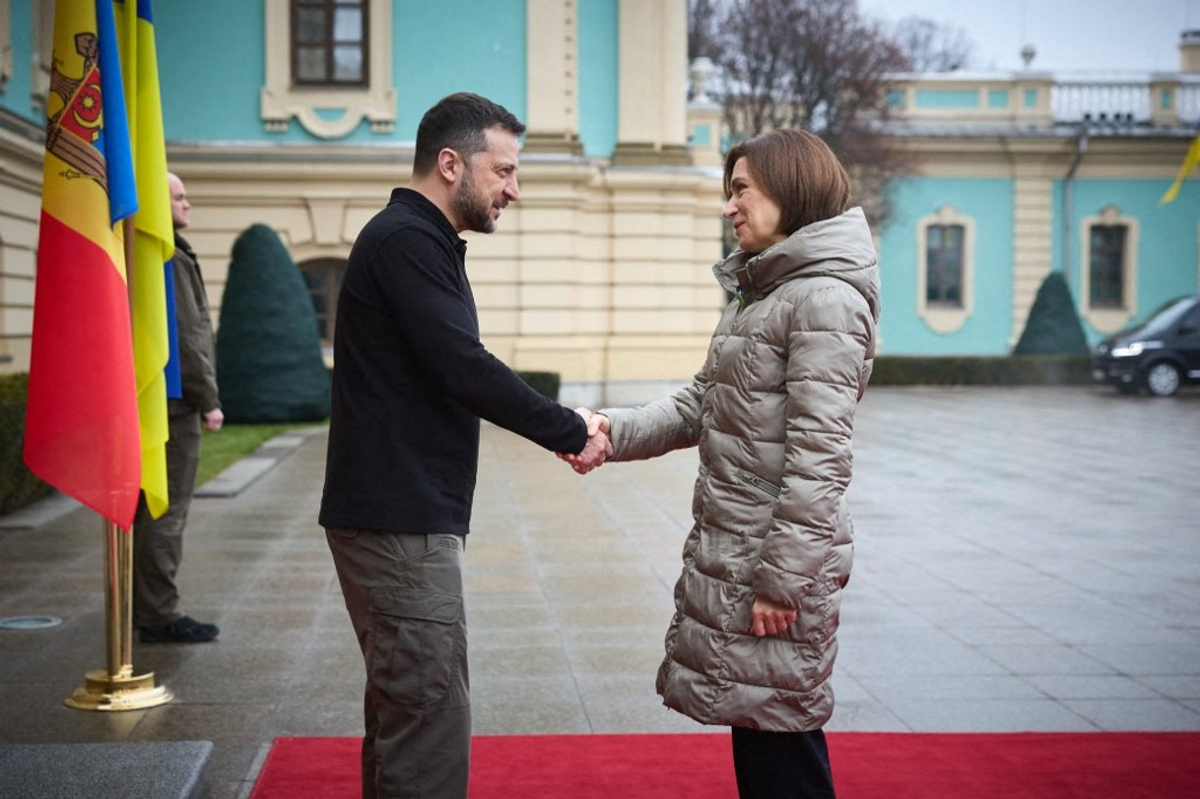
The two countries, which are candidates to accede to the EU, joined the bloc’s so-called ‘roam like at home area’ on January 1.
The move allows Moldovans and Ukrainians to make calls, send texts and use mobile data across the European Economic Area (EEA) without incurring additional charges, while residents of EEA countries can enjoy the same rights when traveling to Ukraine and Moldova.
Follow our coverage of the war on the @Kyivpost_official.
Ukraine and Moldova are the first countries outside the EEA, which is made up of all 27 EU member states plus Liechtenstein, Norway and Iceland, to be granted access to the scheme.
The decision to include Moldova and Ukraine in the roaming zone was made by the EU in July 2025 as part of attempts by Brussels to deepen ties with the two candidate countries and support their “gradual economic integration into the EU’s internal market.”
The European Commission said in a statement in June that mobile roaming would be “the first area where the EU would extend internal market treatment to Ukraine.”
The Roam like at Home scheme, put in place by the EU in 2017, is designed to allow consumers to use their data and mobile allowance across the bloc’s borders for the same cost as at home and with the same network quality and speed.
Deepening ties
Ukraine applied to join the EU on February 28, 2022, just four days after the country was invaded by Russia.
Other Topics of Interest
Ukraine Peace Talks Reignite With Security at Core
Talks resume this weekend as US, European, and Ukrainian officials focus on security sequencing, military guarantees, and enforcement mechanisms to sustain a durable peace.
In addition to being a highly symbolic gesture of alignment with the West, the move was widely interpreted as a means to bolster Ukraine’s security in the future in the face of an aggressive Moscow.
Moldova, which neighbors Ukraine, applied to join the EU in March 2022 and is also a target of destabilization efforts by Moscow, reluctantly playing host to Russian troops in its eastern region of Transnistria.
The predominantly Russian-speaking separatist region broke away from Moldova after a brief conflict in the early 1990s, but is overwhelmingly still recognized as Moldovan territory by the international community.