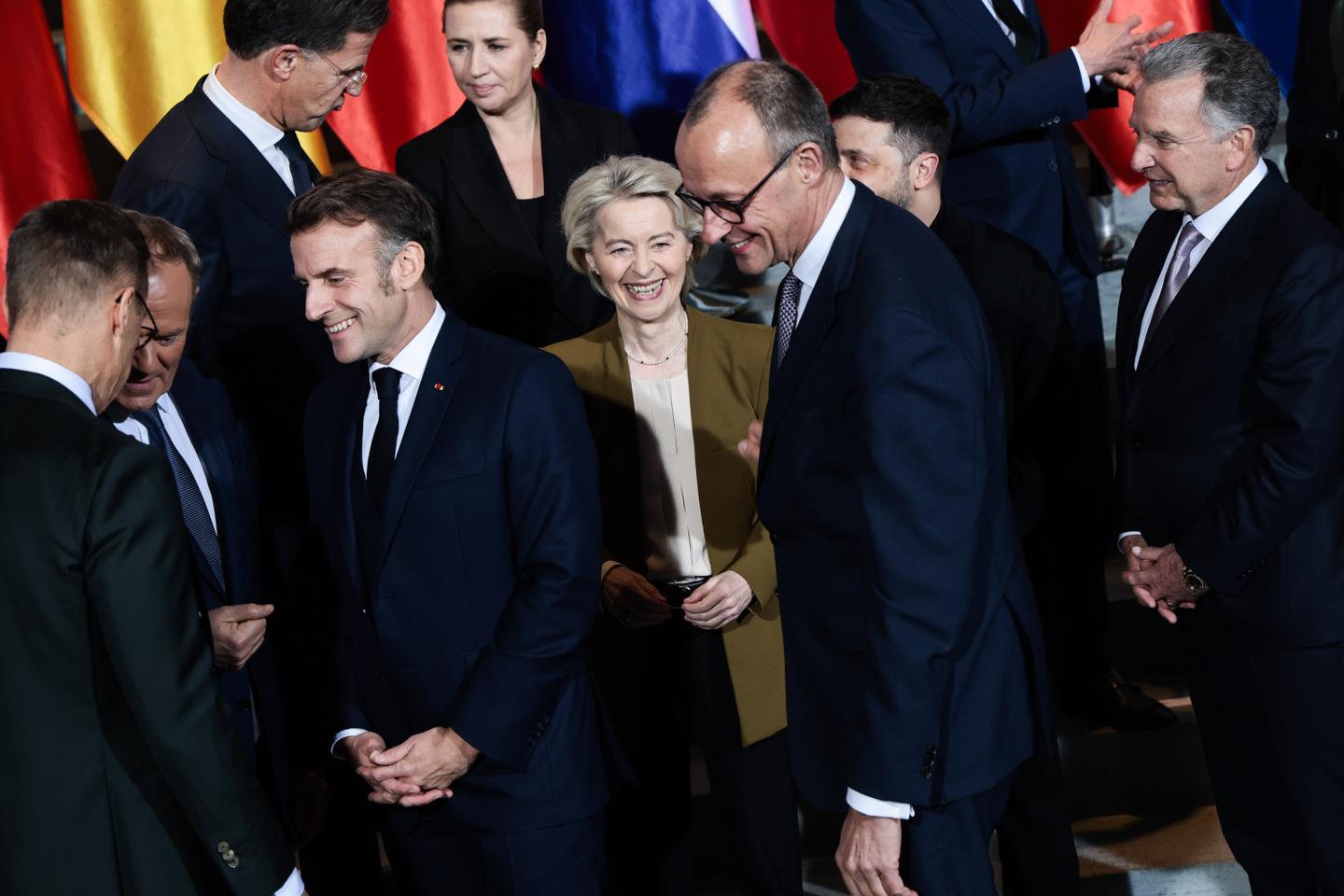
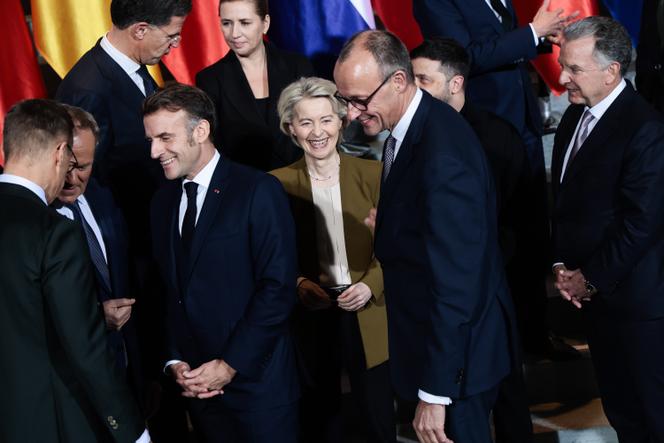
 European leaders and US Special Envoy Steve Witkoff during a working meeting in Berlin on December 15, 2025. CYRIL BITTON/DIVERGENCE FOR LE MONDE
On February 18, 2022, the opening day of the annual Munich Security Conference, German foreign minister Annalena Baerbock engaged in a public discussion with her American counterpart, Democrat Antony Blinken. The drums of war were sounding loudly in the East, and around 150,000 Russian troops had gathered behind Ukraine’s border. The United States had evacuated its embassy in Kyiv, but Europe did not believe war would come. The German minister had a “message for Moscow”: “We don’t want this, we want a serious dialogue on security and peace. We don’t want to challenge our security architecture that we built together.”
At the same conference, Blinken praised transatlantic solidarity, calling it “our strongest source of strength.” In the audience, Kyiv mayor Vitali Klitschko stood up and pleaded urgently: Ukraine needed weapons. Baerbock said she was reviewing a list that included the delivery of “more than 5,000 helmets.”
Six days later, that European world collapsed. On February 24, Russian troops crossed the border and invaded Ukraine. Ukrainian President Volodymyr Zelensky traded in the suit and tie he was last seen wearing in Munich for military fatigues. Nearly four years on, his country lays in ruins but continues to resist; Baerbock’s famous “security architecture” has shattered, and transatlantic solidarity is a thing of the past. Europe, facing its gravest crisis since World War II, is no longer the same.
You have 84.64% of this article left to read. The rest is for subscribers only.