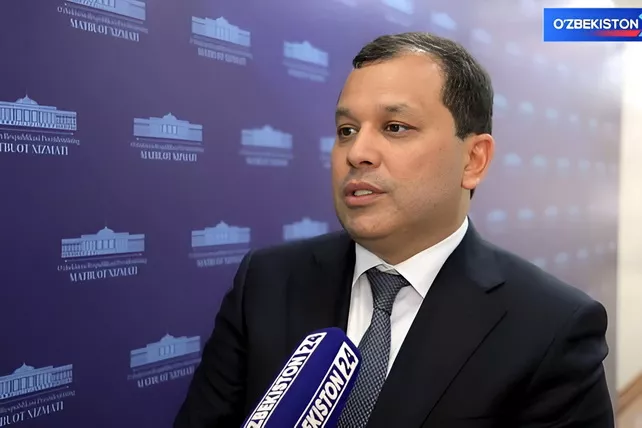
Chairman of Uzbekistan’s Chamber of Commerce and Industry (CCI) Davron Vakhabov has said that broad export opportunities are emerging for Uzbek businesses in the Iraqi and Syrian markets following a late-December visit by an Uzbek trade delegation.
Vakhabov noted that Iraq imports goods worth about $93 billion annually, offering significant potential for Uzbek exporters, The Caspian Post reports via Uzbek media.
He noted that supplies of products such as electrical equipment and construction materials could reach up to $1 billion-around twenty times higher than the current export volume of $50 million. With sustained efforts, exports to Iraq could climb to $500 million as early as 2026.
Special focus during the visit was placed on Erbil in northern Iraq, which enjoys duty-free status and is increasingly becoming a logistics hub not only for the Iraqi market but also for neighboring countries, including Syria. Talks with Gailan Haji Saeed, President of the Erbil Chamber of Commerce and Industry, resulted in the signing of a memorandum of cooperation and an agreement to establish the “Uzbekistan-Erbil” Business Council, bringing together 20 business representatives from each side.
The Syrian market is also showing strong demand for a broad range of products, including foodstuffs, electrical appliances, vehicles, spare parts, and lubricants. Vakhabov estimated that Uzbek companies could export goods worth $100-150 million to Syria over the next year. Transport logistics were also discussed, with truck deliveries of electronics to Baghdad taking about 10 working days at a cost of roughly $3,300, while deliveries to Damascus take around 20 days and cost about $4,500.
In addition, the possibility of using Iraq and Syria as transit corridors for road freight shipments to Saudi Arabia and Jordan is under consideration, potentially opening new regional routes for Uzbek exporters.
The visit, held from December 22 to 28, included talks with Iraqi Deputy Minister of Trade Ghassan Hamid on simplifying logistics and customs procedures, reducing trade barriers, and harmonizing standards and certification. The parties also agreed to support the participation of Uzbek companies in an international exhibition in Baghdad scheduled for February 1-7.
In Damascus, meetings were held with President of the Federation of Syrian Chambers of Commerce Alaa Omar Al-Ali and Director General of the Federation Muhammad Amir al-Khomisi. Discussions focused on expanding trade and economic ties, establishing direct business contacts, and attracting investment for post-conflict industrial recovery. Agreements were reached on organizing a visit by a Syrian business delegation to Uzbekistan in early 2026, as well as holding a business forum and business-to-business (B2B) meetings.
The Uzbek delegation included Ambassador to Kuwait and Iraq Ayubkhon Yunusov, Deputy Minister of Investments, Industry and Trade Shokhrukh Gulamov, and representatives of 25 leading Uzbek companies. According to the CCI, the visit laid the foundation for expanding exports and strengthening Uzbekistan’s business ties across key Middle Eastern markets.