And without much fanfare, the EU at Hogmanay handed the rotating presidency of the bloc from Denmark to Cyprus.
But because it is the EU, nothing is simple and personally, I think the rotating presidency is these days a bit of a nicety, which should be tidied away at some point, but for now still sort of matters.
Remember, the EU is composed of two elements – the member states (working together in the Council) and the parliament, representing the people of Europe and the two co-legislate somewhat like two houses of a national parliament.
READ MORE: Scottish political parties react to US bombing Venezuela as Nicolas Maduro ‘captured’
The Council used to be chaired every six months by a member state, though as the EU has grown in membership and responsibilities, this became impractical.
So the Lisbon Treaty took a lot of these functions and made a permanent president of the European Council based full-time in Brussels, presently the avuncular former Portuguese PM, António Costa.
So Cyprus holds the presidency of the Council of the European Union, where Costa is the president of the European Council. A camel, after all, is a horse drawn by committee.
But, congratulations to Cyprus (population akin to greater Glasgow) and thank you to Denmark (population akin to Scotland).
Despite all my own biases above, the presidency is not nothing and Cyprus being in the hot seat right now gives an added spice.
Cyprus is itself a divided island, with the north of the island still illegally occupied by Turkey since the invasion in the 1970s, and its capital partitioned.
When Cypriots talk about Ukraine, they have an empathy we do not, even though simultaneously Cyprus had a historically close relationship with Russia and was, after London, a favoured destination for the oligarchs and their dirty cash.
It is telling that Cyprus has been at the forefront of EU sanctions, having decisively chosen a side in the face of continued Russian aggression on all fronts.
With the EU’s ongoing strong evolution into a defence union (not yet an alternative to Nato but building itself into a place where it could be), the fact that Turkey is a Nato member and Cyprus isn’t will need some smoothing.
Nicosia, along with Athens, were instrumental in blocking Turkey’s participation in the EU’s €150 billion SAFE programme, designed to boost European defence co-operation.
The UK is not participating in it either, a spectacular failure of statecraft on the part of the UK, blocked not by any EU state but its own poor leadership.
(Image: Getty)
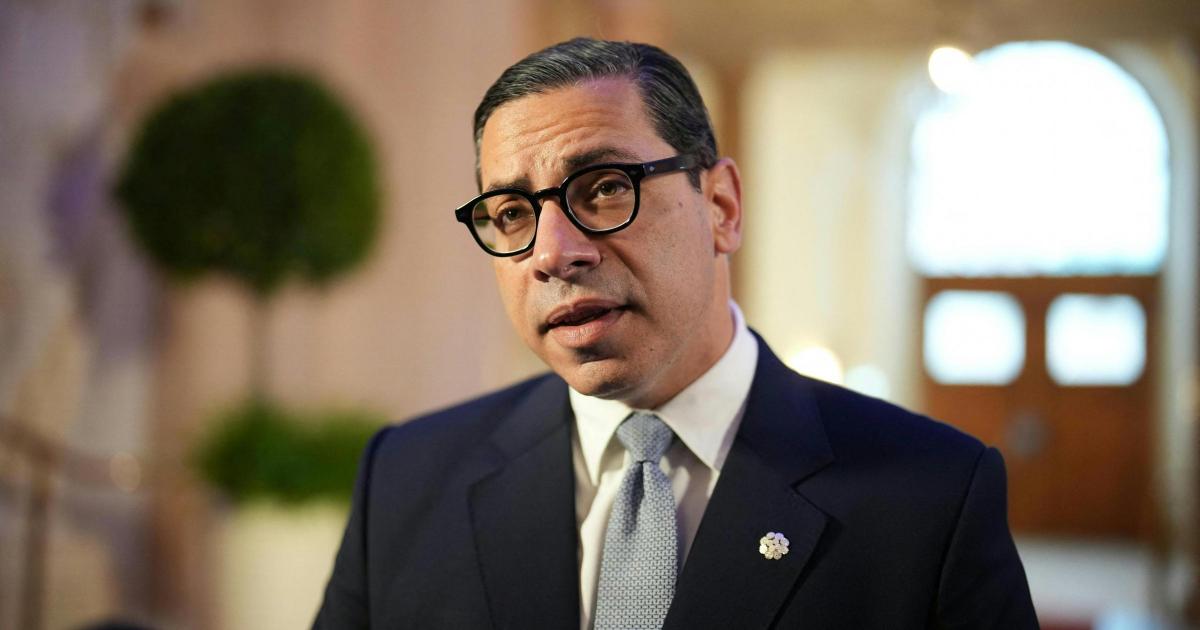
Cyprus also makes much of being a smaller state, with their foreign minister Constantinos Kombos pledging “a different mindset” and also strongly stating that Cyprus will be looking to their own backyard while steering the EU.
With Gaza, Israel, Lebanon and Syria not quite visible but just over the horizon from Cyprus, we can expect a greater focus on events in the Eastern Mediterranean and wider Middle East. A region where the EU has been posted missing lately and could do with a greater focus.
Cyprus has also committed itself to pushing a free trade agreement with India, and on this I’ll confess, I hae ma doots.
India has also played a pretty shameful role in sanctions-busting Russian oil, and the EU is less and less willing to turn a blind eye.
I don’t see either dynamic changing much in the next few months, much as there could be much to be gained if Cyprus can crack it.
But where Cyprus can add most value is in quietly helping internal EU reorganisation to reflect the reality that the world is changing fast and if we don’t hang together, we’ll hang separately.
The USA is now, I’m sad to say, a wilfully unreliable partner, and we are far too reliant upon US defence and US tech. Both need to be urgently reassessed, and Europe’s autonomy strengthened.
That won’t happen overnight, but we need to see continued focus on it.
And Cyprus, given its close relationship to the UK, could do some good in helping the UK pull itself out of the rabbit hole it tumbled into 10 years ago. Cyprus has picked a side: the EU.
So has Scotland, in the EU referendum and in poll after poll since, pro-EU sentiment is ahead by a country mile, even if the way back to the EU, as Scotland or as part of the UK, is debated.
I think it’s only a matter of time until the same realisation dawns in the UK too – my worry is I don’t think it will be any time soon.
There’s been some signs of the EU being used as a football for internal positioning within the Labour Party, but even that misses the point – EU membership is a fundamental of how society works, not a transactional individual policy.
My view is that England will need to experience still more chaos, quite possibly involving a Reform government, before the penny drops that the Empire’s gone.
I’ve said I’ll not make many predictions, but I’m pretty confident 2026 is going to be a big year in Europe.