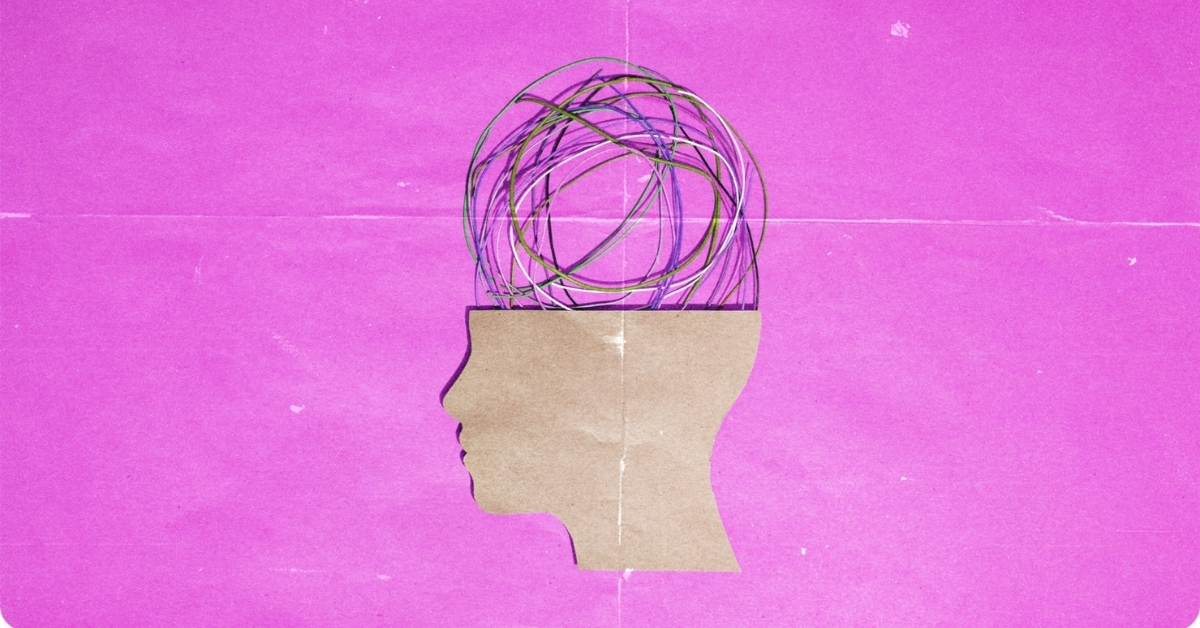
You know the feeling. Someone asks a question, your eyes are open, you’re technically awake, but there’s just nothing there. No thoughts. No distractions. Just a brief internal blackout. According to new research, that experience might not be zoning out at all. It could be consciousness briefly stepping away.
Scientists call the phenomenon “mind blanking,” and a new study suggests it’s a distinct mental state, separate from daydreaming or distraction. In these moments, awareness can actually pause, even while the body stays awake.
Researchers at Sorbonne Université studied 62 adults during a simple attention task. Every 40 to 70 seconds, participants were asked what had been happening in their minds just before the prompt. They could report focused attention, mind wandering, mind blanking, or uncertainty. Mind blanking appeared about 16 percent of the time, nearly half as often as mind wandering, which suggests it’s far from rare.
Here’s What Scientists Say Is Really Happening When Your Mind Goes Blank
Behaviorally, the two states looked very different. Mind wandering made people quicker and more impulsive, with more false alarms. Mind blanking slowed people down. Responses lagged. Cues were missed. It didn’t really look like a distraction; it was more like a brief absence.
Brain activity supported that distinction. EEG recordings showed that mind blanking came with a strange split. The front of the brain showed bursts of fast activity, while the back, including regions tied to visual processing, showed the opposite pattern. That disconnect didn’t appear during mind wandering.
The most striking finding involved vision. During focused attention and mind wandering, images moved through the brain in stages associated with conscious perception. During mind blanking, those later stages never arrived. The eyes still took in the image, but the brain failed to process it in a way that reached awareness. Machine learning tools could identify what participants had seen during other states. During mind blanking, they couldn’t.
These neural patterns resemble those seen during deep sleep or anesthesia, including disrupted communication between brain regions and impaired sensory processing. The difference is timing. These lapses happened briefly, inside otherwise normal wakefulness.
The findings raise an uncomfortable question. Being awake doesn’t guarantee continuous awareness. Conscious experience can arrive in pieces, with short gaps in between.
Not everyone experienced mind blanking. Some participants never reported it, even though they mind-wandered. According to StudyFinds, previous research suggests it might be more common in people with attention-related conditions, hinting that it varies by individual.
The researchers acknowledge limits. Self-reports aren’t perfect, and brief check-ins can’t capture everything. Still, behavior and brain activity pointed in the same direction.
So the next time your mind goes completely blank, it might not be stress or distraction. It could be a short pause in consciousness itself. Maybe your awareness isn’t as constant as it feels.