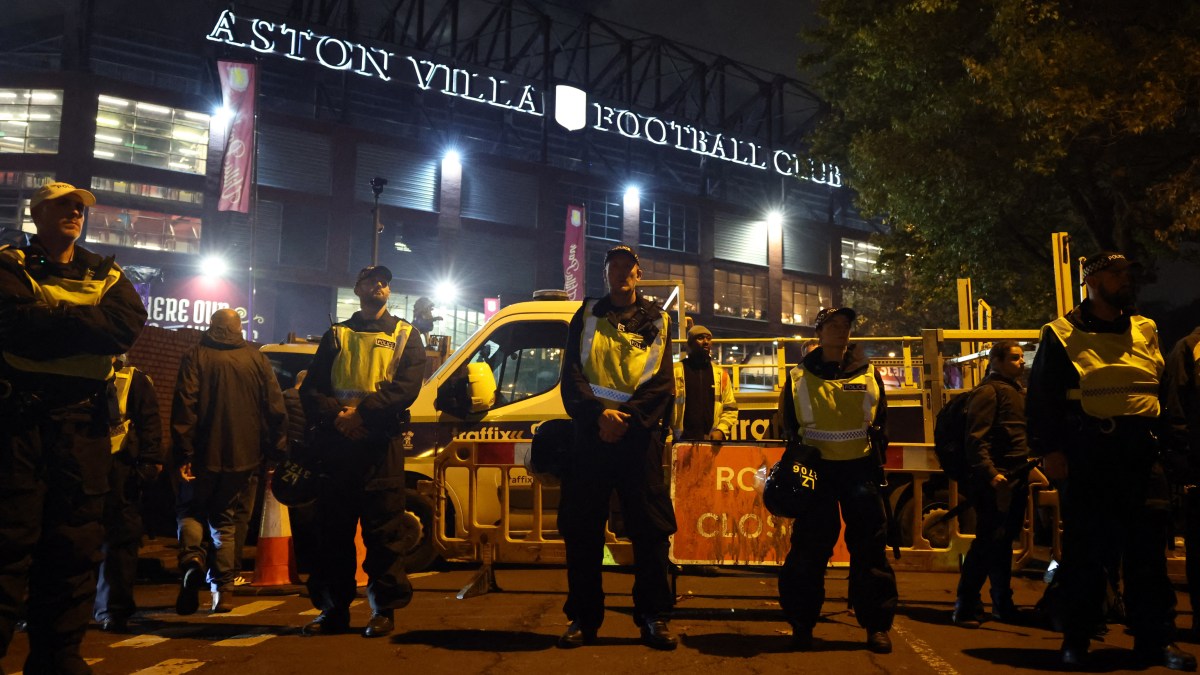
Police produced false evidence to retrospectively justify banning Israeli fans from an away fixture in Britain after the move was agreed. The force drew up the “intelligence” after the local council privately said it had been “challenged” over the decision and needed a clearer “rationale”.
West Midlands police and Birmingham city council had already agreed to operate “on the assumption” of “no away fans” when Maccabi Tel Aviv played Aston Villa in November.
Leaked minutes from a safety advisory group meeting say police based their initial support for it on what one officer described as “my professional judgment” and “in the absence of intelligence”.
The force only produced “significant” and “new” “intelligence” about Maccabi’s fanbase after a Birmingham council staff member confided that they had faced questions and been “asked to obtain” information to pre-empt criticism or claims of “anti-Jewish sentiment”.
West Midlands police changed its approach and focused overwhelmingly on the disorder that broke out when Maccabi Tel Aviv supporters attended a game in Amsterdam in November 2024. It claimed that Israelis “randomly” threw innocent civilians into canals and that hundreds of fans “linked” to the IDF attacked “Muslim communities”, requiring the deployment of thousands of Dutch officers.
Chief Constable Craig Guildford stood by the allegations even after police in the Netherlands dismissed them as untrue or misleading.

Maccabi Tel Aviv supporters set off fireworks at a match against Ajax in November 2024
EROEN VAN DEN BERG/SOCCRATES/GETTY IMAGES
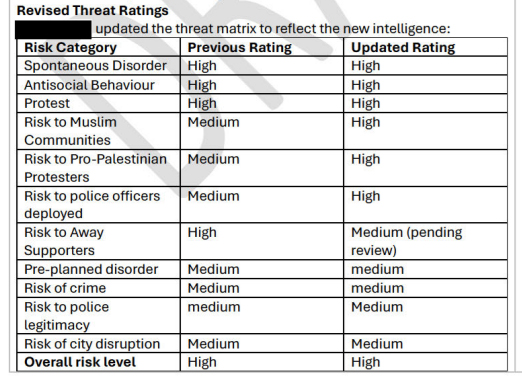
Between October 7, when the first safety group meeting took place, and October 23, the final meeting, police downgraded the threat it said Israeli fans faced (“high” to “medium”), upgraded the threat to the Muslim community (“medium” to “high”), and exaggerated the police response to disorder in Amsterdam (1,200 officers to 5,000).
The city’s 1,600 Jews, initially said to face a “medium threat”, did not appear in the final analysis:
The disclosures will deepen pressure on a force under scrutiny by a committee of MPs, the police watchdog and a separate police inspectorate. Birmingham council said last week it would appoint a lawyer to conduct an external review of “what can be improved from a governance perspective”.
Nick Timothy, the Conservative MP for West Suffolk, said the new paperwork showed West Midlands police had “invented” its claims to fit a political decision made in response to local pressure.
Writing in The Sunday Times, he said: “Some might care little about foreign football fans. But this scandal is far more serious. It is about whether we can trust the police to do their vital work without fear or favour, and who holds the power in modern, multicultural Britain.”

The away end at Villa Park was empty on November 6
JAMES GILL/ DANEHOUSE/GETTY IMAGES
The paper trail begins with minutes of the first of two behind-closed-doors meetings of Birmingham’s Safety Advisory Group (SAG), held on October 7. West Midlands police said it would “prefer” a ban given the risk was on the “higher scale in terms of fixtures this year”. It briefly said it had “some concerns” on “fan behaviour and retaliation”, given the “significant disorder” witnessed in Amsterdam.
According to the SAG chairman’s summary, the police representative’s overall verdict was made “in the absence of intelligence, based on conversations with peers and my professional judgment”.
Those comments were redacted in their entirety from documents released by Birmingham council under freedom of information law but appear in a leaked full version.
The redacted version….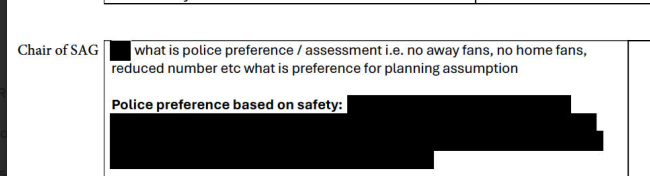
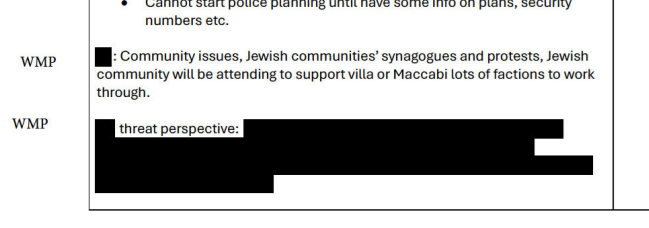 …and the full version: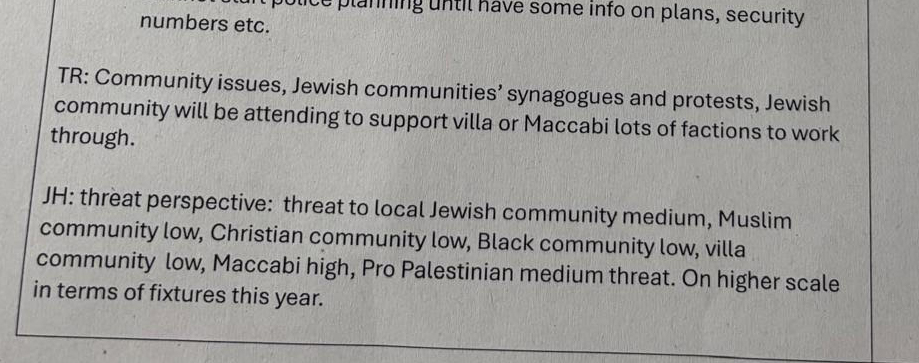
At the same discussion, Waseem Zaffar, a Labour councillor who has accused Israel of “extremism and terrorism”, lobbied for the Europa League game to be cancelled. He was joined by Mumtaz Hussain, a Liberal Democrat, who had publicly said of the game: “We are the voice of the people. And this is something that a lot of people in Aston do not want.”
The councillors were the only elected representatives present. They had already publicly said they believed a ban was a proportionate response to Israel’s actions in Gaza, which they have said amounts to genocide, but did not recuse themselves.
While a cancellation was rejected, police and emergency services agreed to work “on the premise of no away fans for this fixture,” adding: “Confidential discussion today must not be shared outside of SAG.” No objections were raised.
The next day, Mike O’Hara, an assistant chief constable, wrote: “I would like to formally recommend that [SAG] undertake a review of … attendance of away fans”, citing “the international profile of the visiting team” and “current geopolitical tensions”.
On October 9, an official at Birmingham council wrote to West Midlands police to say: “Engaging internally and wider over the last few days, I have been challenged over the safety position and have been asked to obtain a slightly more clear rationale and position when it comes to any fan restriction.
“Can I ask you (or one of your officers) to provide a little more information on the reduction requested and how this would support the safety of the match?”
They continued: “It’s worth highlighting there is concern over a perception that our safety considerations may be wrongly considered as anti-Jewish sentiment — I know this isn’t the case, but if you could help me outline this issue and risk from your perspective that would be of great support and help dispel that feeling.”
They signed off: “Your further support will help to make sure we get this right for all.”
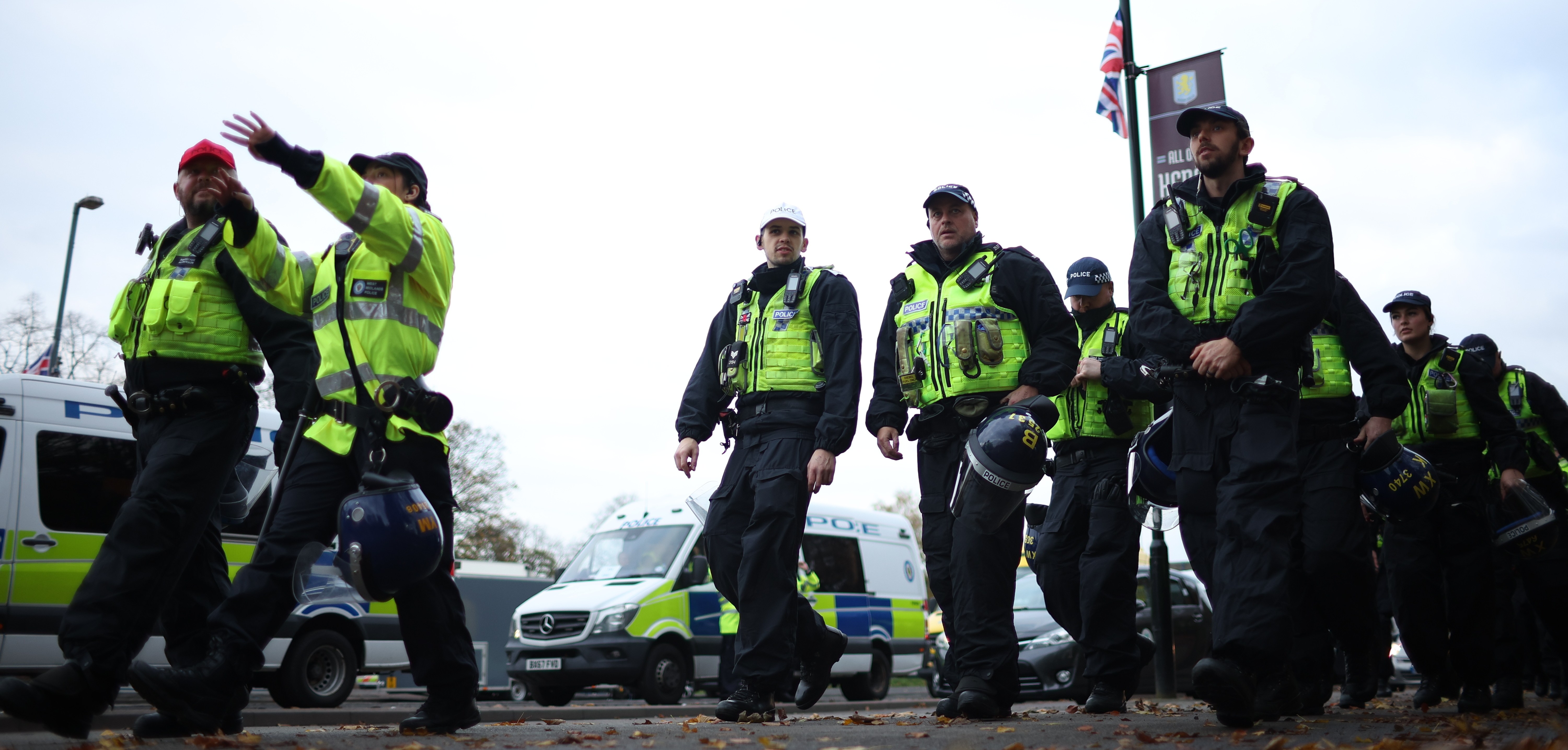
A meeting was held to sign off the decision a week and a half later, by which point West Midlands police claimed they had acquired “significant intelligence indicating potential for disorder involving [Maccabi Tel Aviv] based on recent fixtures”.
According to minutes, the police representative provided detailed information about the “notable unrest” in Amsterdam, “disorder” involving an Israeli away game in Norway, pro-Palestine protests in Italy, and even a baseball game involving an Israeli side in the Netherlands.
It said that “Maccabi Tel Aviv’s presence could attract protest and disorder, even outside the football context”. It added there was a “high likelihood of protest activity linked to the fixture”, concluding: “This sits at the highest threat.”
The council signed off the decision. It was published the same day, prompting condemnation from Sir Keir Starmer and Kemi Badenoch.
In response, the local authority and police convened a final SAG meeting to review the decision on October 23.
By then, the game had become an international controversy. Pro-Palestine voices including Ayoub Khan, a local independent MP, had expressed support for the ban, while pro-Israel voices had condemned it as antisemitic. Maccabi Tel Aviv also decided not to sell tickets to its fans for the game anyway.
Ahead of this discussion, officials asked West Midlands police for written intelligence, saying: “Whilst in the past such information has been provided orally at the meeting, given the understandable level of public concern as to this issue, it would be appropriate to aid transparency and decision-making to provide the … information in written form.”
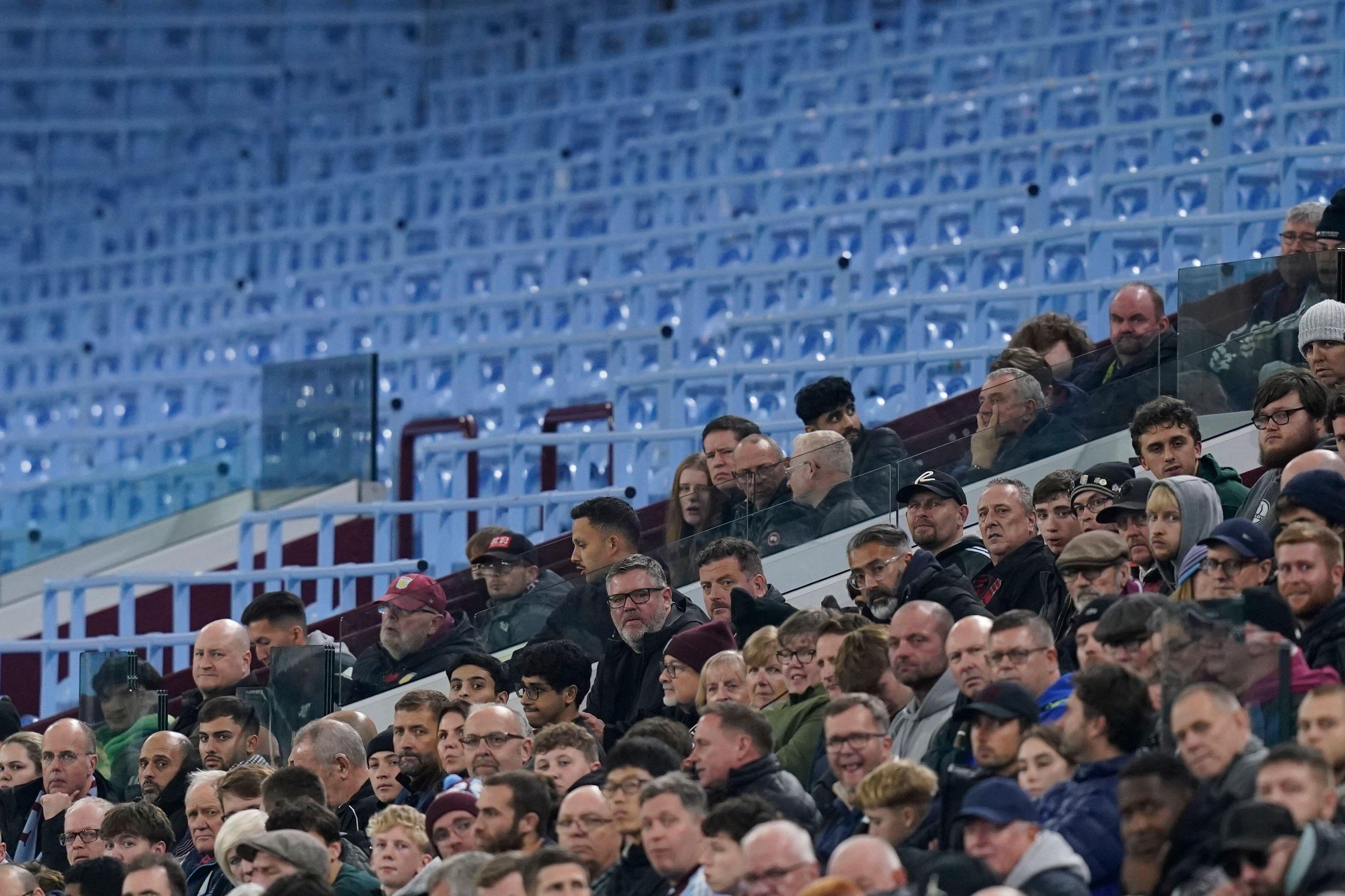
Aston Villa fans watch the Maccabi Tel-Aviv game in front of the empty away end
ANDREW YATES/SPORTIMAGEALAMY
This document included the allegations about Israeli fans targeting “Muslim communities”. It also contained significant discrepancies with the evidence, which had initially been presented verbally.
Whereas on October 7, police correctly said that 1,200 Dutch officers had been required to respond to unrest in Amsterdam, the new document said the figure was 5,000. Guildford, apparently aware, told MPs last month he stood by the latter tally.
• West Midlands police overruled Uefa advice not to ban Maccabi fans
Another difference was the assessment of the threat posed to Birmingham’s ethnic minorities. Minutes of the meeting on October 7 said the threat to Muslims was “low”. The document said it had actually been “medium” but was now deemed “high”.
The threat posed to Jews, previously characterised as “medium”, was not included in the new document. The threat to Israeli fans was downgraded from “high” to “medium”, with the threat to pro-Palestinian protesters and police upgraded from “medium” to “high”.
This evidence served as the basis for the October 23 meeting, in which police claimed fans had engaged in “hate crimes, serious assaults including throwing random members of the public … into the river, flag burning, racist singing and chanting and co-ordinated violence”. The council duly approved the ban.
It did not conduct any independent scrutiny of the details of what happened in Amsterdam, which remains highly contested.
• Police ‘used fake claims’ to ban Maccabi fans from Aston Villa game
Appearing before MPs last month, Guildford said the written intelligence was based on a Zoom call in which one of his officers spoke to three of his Dutch counterparts. The discussion was not minuted and the force has not provided a date for the email summarising its contents.
Approached for comment on the new documents, West Midlands police said it did not “have any more updates”. The council did not reply.