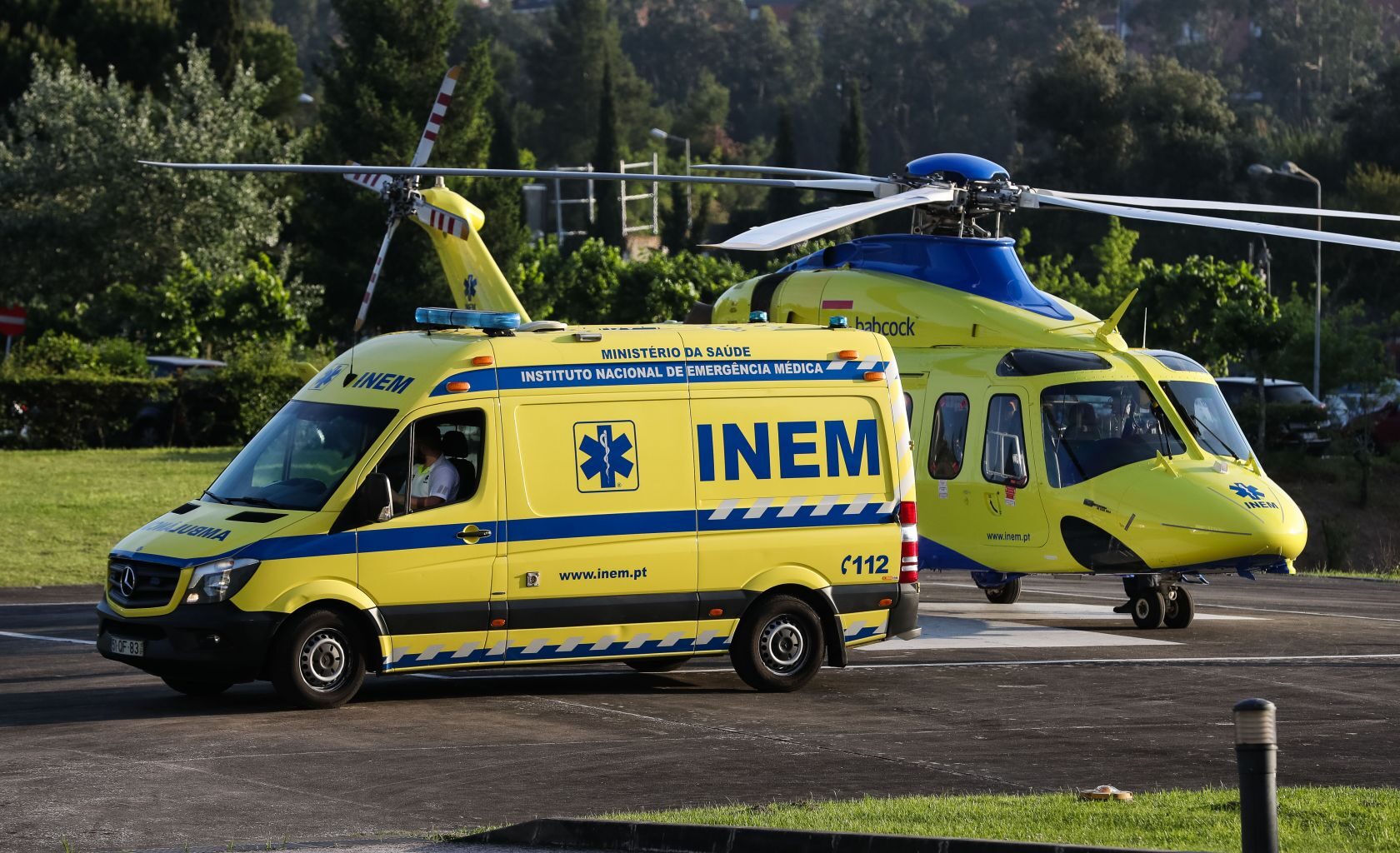
The goal is to “send the right ambulance to the right person at the right time,” the president of the National Institute of Medical Emergency (INEM) told the Lusa news agency, stressing that this new model is identical to that already applied in several countries.
In practice, five priority levels have been defined – emergent, very urgent, urgent, less urgent, and non-urgent – with the classification resulting from the clinical assessment carried out by CODU professionals, based on information collected during the call to 112.
According to Luís Mendes Cabral, from today onwards, each priority assigned to a patient will correspond to defined response times, considering that this will allow for more rigorous management of available emergency resources.
The emerging priority, for situations of imminent risk to life, implies an immediate response, with the dispatch of basic life support resources, coordinated with immediate or advanced life support.
For very urgent cases, with high clinical risk, the new system provides for the arrival of the first rescue resource on site within 18 minutes.
Urgent situations, with a risk of clinical worsening, have a response time of up to 60 minutes, with the dispatch of a basic life support resource, while less urgent situations, associated with low clinical risk, provide for the arrival of a basic life support resource on site within 120 minutes.
In priority 5, for cases considered non-urgent and which do not involve the dispatch of emergency resources, the call is immediately transferred to the SNS 24 line, which provides appropriate advice and referral.
This new system will allow INEM resources to be activated in a “much more effective and safe way,” stressed the president of the institute.
The user who calls the CODU will also be informed about the priority assigned to them, the estimated response time, and the defined referral, in a “clear commitment to transparency and managing the expectations of those who call 112,” said INEM.
In addition, if the victim shows a change in the reported signs or the appearance of a new symptom, they will also be asked to call 112 again.
“The new model also contributes to the sustainability of the Integrated Medical Emergency System, by allowing the available resources to be used more efficiently and directed to the most serious situations,” said the institute.