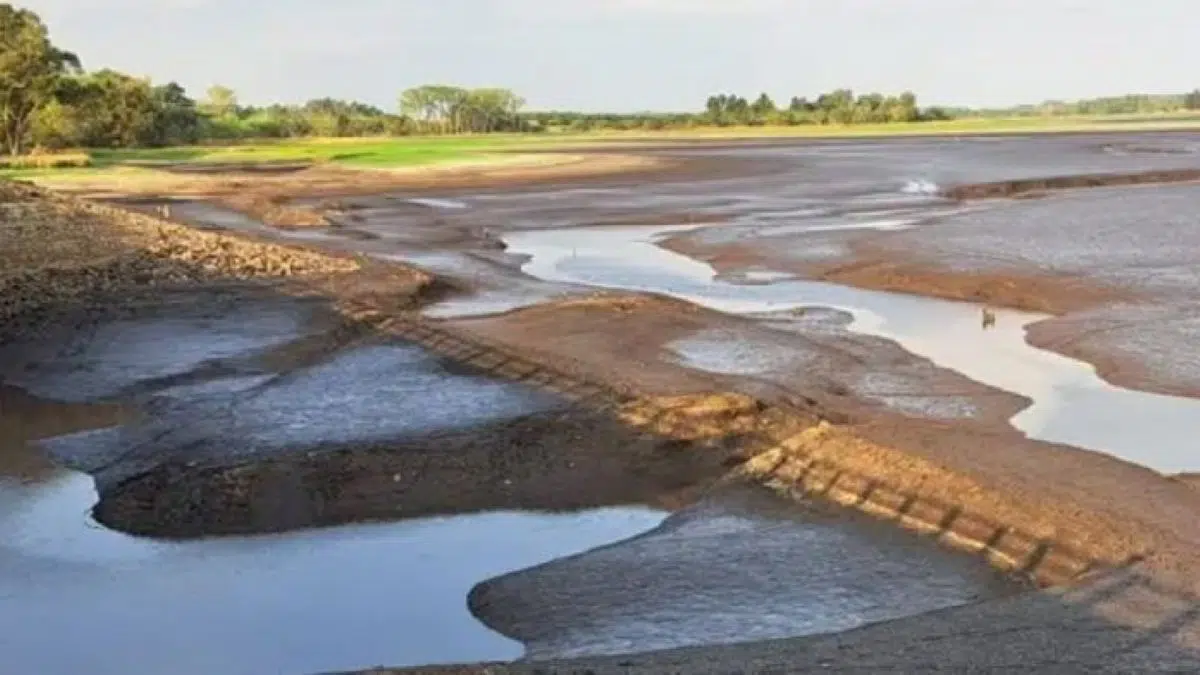
In light of the lack of rainfall projected for the beginning of 2026, the government activates emergency protocols and urges the population to rationalize the consumption of drinking water in the face of the water crisis in Uruguay.
The climatic scenario in Uruguay has raised alarms among health and meteorological authorities. Faced with a rainfall deficit that has been ongoing since the last quarter of 2025, the South American country is facing a water crisis in Uruguay that threatens the stability of supply in the most densely populated areas.
The National Administration of State Sanitary Works (OSE) has already implemented a contingency plan that includes intensive monitoring of reserves and the preparation of infrastructure support to avoid total shortages.
The water crisis in Uruguay in recent years
Projections from the Uruguayan Institute of Meteorology (Inumet) for January and February 2026 are not encouraging: rainfall totals are expected to be significantly below normal averages.
This phenomenon, exacerbated by a persistent heat wave, has led to accelerated evaporation of moisture in the soil, especially in the south of the country.

Experts like meteorologist Mario Bidegain warn that the isolated rainfall recently recorded is insufficient to reverse the critical state of the basins, which are still suffering the consequences of the historic drought experienced between 2020 and 2023.
The technical situation in key dams, such as Paso Severino —crucial for the supply of Montevideo and Canelones— is being monitored minute by minute.
Although current levels have not reached the breaking point of previous years, the lack of deep water recovery in the soil worries specialists, who estimate that up to three years of constant rain would be needed to normalize the system.
In this context, the agricultural sector has also begun to manage emergency declarations due to the deterioration of pastures and crops.
To mitigate the impact, the state water agency has requested citizen collaboration through voluntary restrictions.
It is recommended to avoid using hoses for washing facades and vehicles, optimize garden irrigation, and limit pool filling. These preventive actions aim to preserve existing reserves in the face of a quarter that, according to international forecasts, could become one of the hottest and driest on record.