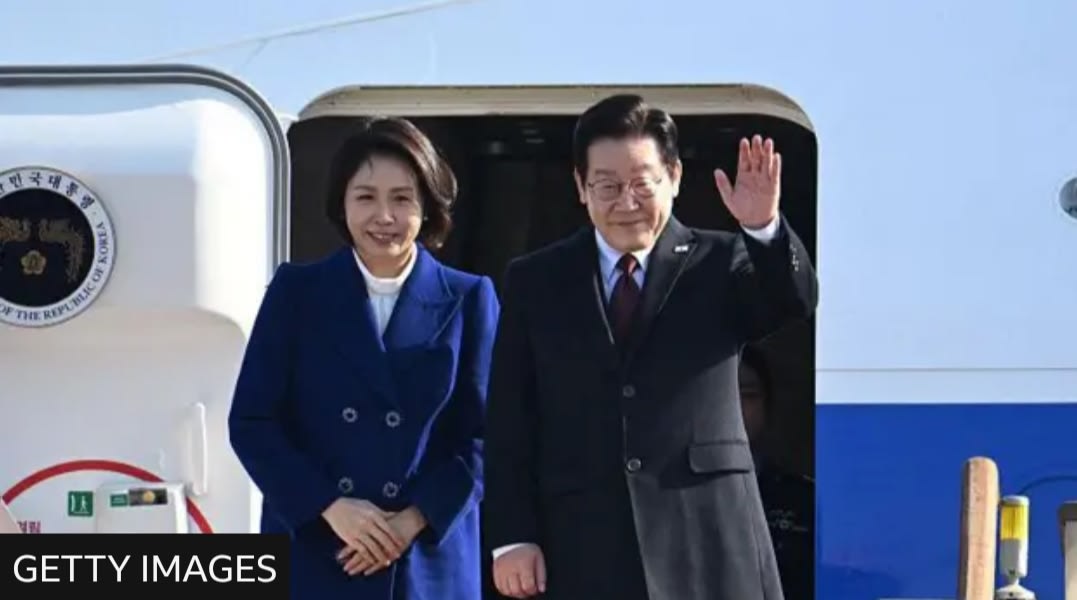
South Korean President Lee Jae Myung is set to meet Chinese President Xi Jinping, marking a potentially pivotal moment in the relationship between Seoul and Beijing. The meeting is widely viewed as an effort to reset bilateral relations after years of diplomatic strain, economic friction, and shifting regional alliances in East Asia.
As two of Asia’s most influential nations seek to recalibrate ties, the outcome of this summit could have far-reaching implications—not only for South Korea and China, but also for regional stability, global trade, and the strategic balance involving the United States.
Background: Why Relations Need a Reset
Relations between South Korea and China have cooled in recent years due to a combination of security concerns, economic competition, and geopolitical alignment. Tensions escalated over issues such as missile defense systems, trade restrictions, and South Korea’s deepening security cooperation with the United States.
China has long viewed South Korea as a critical neighbor and economic partner, while South Korea has attempted to balance its alliance with Washington against its economic dependence on Beijing. This balancing act has grown increasingly difficult amid intensifying U.S.–China rivalry.
Lee Jae Myung’s decision to meet Xi signals a recognition that sustained tension is costly—and that pragmatic engagement is necessary.
Who Is Lee Jae Myung, and What He Represents
President Lee Jae Myung has built a political reputation as a pragmatic reformer focused on economic fairness, social stability, and strategic flexibility in foreign policy. Unlike some of his predecessors, Lee has emphasized diplomacy that prioritizes national interest over ideological alignment.
His approach toward China reflects this philosophy. While reaffirming South Korea’s security alliance with the United States, Lee has made it clear that Seoul does not seek confrontation with Beijing and values constructive dialogue.
This meeting with Xi is consistent with Lee’s broader vision of positioning South Korea as a stabilizing middle power rather than a frontline state in great-power rivalry.
Xi Jinping’s Perspective on the Meeting
For President Xi Jinping, the meeting offers an opportunity to stabilize relations with a key regional partner at a time when China faces increasing diplomatic pressure from the West. Beijing has expressed concern about South Korea’s participation in U.S.-led security initiatives and technology restrictions.
China sees improved relations with Seoul as strategically valuable—both economically and politically. A reset with South Korea could help China counter narratives of regional isolation and demonstrate its commitment to diplomacy over confrontation.
Xi is expected to emphasize economic cooperation, mutual respect, and regional peace during talks.
Key Issues Likely on the Agenda
Several critical topics are expected to dominate discussions between Lee and Xi.
Economic Cooperation:
China remains South Korea’s largest trading partner, while South Korea is a major supplier of semiconductors, electronics, and industrial components. Trade disruptions and supply chain concerns have strained business confidence. Both leaders are likely to discuss restoring predictability and cooperation.
Security and Regional Stability:
North Korea remains a shared concern, though Seoul and Beijing differ on how to address Pyongyang’s nuclear ambitions. Lee may seek China’s cooperation in reducing tensions, while Xi is likely to emphasize dialogue over sanctions.
Technology and Supply Chains:
With global competition over advanced technology intensifying, South Korea finds itself under pressure from both Washington and Beijing. Lee may push for assurances that economic ties will not be politicized.
The US Factor in Seoul–Beijing Relations
Any reset of South Korea–China relations inevitably raises questions about the United States. South Korea’s alliance with Washington remains the cornerstone of its security strategy, particularly in light of North Korea’s weapons programs.
Lee Jae Myung has repeatedly stated that improving ties with China does not come at the expense of the U.S. alliance. Instead, he frames engagement with Beijing as a means of reducing risk and enhancing diplomatic flexibility.
Still, Washington will be watching closely, wary of any shift that could weaken coordinated approaches on security and technology.
Public Opinion and Domestic Politics
South Korean public opinion toward China has grown increasingly skeptical in recent years, influenced by economic disputes and cultural tensions. Lee’s diplomatic outreach may face domestic criticism if perceived as conceding too much.
However, economic realities—particularly trade dependence and export growth—make stable relations with China difficult to ignore. Lee’s challenge will be to present the meeting as a win for national interests rather than a geopolitical compromise.
In China, state media has framed the meeting positively, emphasizing shared history and mutual benefit.
What a “Reset” Really Means
A reset does not imply a return to the close partnership of previous decades. Rather, it suggests a managed relationship—one that acknowledges disagreements while preventing them from escalating into open hostility.
Analysts caution against expecting dramatic breakthroughs. Instead, success may be measured in reduced rhetoric, resumed dialogue, and incremental cooperation.
In an era of polarized global politics, even modest stabilization can be significant.
Regional and Global Implications
Improved relations between South Korea and China could contribute to greater stability in Northeast Asia. It may also ease economic uncertainty at a time when global supply chains are under strain.
For other regional players, including Japan and ASEAN countries, the meeting serves as a reminder that diplomacy remains possible—even amid rivalry.
Conclusion: A Cautious Step Toward Stability
The meeting between South Korea’s Lee Jae Myung and China’s Xi Jinping represents a cautious but meaningful effort to reset relations. While deep differences remain, the willingness to engage reflects shared recognition that confrontation benefits no one.
Whether this reset leads to lasting improvement will depend on follow-through, trust-building, and the ability to navigate external pressures. For now, the summit stands as a reminder that diplomacy, even when difficult, remains an essential tool in a rapidly changing world.
As Asia watches closely, the outcome of this meeting could shape the region’s political and economic landscape for years to come.