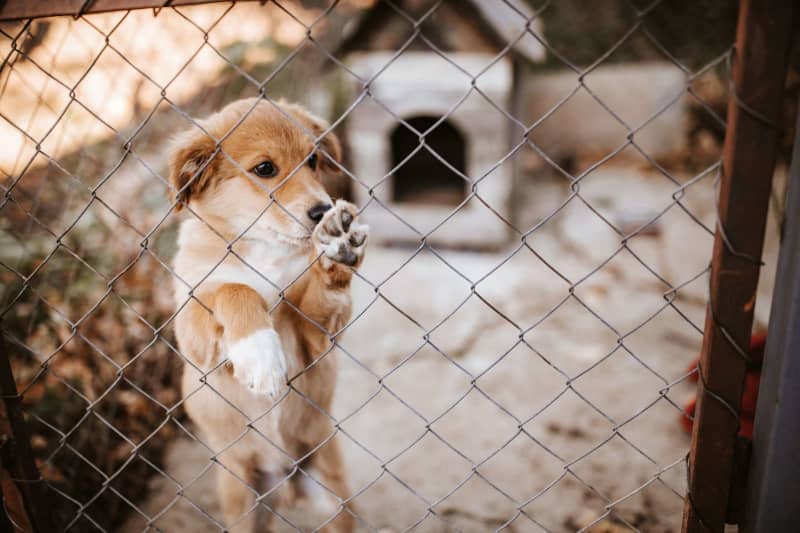
“It’s a rescue.”
That’s something you hear more and more in Germany when the proud dog owner turned saviour answers a question as to their dog’s origins.
Around 25% of the approximately 10.5 million dogs in Germany are now believed to have been imported from abroad – a realistic estimate, according to Lea Schmitz from the German Animal Welfare Association.
Lucky for the poor dogs, you might think. But for some four-legged friends, experts say, their supposed rescue means a stressful life in a flat instead of lifelong freedom – or even ending up in a shelter.
In addition, criminals have discovered the lucrative brokerage market for themselves: Dogs that are supposedly in need of help are bred specifically for this market.
One person who has observed many street dogs closely over the years and spoken to people in their environment is dog trainer Sarah Fink.
“I often find street dogs to be very happy,” she writes in her book “The Secret World of Street Dogs.”
Fink runs a dog training business and has worked with thousands of clients. In her experience, it is clear that some dogs find captivity – “and that is what it is for some dogs that have lived freely for generations” – very stressful.
Outraged residents: Someone wants to steal a dog again
Contrary to popular belief, many supposed street dogs in Greece, Bulgaria and Turkey, for example, do have permanent caregivers who look after them. Far more often than seriously emaciated dogs, you see street dogs that are overweight.
Fink has fitted street dogs in several countries with transmitter collars to learn more about their daily routines – and she repeatedly found that the street dog is not actually a stray, but has at least one permanent caregiver.
There were almost no dogs that no one actually cared for – but, conversely, there were quite a few people who reacted with suspicion or indignation to attempts to put a transmitter collar on a dog.
“Because they have often had the experience of tourists stealing or ‘rescuing’ their dogs, assuming they are street dogs,” she says.
Real street dogs often lack early socialization
In the case of a real street dog, however, a lack of early contact with humans and socialization can prove to be an insurmountable problem, as Schmitz explains. “For good socialization with humans, it is crucial that a dog has positive interactions with people, especially in the first weeks of life.”
According to experts, dogs that have not been socialized to the strictly regulated life in a human home in densely populated Germany can develop serious behavioural problems or suffer from severe stress.
Typical examples are fearful dogs that hardly allow themselves to be touched, or who snap and pull panic-stricken on the leash – which buyers often mistakenly interpret as a sign of torture, she says. This behaviour is difficult or even impossible to train out of them. In the end, many dogs that once lived freely with their pack end up spending a long time or even their entire lives in a German animal shelter.
According to data from the EU’s Trade Control and Expert System (TRACES), between 2019 and 2022, an average of almost 72,000 dogs per year were legally imported into Germany from Romania, Spain and Hungary alone. Added to this is an immense number of illegally traded dogs – according to estimates, possibly several hundred thousand per year.
Some puppies produced by criminals under terrible conditions are sold as supposed rescue dogs, says Schmitz. Social media is also often used to exert emotional pressure. Alleged animal welfare is a lucrative business, warns animal trainer Fink.
“You can make a lot of money with compassion, and the worse the pictures you show, the more attention you get.”
How can I recognize illegal suppliers?
According to the Animal Welfare Association, for years, the most common country of origin for illegally traded dogs has been Romania, with many animals also coming from Hungary and Bulgaria. In many cases, people who actually only want to help are involved in illegal transports: as so-called flight sponsors. Dogs transported by plane are booked on the flight tickets of well-meaning tourists.
“Animal welfare associations that work with such flight sponsorships are not reputable,” warns Schmitz. Caution is also advised with associations that place dogs directly for example without an animal shelter or foster home as an intermediate stop.
“If something goes wrong, it is usually not possible to return the dog.”
Buyers should also be suspicious if a supposed animal welfare organization mainly offers puppies. And, also very importantly, a reputable animal welfare organization never just brings animals out of the country, but is also involved locally, for example with neutering projects. In general, neutering projects are the most important component of animal welfare and the only thing that makes sense across the board, emphasizes Fink.
The dog trainer praises the animal welfare organization Bansko Street Dogs in Bulgaria, which does not simply place dogs abroad, but first looks for foster homes locally and tests how the dogs behave in an apartment. Schmitz cites the German animal welfare organization Tierhilfe Hoffnung, which runs the Smeura animal shelter in Romania – the largest animal shelter in the world – as a positive example. Thousands of dogs are housed there on the grounds of a former fox farm.
“I think it definitely makes sense to adopt dogs instead of buying them from breeders,” says Fink. “The important thing is to pay close attention to where you adopt the dogs from and what you are supporting in doing so.”
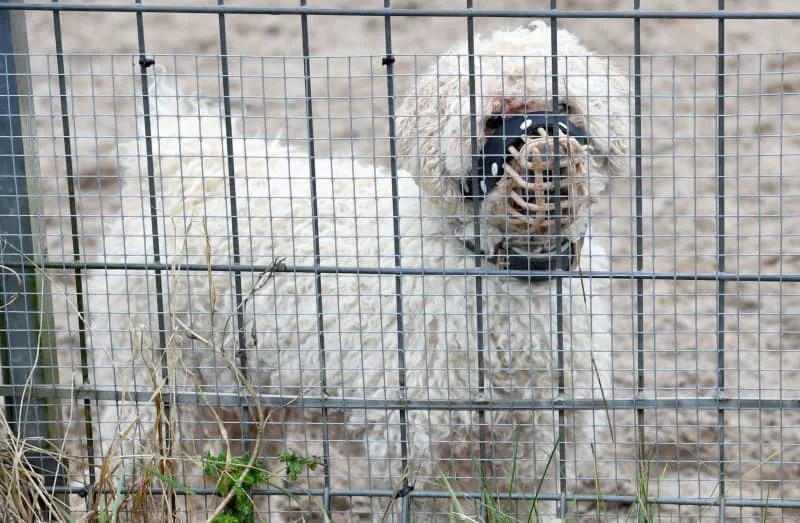
Merlin, seen here in at a dog shelter in the northern German city of Kiel, is considered a “problem dog.” Some supposedly rescued dogs end up in a shelter because they cannot adapt to life in a flat. Carsten Rehder/dpa
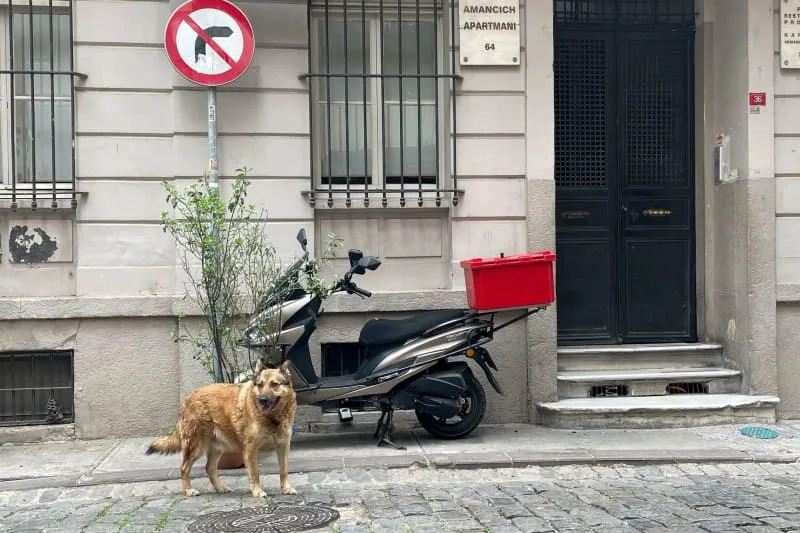
A street dog in Istanbul. Contrary to popular belief, many supposed street dogs in Greece, Bulgaria and Turkey have caregivers who look after them. Far more often than seriously emaciated dogs, you see street dogs that are overweight. Mirjam Schmitt/dpa