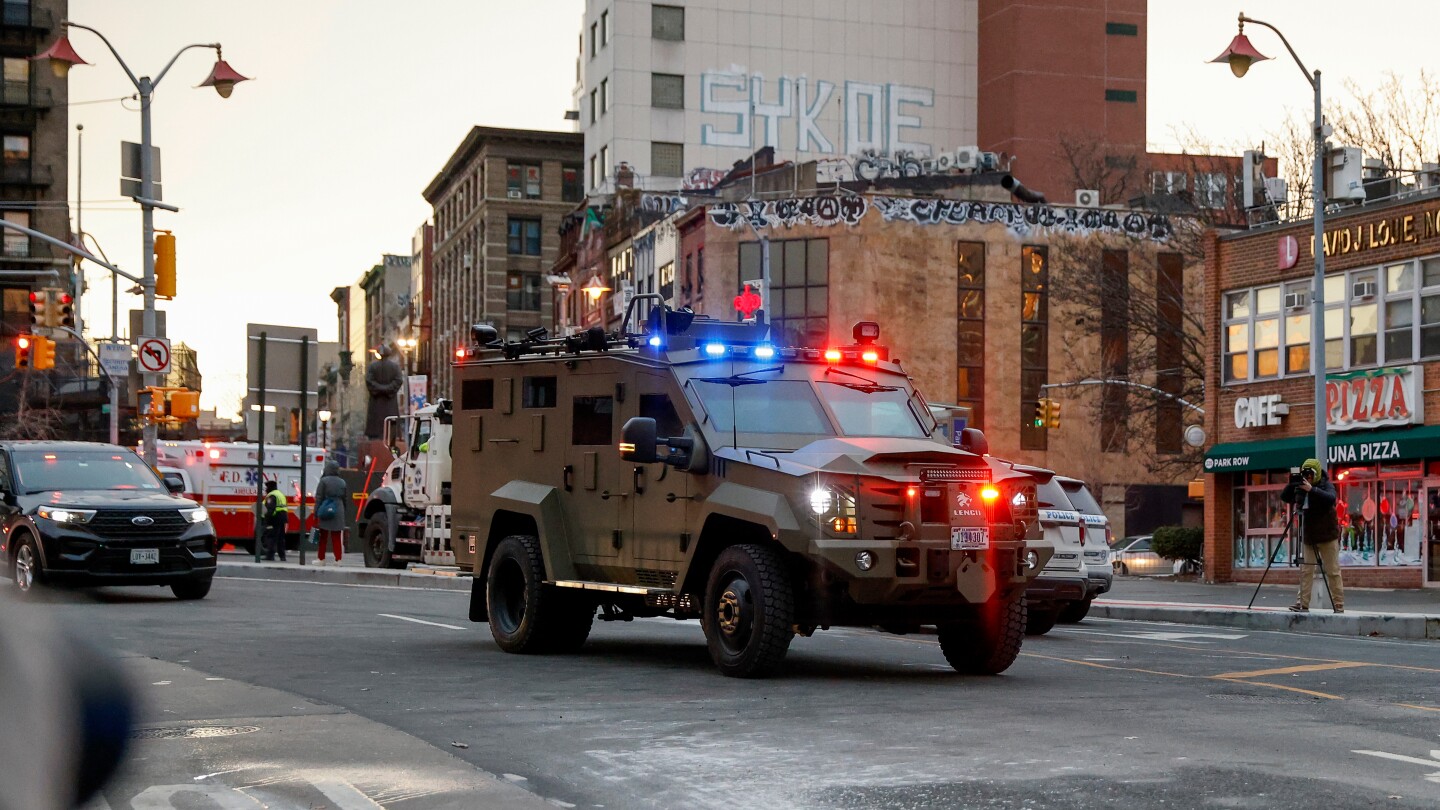
Deposed Venezuelan President Nicolás Maduro is making his first appearance Monday in an American courtroom on the narco-terrorism charges the Trump administration used to justify capturing him and bringing him to New York.
Maduro and his wife are appearing before a judge for a brief, but required, legal proceeding that will likely kick off a prolonged legal fight over whether he can be put on trial in the U.S.
His lawyers are expected to contest the legality of his arrest, arguing that he is immune from prosecution as a sovereign head of a foreign state. But the U.S. doesn’t recognize him as Venezuela’s legitimate leader.
Maduro, along with his wife, son and three others, is accused of working with drug cartels to facilitate the shipment of thousands of tons of cocaine into the U.S. They could face life in prison if convicted.
What to know:
US eyes Venezuela’s oil: Secretary of State Marco Rubio said Sunday that the U.S. would not govern Venezuela day-to-day other than enforcing an existing “oil quarantine” on the country, walking back Trump’s comment that the U.S. would “run” Venezuela temporarily. Still, Trump’s plan to seize and revitalize Venezuela’s oil industry faces major hurdles.Venezuela’s interim president wants ‘respectful relations’ with US: Venezuela’s Delcy Rodríguez, who called Maduro’s capture an “atrocity” in the hours after the operation, has now invited Trump to “collaborate with us on an agenda of cooperation.” Her conciliatory message came after Trump threatened that she could “pay a very big price” if she didn’t fall in line with U.S. demands.UN Security Council holds emergency meeting: U.N. Secretary General Antonio Guterres said he remains “deeply concerned that rules of international law have not been respected” and worried that the United States’s raid could set a precedent for how future relations between and among states are conducted. U.S. ambassador Mike Waltz defended the military action as a justified “surgical law enforcement operation.”