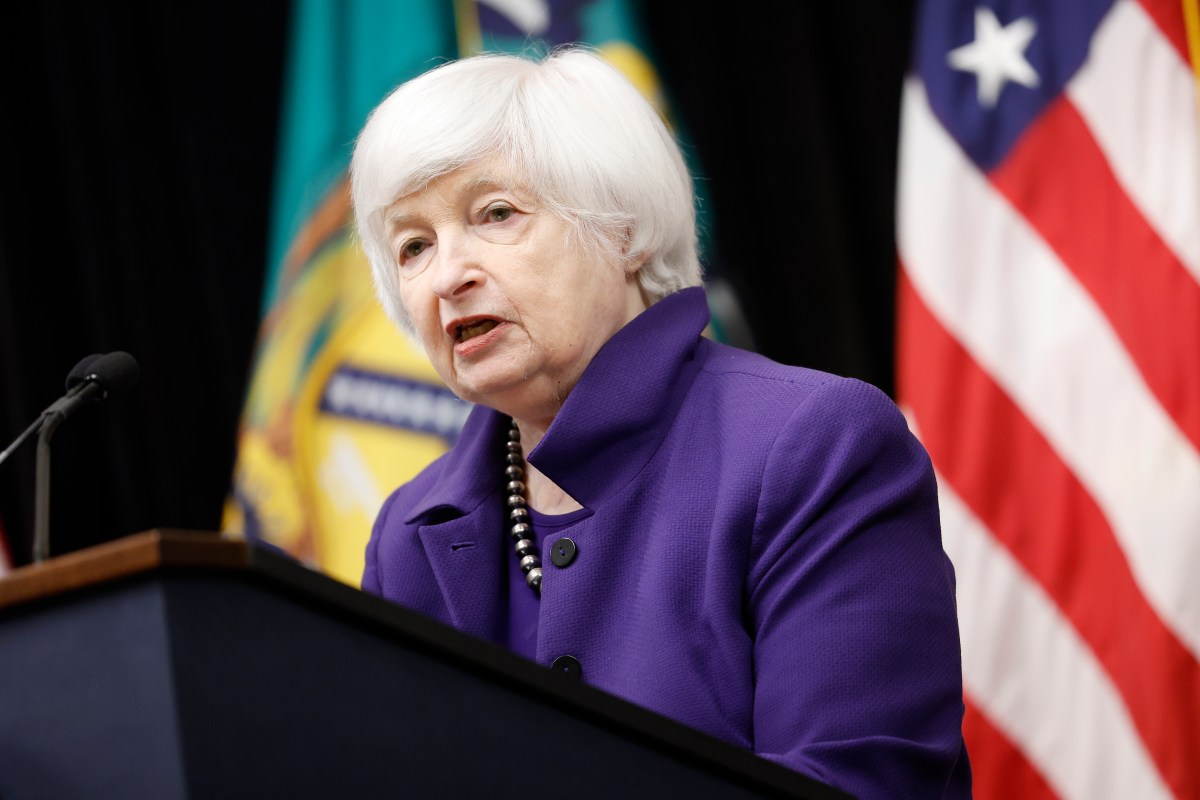
Former Federal Reserve Chair Janet Yellen warned that America’s mounting national debt could cripple policymakers and limit their ability to address the country’s other fiscal challenges.
Speaking at a panel on the “Future of the Fed” on Sunday, Yellen said that rising debt levels and political pressure had created the risk of “fiscal dominance” taking hold in the U.S.—meaning that a central bank is “pressured, implicitly or explicitly, to keep interest rates lower than warranted by macroeconomic conditions.”
“The preconditions for fiscal dominance are clearly strengthening,” said Yellen, who also served as President Joe Biden‘s Treasury Secretary, adding that such a development could hamper the Fed’s ability to fulfil its central mandates of keeping prices stable and the labor market in good shape.
Why It Matters
The issue of Fed independence, and fears that this has been undermined, emerged throughout 2025 when the central bank decided at successive meetings to keep interest rates steady despite President Donald Trump’s demand for aggressive rate cuts, which he hoped would boost the economy and lower the government’s debt-servicing costs. This resulted in a series of attacks—verbal and legal—by Trump against Fed Chair Jerome Powell, seen by some as a violation of the central bank’s long-respected autonomy from the Executive Branch.
What To Know
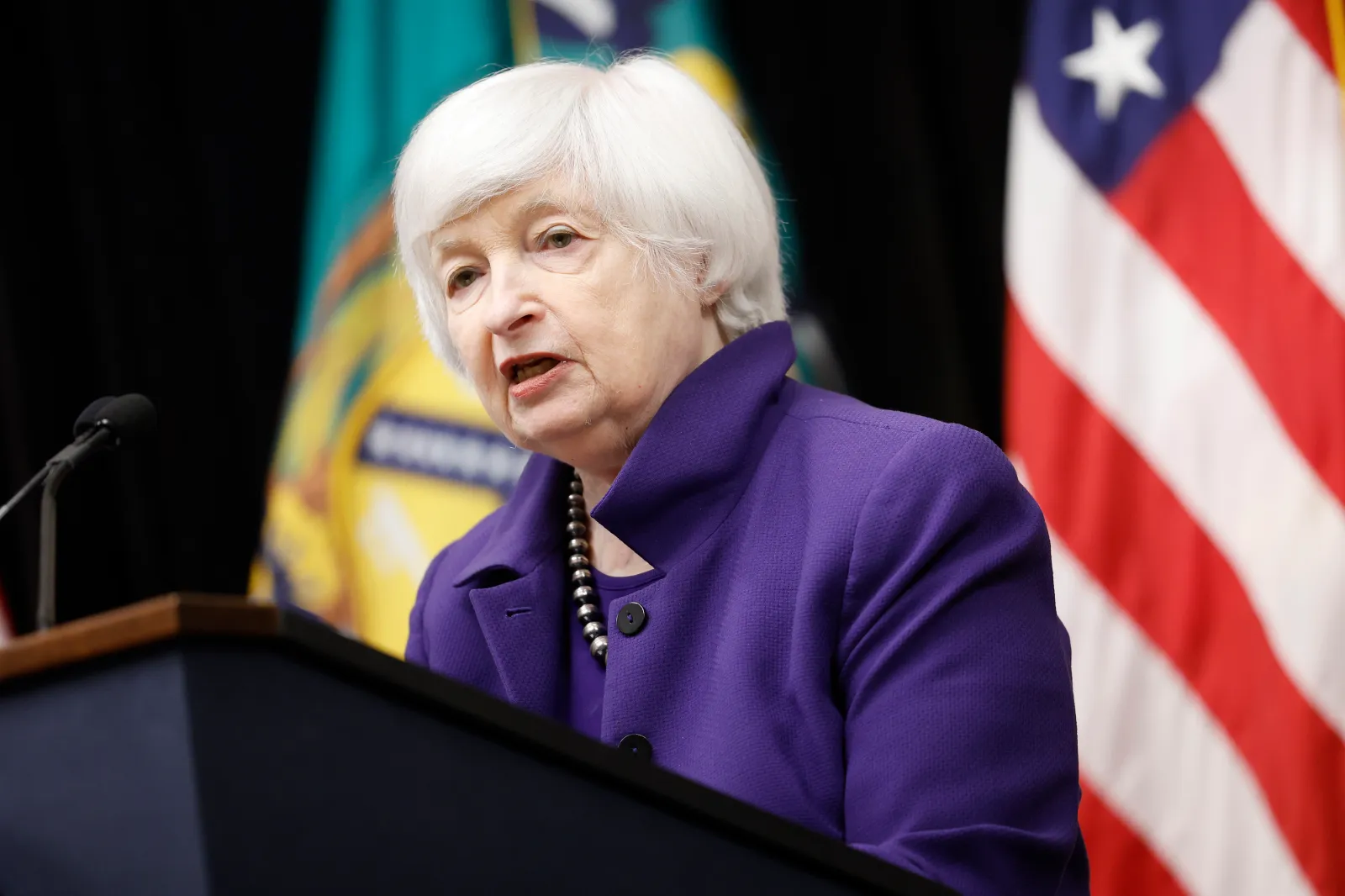
Speaking at the panel hosted by the American Economic Association, Yellen said there appeared to be little indication that the country’s rapidly growing national debt—which surpassed $38 trillion in late 2025—would slow anytime soon or that lawmakers were paying sufficient attention to the risks this poses.
She cited estimates from the Congressional Budget Office (CBO), which projected in early 2025 that the national debt could reach about $50 trillion and 118 percent of GDP within the next decade.
As a result, debt servicing costs—the funds needed to cover interest and principal repayments—are also expected to grow drastically, outstripping other forms of spending, increasing future borrowing needs, while raising the risk of a “fiscal dominance” scenario as central bank policymakers are forced to keep rates low to lighten the government’s debt burden.
But a shift toward fiscal dominance, Yellen said on Sunday, would limit the Fed’s ability to fulfill its core mandates: managing inflation and keeping the economy operating at full employment.
Autonomy to address these issues is especially central in 2026, with inflation still sitting above the Fed’s long-term target of 2 percent and the labor market contending with slow jobs growth and unemployment at a four-year high.
What People Are Saying
Janet Yellen, at the American Economic Association panel on Sunday: “Fiscal dominance is likely to raise term premiums and borrowing costs as investors become more concerned the government will rely on inflation or financial repression to manage its debt. For all of these reasons, avoiding fiscal dominance has been a central objective of modern central banking frameworks. Well, should we be concerned about the potential for fiscal dominance? In my opinion, the answer is yes.”
Moody’s Ratings, on downgrading the U.S. credit rating in May: “Successive U.S. administrations and Congress have failed to agree on measures to reverse the trend of large annual fiscal deficits and growing interest costs. We do not believe that material multi-year reductions in mandatory spending and deficits will result from current fiscal proposals under consideration. Over the next decade, we expect larger deficits as entitlement spending rises while government revenue remains broadly flat. In turn, persistent, large fiscal deficits will drive the government’s debt and interest burden higher.”
What Happens Next
After three consecutive cuts of 25 basis points, the Fed is widely expected to keep rates steady at its next meeting in late January.
Meanwhile, Trump has said he expects this month to nominate a new Fed chair, who, subject to Senate approval, will succeed Powell when his term ends in May.

The news cycle is loud. Algorithms push us to extremes. In the middle—where facts, ideas and progress live—there’s a void. At Newsweek, we fill it with fearless, fair and fiercely independent journalism.
Common ground isn’t just possible—it’s essential. Our readers reflect America’s diversity, united by a desire for thoughtful, unbiased news. Independent ratings confirm our approach: NewsGuard gives us 100/100 for reliability, and AllSides places us firmly in the political center.
In a polarized era, the center is dismissed as bland. Ours is different: The Courageous Center—it’s not “both sides,” it’s sharp, challenging and alive with ideas. We follow facts, not factions. If that sounds like the kind of journalism you want to see thrive, we need you.
When you become a Newsweek Member, you support a mission to keep the center strong and vibrant. Members enjoy:
Conventional Wisdom: Tracking political winds with clarity. Uncommon Knowledge: Deep dives into overlooked truths. Ad-free browsing and exclusive editor conversations.
Help keep the center courageous. Join today.
