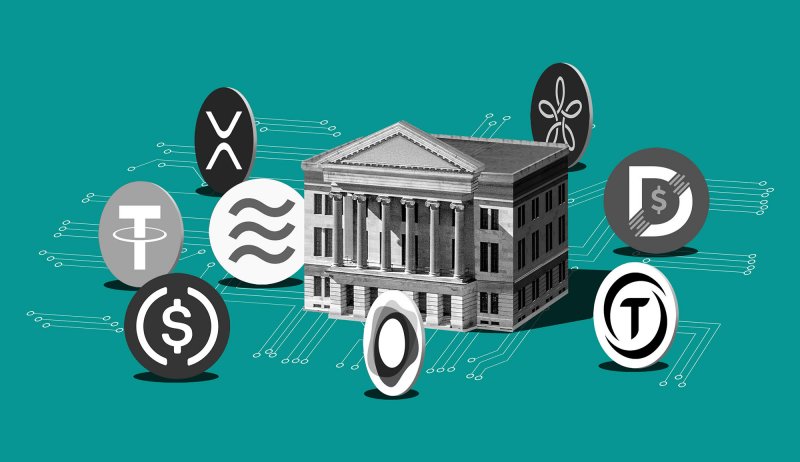
In 2026, money is no longer simply coins, banknotes, or balances in a commercial bank account. It is increasingly digital, programmable, and decentralized — or, in some cases, more centralized than ever before, News.az reports.
Around the world, governments, regulators, technology firms, and financial innovators are shaping a new monetary era defined by two powerful forces: central bank digital currencies (CBDCs) and cryptocurrencies.
One represents the ultimate institutional approach — sovereign digital money issued and controlled by a nation’s central bank. The other emerged from a grassroots movement for decentralized finance, where blockchain-based currencies operate independently of government control. Together, they are reshaping how people pay, save, invest, store value, and interact with financial systems.
In 2026, the competition between CBDCs and cryptocurrencies is less about technology superiority and more about trust, control, stability, innovation, and inclusion. The outcome will influence the structure of the global financial system for decades.
CBDCs: digital cash backed by the state
Central bank digital currencies are the digital form of sovereign money. Unlike bank deposits, which are liabilities of commercial banks, CBDCs are direct liabilities of a central bank — the same institution that issues physical currency. This gives them a unique status as risk-free legal tender, guaranteed by the state.
CBDCs are being developed for multiple reasons. Central banks seek to modernize payment systems, enhance financial inclusion, reduce the cost of transactions, and maintain control over monetary sovereignty as cash usage declines. In some countries, CBDCs are also seen as a way to improve the transparency of financial flows and reduce reliance on foreign currency-dominated payment networks.
By 2026, many nations are running pilots or partial rollouts. The design varies widely: some CBDCs are account-based, others token-based. Some operate through commercial banks as intermediaries, while others allow individuals to hold digital wallets directly with the central bank.
Supporters say CBDCs could accelerate payment innovation, strengthen financial stability, and provide a safer alternative to volatile cryptocurrencies. Critics warn of surveillance risks, technical vulnerabilities, and the possibility that CBDCs could displace the role of banks.
What remains clear is that CBDCs have moved from theoretical discussions into active policy development — becoming one of the most significant monetary innovations in modern history.
Cryptocurrencies: decentralized finance matures
Cryptocurrencies began as an experiment in open, decentralized money, built on blockchain technology. Unlike CBDCs, they are not backed by any state or central authority. Their value is determined by market demand and network adoption.
In 2026, cryptocurrency markets are broad and diverse. Major assets with deep liquidity coexist with thousands of smaller tokens, decentralized finance platforms, and blockchain-based financial instruments. Cryptocurrencies are used for investment, remittances, online commerce, cross-border transfers, and as speculative assets.
Over the past decade, the sector has evolved. Institutional investors participate alongside retail users. Custody services, compliance frameworks, and regulated exchanges have made crypto more accessible. At the same time, volatility remains a defining feature, and regulatory scrutiny continues to shape the industry’s direction.
The core attraction of cryptocurrencies remains unchanged: financial sovereignty, censorship resistance, and open access to global payment networks without traditional intermediaries. For some users, particularly in economies with unstable currencies or capital controls, crypto represents a tool for wealth preservation and financial independence.
Yet these benefits come with risks. Price swings can erode value quickly. Security breaches and scams remain a concern. And uncertainty over regulatory treatment complicates mainstream adoption. As 2026 progresses, both promise and peril continue to define the cryptocurrency landscape.
Two visions of digital money: control vs decentralization
CBDCs and cryptocurrencies reflect fundamentally different philosophies.
CBDCs are centralized by design. The issuing authority — the central bank — retains full control over supply, distribution, and oversight. This allows monetary policy integration, anti-fraud measures, and system stability. It also means users must trust the state to safeguard privacy and prevent misuse of power.
Cryptocurrencies, by contrast, distribute control across a network. No single authority can alter the ledger or dictate policy. Rules are embedded in code and consensus mechanisms. This creates resilience and censorship resistance, but also limits the ability to coordinate intervention during crises.
In 2026, this philosophical divide has become a key societal debate. Some argue that money is a public good that must remain tied to sovereign institutions. Others believe financial freedom and innovation require systems beyond government authority.
The competition is not merely technological — it is about who defines value, who controls systems of exchange, and how power is distributed in the global economy.
Payments revolution: speed, cost, and accessibility
One of the most visible impacts of digital money is in payments. CBDCs promise instant settlement, even across borders, with lower transaction fees than traditional banking systems. They can reduce reliance on correspondent banking networks and streamline government disbursements such as social welfare payments.
Cryptocurrencies also enable fast global transfers, often bypassing traditional financial rails. For migrant workers sending remittances, crypto alternatives can be cheaper than conventional remittance providers. Stablecoins — digital tokens pegged to fiat currencies — have further expanded crypto-based payment ecosystems.
However, payments infrastructure remains uneven. CBDCs require secure, resilient national systems and widespread wallet adoption. Crypto transactions depend on blockchain networks that can experience congestion or high fees during peak activity. Usability, education, and trust remain barriers.
The future likely lies in hybrid ecosystems, where CBDCs, bank accounts, mobile wallets, and crypto platforms coexist — each addressing different user needs.
Financial inclusion: opportunity and challenge
Advocates of CBDCs argue that digital sovereign money can support financial inclusion, particularly for unbanked populations. A CBDC wallet could allow citizens to receive payments, store value, and participate in the formal economy without needing a traditional bank account.
Cryptocurrencies offer another path to inclusion by enabling open, borderless financial participation. Anyone with internet access can hold, send, or receive digital assets.
Yet inclusion depends on more than access. Digital literacy, device availability, trust in institutions, and regulatory clarity all play roles. Without thoughtful design, digital systems risk excluding marginalized communities or exposing them to new vulnerabilities.
In 2026, policymakers are increasingly focused on blending innovation with social protection — ensuring that digital money strengthens, rather than fractures, financial equality.
Privacy and surveillance: the most sensitive fault line
Perhaps the most controversial aspect of CBDCs is the potential impact on privacy. Depending on design choices, CBDC transactions could be traceable by central authorities. Supporters argue this helps combat crime and tax evasion. Critics fear that it could enable unprecedented financial surveillance, undermining civil liberties.
Cryptocurrencies, meanwhile, offer varying levels of transparency. Many blockchain networks are publicly traceable, though pseudonymous. Others are designed to increase privacy protections. This has prompted debates about striking the right balance between privacy rights and law enforcement capabilities.
In 2026, societies are still negotiating these boundaries. The outcome will shape not only the future of money, but also the relationship between citizens and the state in the digital age.
Regulation: defining the rules of the new financial world
Regulation plays a pivotal role in the contest between CBDCs and cryptocurrencies. Governments seek to protect consumers, safeguard financial stability, prevent illicit finance, and maintain control over monetary systems.
CBDCs, as sovereign initiatives, are naturally embedded in regulatory frameworks. Cryptocurrencies, however, operate across borders, often beyond conventional legal structures. This creates complex jurisdictional challenges. Regulations vary widely, from permissive environments to strict bans.
In 2026, the regulatory landscape is maturing. Many countries are introducing licensing regimes, tax reporting requirements, stablecoin oversight, and investor protection measures. At the same time, innovation-friendly jurisdictions continue to attract crypto entrepreneurs.
The long-term impact of regulation will depend on balance. Rules that are too strict risk stifling innovation. Rules that are too loose risk market instability and consumer harm.
Monetary policy in a digital age
CBDCs could fundamentally change how central banks conduct monetary policy. In theory, digital sovereign money could enable more direct transmission of policy measures, such as targeted stimulus or negative interest rates applied at the individual level.
Cryptocurrencies, by contrast, exist outside traditional monetary systems. Their supply is often governed by algorithmic rules rather than central decision-making. Some analysts believe large-scale crypto adoption could erode monetary sovereignty by reducing the role of national currencies.
By 2026, central banks are carefully studying these dynamics. The key challenge is preserving economic stability while embracing innovation.
Cross-border competition and currency geopolitics
Digital money is also reshaping international power relations. CBDCs could challenge the dominance of established reserve currencies by enabling faster, cheaper cross-border transactions. Regional digital currency alliances may emerge, influencing trade patterns and financial integration.
Cryptocurrencies introduce another competitive layer — a form of stateless money that operates beyond geopolitical influence. For some users, this independence is attractive. For governments, it raises questions about capital control, taxation, and systemic risk.
As global finance becomes more digitized, the balance between cooperation and competition will define the next chapter in monetary geopolitics.
What everyday life looks like in 2026
For ordinary people, the shift toward digital money is already visible. Cash usage is declining in many regions. Mobile wallets are increasingly standard. Online payments are instant and seamless. In some cities, public transport, retail purchases, and government services accept digital wallets linked to CBDCs or bank systems.
At the same time, cryptocurrency remains part of daily financial life for many users — whether as an investment, a hedge against inflation, or a payment tool. Younger generations, in particular, are growing up in an environment where money is purely digital and often programmable.
The familiar boundaries between banks, fintechs, central banks, and decentralized protocols are blurring.
The likely future: coexistence, not replacement
Despite frequent debate about whether CBDCs will “replace” cryptocurrencies or vice versa, the more realistic future is coexistence. Each addresses different needs.
CBDCs provide stability, state backing, and integration with existing financial systems. Cryptocurrencies offer openness, innovation, and alternative financial models. Stablecoins bridge elements of both worlds.
The ultimate winners will be users — if systems are designed responsibly, inclusively, and securely.
A defining transition for the global economy
As 2026 unfolds, the future of money is still being written. Central banks are experimenting with new forms of sovereign digital currency. Crypto developers continue to push the boundaries of decentralized finance. Regulators are working to define guardrails while preserving innovation.
This is more than a technological transition. It is a re-examination of what money means, who controls it, how it flows, and how societies balance freedom with security.
The decisions made today will shape financial stability, economic opportunity, and citizen-state relationships for generations. The digital age has finally reached the heart of the monetary system — and the outcome will define the future of global finance.