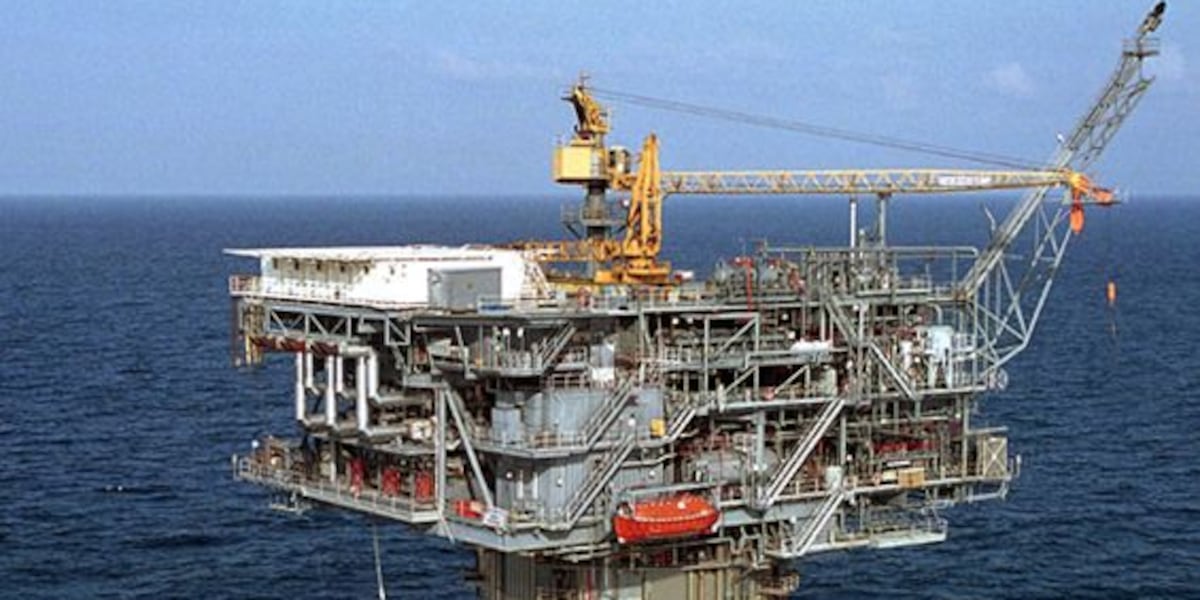
NEW ORLEANS (WVUE) — If Venezuela begins producing significantly more oil following the U.S. capture of its disputed president Nicolas Maduro, the impact on Louisiana could be mixed.
The oil and gas industry in Louisiana is big business, employing hundreds of thousands.
“Louisiana has 15 refineries — that’s almost one-sixth of the nation’s refining capacity, second only to Texas,” said Tommy Faucheux, president of the Louisiana Mid-Continent Oil and Gas Association.
“Louisiana employs more than 306,000 people as part of the larger energy industry. Louisiana’s energy industry accounts for roughly 25 percent of Louisiana’s overall economy.”
To some in the industry, oil prices still are not as high as they would like.
“It’s kind of a mixed bag, you know? The oil prices are not great,” said Mike Moncla, president of the Louisiana Oil and Gas Association.
Louisiana refineries use heavy crude, the type of oil that Venezuela has in abundance.
“We were constantly running short of crude, and Venezuela was close and the crude was cheap,” said professor Eric Smith, associate director of Tulane University’s Energy Institute.
Members of ‘Citgo 6′ imprisoned by Venezuela rejoice over removal of Nicolas Maduro
But the relationship between Venezuela and the U.S. soured under the socialist regimes of Hugo Chavez and his chosen successor, Maduro.
“Chavez comes along in the early ’90s, and that all goes away,” Smith said.
President Donald Trump, in announcing Saturday (Jan. 3) that the U.S. had captured Maduro to prosecute him for alleged narco-terrorism crimes, said large U.S. oil companies will spend billions to invest in Venezuela’s “broken” oil infrastructure.
But not everyone agrees that will happen or happen quickly.
“I don’t think there’s going to be a lot of American interest in putting in onshore infrastructure, until they know what the long-term prospects are for the country,” Smith said.
Moncla said he thinks oil companies will want signs of a more stable environment before investing in Venezuela.
“The big risk there has always been is nationalization of your equipment,” he said. “You get over there, and next thing you know, they take over all your equipment. They’ve done that before, so it would have to have some nice language in (diplomatic agreements and contracts) — some I’s dotted and some T’s crossed — by our federal government for companies to want to go in there.”
Faucheux said, “I think companies will make investments where they feel like they have the opportunity to have a return and to continue to be successful in business. Companies invest where they have some predictability and stability.”
More oil produced by Venezuela could drive down prices at the gas pump, but also impact oil prices in a negative way for Louisiana.
“It would be good for the consumer,” Moncla said. “As far as the upstream oil and gas part of it, low prices is not what we’re looking for. We’d rather have a more profitable commodity number than lower oil prices.”
Faucheux says Louisiana refineries continue to perform well, even with crude oil prices around $58 per barrel on Monday.
“It is a global commodity. The more supply you have around the globe, the lower oil prices go,” Faucheux said. “Now, in Louisiana, we benefit from an upstream industry in the Gulf of America where we produce a lot of oil. But in Louisiana, we also benefit from refineries that are healthy and do well.”
See a spelling or grammar error in our story? Click Here to report it. Please include the headline.
Subscribe to the Fox 8 YouTube channel.
Copyright 2026 WVUE. All rights reserved.