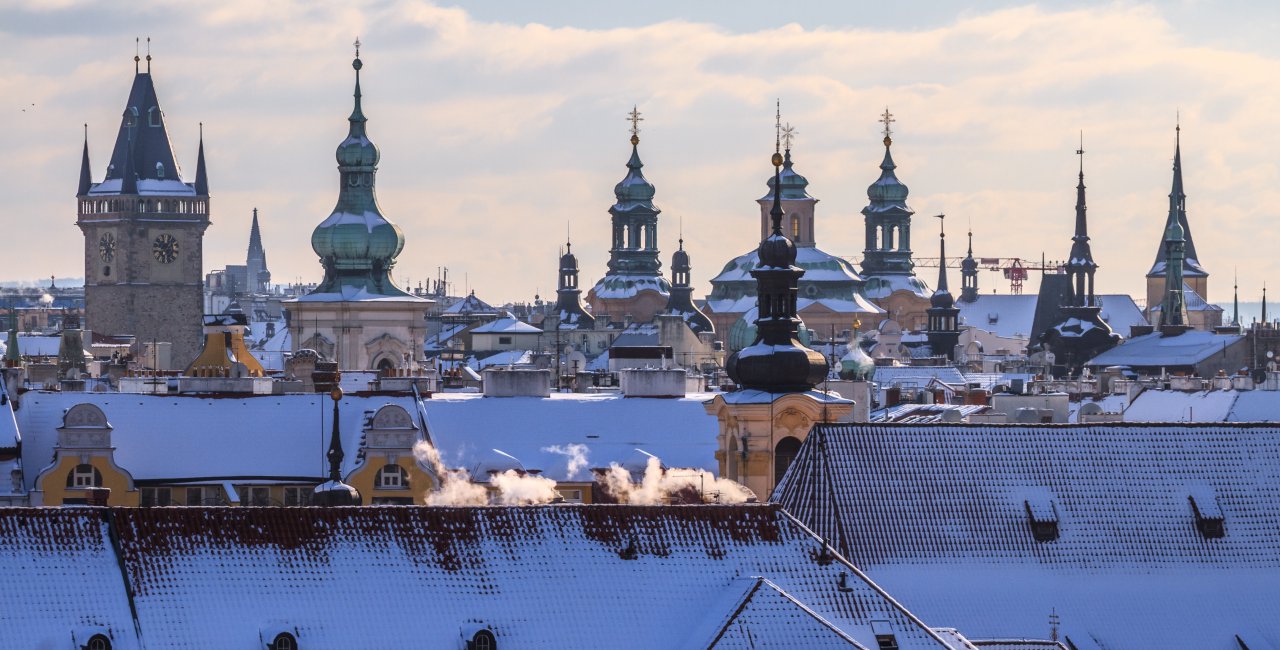
If you thought your morning commute in Prague was feeling a bit more Arctic than usual, you aren’t imagining it. A major disruption of the polar vortex has turned Czechia into one of the coldest spots on the planet this week.
While Scandinavia remains the coldest region in Europe (with Sweden hitting a staggering -40.8°C), the Czechia is currently holding the title for the coldest temperatures in Central Europe.

From the frost basins of the Jizera Mountains to the cobblestones of Old Town, the country is currently enduring temperatures nearly 15°C below the long-term seasonal normal. Here’s a breakdown of the deep freeze and what to expect for the rest of the week.
Record cold
Travel Warning: Salt Stops Working
For those planning to head to the mountains for skiing or hiking, road authorities are urging extreme caution. Once temperatures drop below -10°C, traditional road salt loses its effectiveness.
In the Liberec and Jizera regions, road crews have switched to spreading gravel and sand. High-altitude routes, such as the road from Mníšek to Raspenava, are currently closed to heavy trucks due to the risk of getting stuck on icy, narrow bends.
The Continental Contrast
Czechia is currently one of the coldest regions on the map, outchilled only by the remote reaches of Scandinavia. The current weather map of Europe looks like a tale of two seasons. While Czechs are layering up, parts of the Balkans are experiencing an unseasonal “autumn” with temperatures in Greece reaching 20°C, even at night.
When will it end?
The refrigeration of the country is expected to last until Thursday. By Friday, a low-pressure system from the Atlantic is expected to move in. While this will bring slightly warmer air, it also brings the first major forecast for heavy snow across the country.
Sources: Czech Hydrometeorological Institute (CHMI), Windy.com, ECMWF Weather Models.