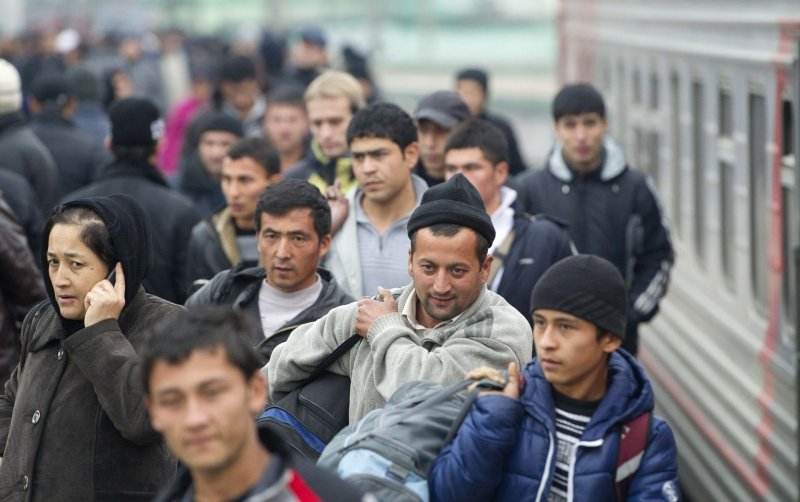
Photo: Sputnik Uzbekistan
Saudi Arabia’s decision to accept at least 20,000 labor migrants from Uzbekistan is more than just another bilateral employment agreement. It is a clear signal of deeper structural changes unfolding across the Eurasian labor market. These shifts increasingly indicate that the migration model in which Russia served as the central hub for decades is steadily losing relevance.
Formally, the development stems from agreements reached during a meeting between Uzbekistan’s Minister for Poverty Reduction and Employment Batir Zakhidov and Saudi Arabia’s ambassador to Tashkent, Yousuf bin Saleh Al-Otaibi. The arrangements envisage “legal, safe, and transparent employment” for Uzbek citizens, particularly in the medical and social sectors. Saudi employers are expected to provide work visas, official labor contracts, housing, and health insurance, with applications set to open in the coming weeks.
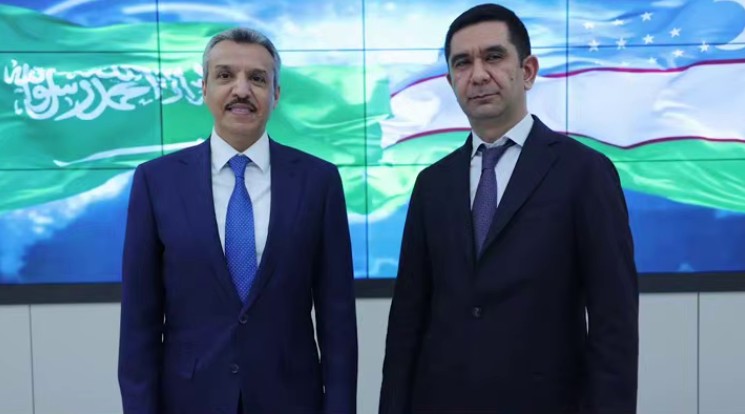
Photo: Ministry of Poverty Reduction and Employment
Yet behind these formalities lies a far more consequential process. Uzbekistan, along with other Central Asian states, is gradually reducing its dependence on the Russian labor market. About 10 to 15 years ago, Russia had virtually no competitors as a destination for migrant workers from the region. According to international financial institutions, between three and four million Central Asian migrants lived and worked in Russia prior to the pandemic, including more than 1.5 million Uzbek citizens. Remittances from Russia accounted for a substantial share of household incomes and played a meaningful role in regional economies.
That model is now unraveling, largely due to Russia’s own policy choices. Tighter migration legislation, expanded grounds for deportation, mandatory language and history exams, frequent police raids, and a growing atmosphere of administrative pressure have turned labor migration to Russia into a high-risk endeavor. In recent years, the number of entry bans and administrative cases against foreign nationals has reached record levels, reinforcing a sense of insecurity among migrant communities.
Against this backdrop, Moscow’s growing reliance on migrant labor from India looks particularly revealing. Russian officials openly discuss plans to bring in hundreds of thousands of Indian workers while imposing no requirements for Russian-language proficiency or knowledge of Russian history — conditions strictly enforced for migrants from Central Asia and the Caucasus. This selective approach resembles not a carefully calibrated labor strategy but a discriminatory practice that undermines Russia’s credibility as a reliable partner.
Tragic incidents only deepen this erosion of trust. In early January 2026, Tashkent sent official diplomatic notes to Russian authorities following the death of an Uzbek citizen after a security raid in Khabarovsk. The incident dates back to December 12, when special forces stormed a café, beat several Uzbek nationals, and left one of them in a coma; he later died. Reports indicate that another victim remains in critical condition. Uzbekistan’s consulate demanded a thorough investigation, highlighting growing concern over the safety of its citizens in Russia.
For labor-exporting countries, such cases send a clear message: the old migration model no longer guarantees either economic benefits or basic security for their nationals. Under these circumstances, seeking alternatives becomes not a matter of preference but a strategic necessity.
This is where the Middle Eastern vector — above all, the Gulf states — comes into sharper focus. Saudi Arabia, implementing its ambitious Vision 2030 transformation agenda, requires large numbers of workers across multiple sectors, from health care and social services to engineering and technical professions. Foreign labor already accounts for more than 40 percent of the kingdom’s workforce, a figure expected to grow as development projects accelerate.

Source: Kun.Uz
What distinguishes the Gulf approach is its pragmatism. These states are not seeking an uncontrolled influx of cheap labor but rather a managed, skills-oriented migration model with clear rules and long-term planning. Uzbekistan’s proposal to establish training centers tailored to Saudi requirements reflects this logic. For Tashkent, it represents an opportunity to rethink the philosophy of labor migration itself — moving away from exporting unskilled labor toward supplying trained specialists.
For migrants, the implications are significant: legal employment, higher incomes, and greater social protection. For Central Asian governments, diversification of labor destinations reduces vulnerability to policy shocks in any single market. Uzbekistan has already begun expanding the geography of its labor migration, with the Middle East and parts of East Asia playing an increasingly prominent role.
Russia, meanwhile, is voluntarily relinquishing its long-standing position as a migration hub. The consequences extend far beyond the immediate loss of migrant labor. Moscow is forfeiting economic interdependence with neighboring states, weakening long-established human networks, and eroding its reputation as a predictable actor in Eurasia. Reduced migration flows are likely to push up costs in construction, utilities, transport, and services, fueling inflation and delaying infrastructure projects. Russia’s demographic challenges make it unrealistic to replace this labor shortfall with domestic resources in the medium term.
Even more damaging is the loss of soft power. For decades, labor migration functioned as a channel of social and economic integration between Russia and Central Asia, reinforcing interpersonal ties and mutual dependence. By alienating migrants through administrative pressure and selective discrimination, Russia is dismantling this mechanism itself, creating space for competitors ranging from Gulf states to China and Southeast Asia. Once migrants gain legal experience, higher wages, and social guarantees elsewhere, convincing them to return to Russia may prove exceedingly difficult, even if demand resurges.
In this sense, the shrinking migrant presence in Russia does not signal declining demand for Central Asian labor. On the contrary, the global labor market is opening new directions and opportunities. The Saudi–Uzbek partnership illustrates a broader trend toward diversified, professionalized labor mobility.
Russia, however, risks emerging as the clear loser — not because migrants are leaving, but because its own policies are ensuring they no longer wish to come back.
By Tural Heybatov