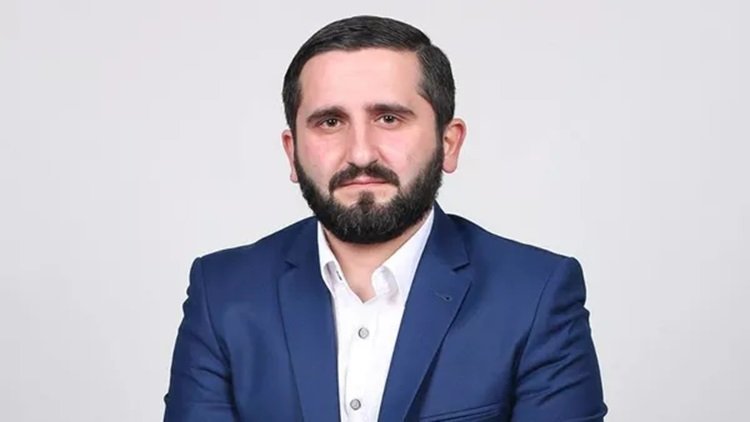
Interview with News.Az by Georgian analyst and Iran expert Vasili Papava.
— Protests in Iran are escalating and have spread to 78 cities across 26 provinces. Initially sparked by economic demands, the protests now include political slogans. Demonstrators are calling for the overthrow of the country’s Supreme Leader Ayatollah Ali Khamenei and a revision of state policy. What are your forecasts for the further development of events?
— As of January 6, 2026, the situation in Iran remains tense, but certain patterns are emerging that allow for a balanced perspective. Despite the scale of demonstrations across dozens of cities, the state system retains significant resilience.
Authorities appear to have adopted a strategy combining economic promises with control measures. President Masoud Pezeshkian has already expressed willingness to engage in dialogue on pricing issues, discussing subsidy reforms and salary increases. The government hopes that direct financial support to the population will help calm the “streets” and bring merchants back to work. If these measures achieve even a short-term stabilization of basic commodity prices, the intensity of protests could decrease significantly.
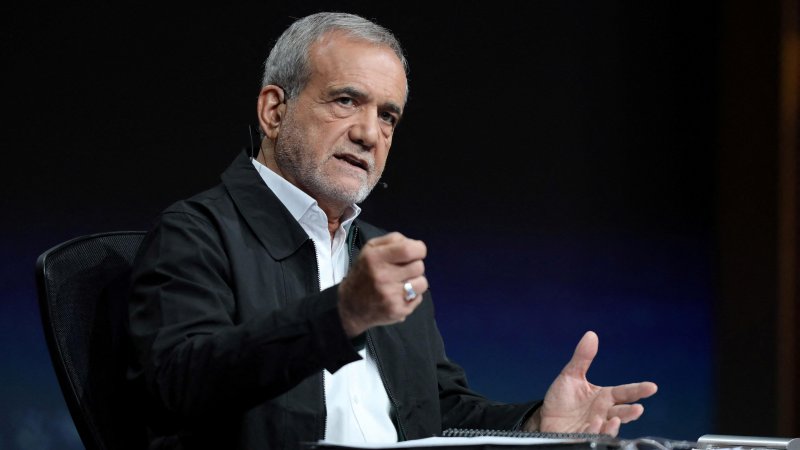
Photo: Reuters
At the same time, security forces, including the IRGC and the police, show unity. Unlike radical historical scenarios, there are currently no signs that army units or law enforcement agencies are ready to side with the protesters. For many government officials and loyal segments of the population, maintaining order is a priority, and the system of the Basij militia allows localizing unrest in the provinces.
The factor of national unity should also be considered. Iranian society traditionally views external pressure with caution. The authorities’ rhetoric about defending sovereignty from foreign interference resonates with some citizens who, while dissatisfied with the economy, still fear destabilization orchestrated from abroad.
In the near term, the most likely scenario seems to be a gradual transition of protests into a stage of “smoldering” discontent. Large-scale demonstrations will probably start to subside during January as authorities introduce subsidized goods to the market and tighten control over currency operations. However, if the rial continues to fall, social pressure may rise again, requiring even more decisive economic measures from the leadership.
At present, the system demonstrates an ability to adapt to crises using a flexible combination of social promises and security measures.
— In your view, could external forces be behind these protests?
— The question of external influence is one of the most complex in the current agenda. Objectively, the situation intertwines genuine internal problems with active external informational support.
Iranian authorities, including President Pezeshkian and Supreme Leader Ayatollah Khamenei, officially speak of the “hand of the enemy.” In their rhetoric, protests are divided into two categories: legitimate economic grievances from merchants and “unrest” inspired by the intelligence services of the U.S. and Israel. For the leadership, this is not mere rhetoric — it is a way to consolidate loyal citizens in the face of an external threat, appealing to the defense of sovereignty.
Looking at the facts supporting this view, public support for the protesters is notable. U.S. President Donald Trump made several harshly-worded statements in early January 2026 about readiness to “step in” if violence escalates.
Additionally, Israeli media outlets have called on citizens in Farsi to continue the protests. For Iranian intelligence, such rhetoric appears as direct interference and an element of “hybrid warfare” aimed at destabilizing the system.
From Tehran’s perspective, the economic crisis itself is not accidental but a result of a maximum-pressure policy. The record fall of the Iranian rial and sanctions are seen by the leadership as externally created conditions for social unrest. In this context, any internal protests are viewed as a logical continuation of external pressure on the Iranian state.
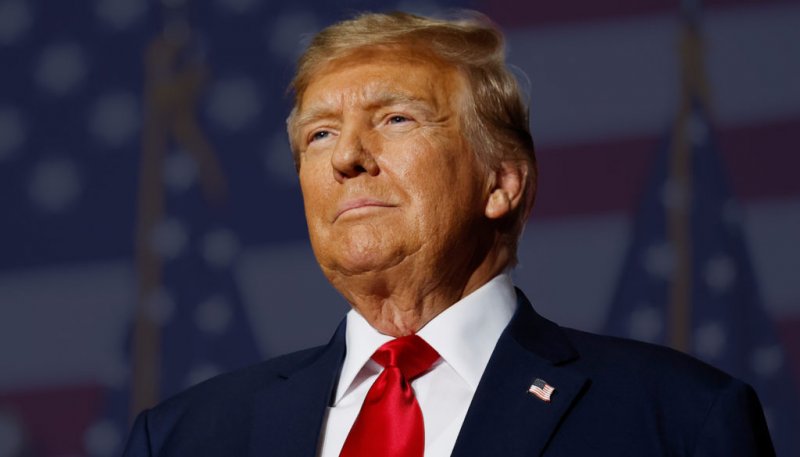
Photo: AP Photo
At the same time, many observers note that the initial impetus for the protests was deeply internal and social. The actions began spontaneously, with merchants in Tehran closing shops because it became impossible to operate under the current exchange rate. Currently, there is no convincing evidence that thousands of people across dozens of cities are marching under a single secret foreign order. The main driving force remains fatigue from inflation and the desire for economic predictability.
One can say that external forces are indeed trying to exploit the wave of discontent for their own interests, providing moral and informational support. However, without serious internal causes, this wave would unlikely have reached such a scale. Authorities are now trying to regain initiative: by acknowledging the legitimacy of economic demands, they simultaneously warn that politicalization of protests serves only external opponents. The further development of events will show whether the government can convince society that stability is currently more important than radical change.
— Iranian leadership emphasizes the importance of dialogue with demonstrators and recognizing their demands as legitimate. Could this reduce tension?
— The rhetoric of dialogue conveyed by President Masoud Pezeshkian is an important attempt by authorities to calm passions, but in practice, its effectiveness faces serious obstacles. As of January 6, 2026, it has become clear that mere willingness to listen is insufficient for full de-escalation.
The very fact that the reformist president publicly recognizes economic demands as “legitimate” and calls for not blaming foreign powers alone is a certain progress. The government has already taken several steps: appointing new leadership at the Central Bank, announcing a move to a unified exchange rate, and replacing indirect subsidies with direct payments to the population. For some protesters, especially shop owners and small business people, these signals could be a reason to return to work and exit the active phase of protests.
However, three key factors stand in the way of real reconciliation. First, there is a difference in approaches within the authorities themselves. While Pezeshkian calls for dialogue, Supreme Leader Khamenei, in recent speeches, clearly distinguishes between “peaceful protesters” and “rioters.” His statement that “rioters must be put in their place” effectively gives the security forces a free hand for harsh actions. Since the security block reports directly to the Supreme Leader, the president’s ability to truly moderate the regime is limited to words, while arrests and clashes continue on the ground.
Second, public trust is undermined by the inconsistency between words and actions. Amid declarations of dialogue, the death toll continues to rise, and internet restrictions and the use of force to suppress protests only fuel anger. For many, the protest has long evolved from economic to political. Slogans against the entire system show that part of society no longer believes in the possibility of reform within the current model.
Third, the 2026 budget complicates matters, sparking a new wave of criticism. It includes a significant increase in security spending (almost 150%), while wage growth lags far behind inflation. This creates the impression that the authorities prioritize maintaining control over genuinely improving citizens’ lives.
Ultimately, while dialogue rhetoric helps prevent the moderate population from radicalizing, it is unlikely to be a “magic solution.” Most likely, we will see temporary lulls in some regions and continued hard confrontation in others. Tension will persist until economic promises turn into real stabilization of prices and the rial.
— Protesters mention the name of Crown Prince Reza Pahlavi, who lives in the U.S. How likely do you think the Pahlavi dynasty’s return to Iran is?
— During the early 2026 protests, monarchist slogans and mentions of Reza Pahlavi became a noticeable feature of street actions. From Tehran to Isfahan and Rasht, chants appeal to the past: “Javid Shah” (“Long live the Shah”), “Reza Shah, rest in peace,” and “We Iranians do not want the Islamic Republic.” These slogans reflect deep dissatisfaction with current conditions and a certain nostalgia for an era associated by some with stability and secular development.
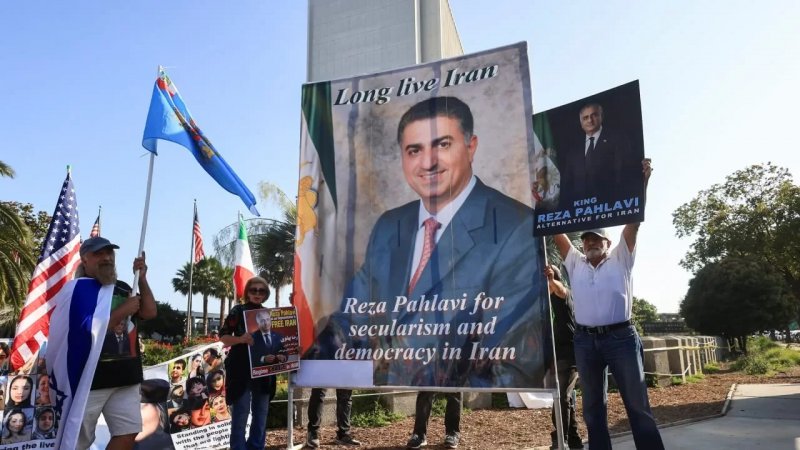
Protesters against the current Iranian regime and in support of Reza Pahlavi
However, the likelihood of a practical restoration of the Pahlavi dynasty is currently low for several objective reasons.
First, the protest movement, despite general anti-government sentiment, remains heterogeneous. While monarchist slogans unite some protesters as a symbol of resistance, not all participants see Iran’s future as a return to monarchy. The opposition is fragmented: some activists advocate for a secular democratic republic, and in regions with ethnic minorities (such as Kurdistan or Sistan and Baluchestan), the agenda focuses more on autonomy and civil rights.
Second, Reza Pahlavi himself takes a cautious position. He has repeatedly emphasized that his main goal is not an automatic return to the crown but promoting a transition to democracy, where the form of government is chosen by the people in a referendum. This makes him more a symbolic figure of the “transition period” than a leader ready to immediately take power.
Third, Iran’s state system retains significant self-preservation resources. Security forces, such as the IRGC and Basij, remain loyal to the leadership. Historical experience shows that without a split within the elites or mass defection of security forces to the protesters’ side, radical regime change is extremely difficult.
It is also worth noting that Tehran skillfully uses the protesters’ monarchist rhetoric for its own purposes. By broadcasting these slogans on state channels, authorities attempt to convince conservative segments that the alternative to the current regime is a “return to the past” and loss of independence, helping maintain loyalty among parts of society.
Thus, as of January 6, 2026, the popularity of monarchist slogans primarily reflects the strength of the protests and the search for alternative development paths. They serve as a powerful tool of pressure on authorities but have not yet transformed into a clear political program capable of uniting all layers of Iranian society for a full regime change.
— U.S. President Donald Trump recently mentioned a possible strike on Iran, followed by Israeli Prime Minister Benjamin Netanyahu. How likely is this scenario?
— The rhetoric of Trump and Netanyahu in early January 2026 has indeed become noticeably tougher, creating a sense of potential military confrontation. However, analyzing the facts, the situation appears more like large-scale psychological pressure than preparation for immediate invasion.
Trump used the phrase “locked and loaded,” promising to “come to the aid” of the Iranian people if authorities use excessive force against protesters. Despite the bellicosity, this is largely classic “red line” signaling. Currently, the U.S. is not deploying troops on a scale necessary for actual intervention. Rather, it is a signal to Tehran that their suppression of protests is being closely monitored.
Netanyahu speaks more concretely, linking support for protesters to demands regarding Iran’s nuclear program. Since June 2025, Israel views the current instability as weakening Iran’s ability to respond to external challenges. However, available data suggest that Israel also signals through intermediaries that it does not plan an immediate attack unless Tehran takes drastic nuclear steps.
The likelihood of a strike right now remains low for several reasons. Direct external aggression could backfire, rallying Iranian society around the flag and turning critics into defenders of the homeland. Moreover, such an operation would require building a strong regional force, which is not currently observed.
Iranian authorities, in turn, take these threats seriously and use them to consolidate loyal segments of the population, announcing readiness to respond. This creates a “war of words” where each side tests the opponent’s nerves.
Thus, as of January 6, 2026, the main goal of statements from Washington and Tel Aviv is maximum political pressure. They hope that external threats combined with internal unrest will force the Iranian leadership to make concessions. The situation remains dynamic: any sudden escalation of street violence or new information about nuclear activity could instantly shift this balance.
By Asif Aydinli