①The meeting emphasized that in 2026, a moderately accommodative monetary policy should continue to be implemented, leveraging the integrated effects of incremental and existing policies. Efforts should be intensified in countercyclical and cross-cyclical adjustments to enhance the quality and effectiveness of financial services in supporting the high-quality development of the real economy. ②The meeting requested the effective implementation of a moderately accommodative monetary policy, improvement in the quality and efficiency of financial services for the high-quality development of the real economy, and prudent resolution of key financial risks.
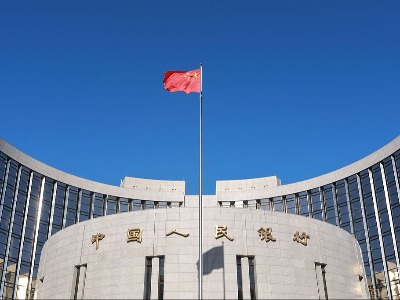
According to the website of the People’s Bank of China, the annual work conference of the People’s Bank of China was held on January 5-6, 2026. The meeting, guided by **** Thought on Socialism with Chinese Characteristics for a New Era, thoroughly studied and implemented the spirit of the Fourth Plenary Session of the 20th CPC Central Committee and the Central Economic Work Conference. It reviewed the work of 2025, analyzed the current situation, deliberated on the 15th Five-Year Reform and Development Plan of the People’s Bank of China, and arranged the tasks for 2026. Pan Gongsheng, Party Secretary and Governor of the People’s Bank of China, attended the meeting and delivered a speech. Zhu Hexin, Qu Jishan, Xuan Changneng, Lu Lei, Tao Ling, and Zou Lan also attended the meeting.
The meeting noted that since 2025, in the face of complex and severe domestic and international economic and financial conditions, the People’s Bank of China has resolutely implemented the decisions and arrangements of the CPC Central Committee and the State Council. On the basis of effectively executing existing monetary policies, it introduced a new package of monetary policy measures, strongly supporting stable growth of the real economy and smooth operation of financial markets. It continuously deepened structural reform on the supply side of finance, prudently addressed key financial risks, actively promoted reforms to improve global financial governance, and pushed forward comprehensive strict governance of the Party. All tasks have reached new levels.
 First, adhere to macro thinking and systematically plan major business and reform matters of the People’s Bank of China from a systemic perspective. Accelerate the improvement of the central bank system, organize research and formulate key tasks for the construction of the ‘six core elements’, construct frameworks for monetary policy and macro-prudential policy, develop financial markets, and promote RMB internationalization. Develop specific work plans and dynamically evaluate and refine them.
Second, uphold professionalism, pragmatism, and precision; ensure that the moderately accommodative monetary policy takes effect. Strengthen the alignment and relevance between the policies of the People’s Bank of China and market concerns, promptly introduce a package of monetary policies, and comprehensively utilize various monetary policy tools such as reducing the reserve requirement ratio and open market operations to maintain ample liquidity. Lower policy interest rates, structural monetary policy tool interest rates, and individual housing provident fund loan rates to reduce overall social financing costs. Reinforce the execution and supervision of monetary policy, and improve interest rate self-discipline management. Continuously refine the monetary policy framework, guide money market interest rates to operate more steadily around policy interest rates, and strengthen market communication and expectation management.
Third, focus on the broader context and engage in international financial cooperation. Follow the guidance of head-of-state diplomacy, implement the global governance initiative, concentrate on global financial stability and regional safety nets, and deepen multilateral and bilateral financial cooperation. Actively participate in mechanisms like the G20 to strengthen global macroeconomic policy coordination. Support the opening of the IMF Shanghai Center.
Fourth, the quality and efficiency of financial services for high-quality development have improved. Improve the policy framework, statistics, and evaluation systems for the ‘five major articles’ in finance. Increase re-lending quotas for technological innovation and technical transformation, agricultural support, and small business support. Launch the ‘Technology Board’ in the bond market and establish risk-sharing tools for technology innovation bonds and re-lending services for consumption and elderly care. Optimize financial policy instruments to support technological innovation and build a modern industrial system. The quality and effectiveness of financial support in areas such as technology, green development, inclusive finance, elderly care industry, and digital economy industries have continued to improve. Over 700 entities issued science and technology innovation bonds exceeding 1.5 trillion yuan.
Fifth, key financial risks are continuously converging. Financial markets remain stable. Optimize two monetary policy tools supporting capital markets and firmly support the role of Huijin Company as a ‘quasi-stabilization fund’ to effectively boost market confidence. Strengthen bond market monitoring and expectation management, and increase efforts to investigate and handle illegal activities in the bond market. Adopt comprehensive measures to maintain robust operation of the foreign exchange market. Significant progress has been made in resolving debt risks of financing platforms. The handling of financial risks in key institutions and regions is proceeding steadily. Establish the Macro Prudential and Financial Stability Committee of the People’s Bank of China to further strengthen macro-prudential management and the financial stability guarantee system. Enhance the coordinated regulation of financial infrastructure.
Sixth, high-level financial openness continues to expand. Improve the pre-entry national treatment plus negative list management system, and support qualified foreign financial institutions in participating in new business pilots in China. Steadily advance institutional openness in financial markets, enhance interconnectivity between domestic and overseas markets, and facilitate more investors to invest in China’s financial markets. Refine policies for the cross-border use of the RMB to create a more favorable environment for domestic and foreign entities to hold and use the RMB.
Seventh, financial management and service levels have further improved. Accelerate the revision of important legislation such as the People’s Bank of China Law, the Financial Stability Law, and the Commercial Bank Law. Deeply participate in the formulation of financial laws. Conduct research and drafting for the 15th Five-Year Plan. Promote the in-depth development of comprehensive financial statistics. Advance precise governance of ‘funding chains’ related to fraud and gambling. Strengthen supervision of virtual currency transactions. Ensure adequate cash supply. Optimize the Digital RMB management system. Implement a one-time credit repair policy to support individuals in efficiently and conveniently rebuilding their credit. Continuously improve the supporting rules and regulations of the Anti-Money Laundering Law, strengthen risk assessments, and steadily advance anti-money laundering regulation, beneficial ownership information registration, and efforts to combat money laundering crimes.
Eighth, comprehensively advance the strict governance of the Party in depth. Strictly implement the ‘First Agenda’ system. Deeply study and publicize ****’s important financial discourse and practices in Fujian. Diligently carry out the learning, publicity, and implementation of the spirit of the Fourth Plenary Session of the 20th Central Committee of the Communist Party. Regularly and effectively promote the rectification of issues identified by central inspections. The construction of leadership teams and cadre talent pools is proceeding in an orderly manner. Continuously improve the mechanism for supervising and restricting the exercise of power, conduct high-quality education on thoroughly implementing the spirit of the Central Eight Provisions, regularly carry out education on Party discipline and警示教育 (warning education), and severely investigate violations of laws and discipline. Internal management continues to be standardized, steadily advancing follow-up work on institutional reforms, and strengthening the management of branches and affiliated units. Reinforce internal audit supervision, centralized procurement, and fund management. Improve the quality and efficiency of work in trade unions, youth organizations, retired cadres, logistics services, and security.
The meeting emphasized that the People’s Bank of China must take **** Thought on Socialism with Chinese Characteristics for a New Era as its guide, fully implement the spirit of the 20th National Congress and all plenary sessions of the 20th Central Committee, earnestly implement the decisions and arrangements of the Central Economic Work Conference, adhere to the general tone of pursuing progress while ensuring stability, continue to implement a moderately accommodative monetary policy, leverage the integrated effects of incremental and stock policies, intensify countercyclical and cross-cycle adjustments, enhance the quality and effectiveness of financial services in supporting the high-quality development of the real economy, deepen financial reform and higher-level opening up, strengthen the forward-looking, targeted, and coordinated nature of macroeconomic policies, focus on expanding domestic demand and optimizing supply, prevent and resolve risks, stabilize social expectations, create a favorable monetary and financial environment for stable economic growth, high-quality development, and stable operation of financial markets, and provide strong financial support for a good start to the ’15th Five-Year Plan’ in 2026. Key tasks for 2026 include:
First, persistently advance the strict governance of the Party in depth. Continue to prioritize studying and implementing the important speeches and instructions of General Secretary **** as the primary political task. Organize training and education activities to study and implement the spirit of the Fourth Plenary Session of the 20th Central Committee of the Communist Party. Consolidate and expand the results of rectifying issues identified by central inspections, improve the long-term mechanism for regular and effective rectification, and continuously assess the effectiveness of the rectification. Adhere to the criteria for good cadres, strengthen overall planning, optimize the allocation of leadership teams at all levels of the system, and accelerate the building of a strong contingent of cadres and talents. Firmly correct misconduct and combat corruption, implement long-term systems for improving work styles, sustain efforts to alleviate burdens on grassroots levels by addressing formalism, and intensify the campaign against improper dining and entertainment. Maintain high pressure against the ‘four undesirable work styles’ and corruption issues.
Second, continue to implement a moderately accommodative monetary policy effectively. Consider promoting high-quality economic development and reasonable price recovery as important factors in monetary policy. Flexibly and efficiently employ various monetary policy tools such as reserve requirement ratio cuts and interest rate reductions to maintain ample liquidity, keep social financing conditions relatively loose, and guide reasonable growth in total financial volume and balanced credit distribution, aligning the growth of aggregate social financing and money supply with expected targets for economic growth and overall price levels. Smooth the transmission mechanism of monetary policy, utilize policy interest rates effectively, ensure proper execution and oversight of interest rate policies, and promote low overall social financing costs. Gradually expand the coverage of disclosing comprehensive financing costs for corporate loans and promote disclosure of comprehensive financing costs for personal loans. Maintain the basic stability of the renminbi exchange rate at a reasonable and balanced level and guard against risks of excessive exchange rate fluctuations.
Third, enhance the quality and effectiveness of financial services in supporting the high-quality development of the real economy. Further improve the policy framework for the ‘five major essays’ of finance, implement evaluation systems effectively, strengthen assessments of financial service outcomes, and elevate the professionalism and sophistication of financial services. Refine the structural monetary policy toolkit, optimize tool design and management, and strengthen financial support in key areas such as boosting domestic demand, technological innovation, and small and medium-sized enterprises. Develop and build a high-quality bond market ‘technology board.’ Utilize consumer and pension relending facilities to encourage increased credit deployment in consumer sectors. Optimize the administration of agricultural and SME relending facilities and rediscount operations to enhance financial institutions’ capacity to serve small and medium-sized enterprises. Strengthen the supervision of key supply chain financing information service platforms.
Fourth, prudently resolve financial risks in key areas. Continue efforts to mitigate debt risks of financing platforms with financial support, and steadily advance the exit of these platforms. Address risk resolution in key regions and institutions, and strengthen early identification and correction of risks for small and medium-sized financial institutions. Fully leverage the central bank’s functions of macro-prudential management and financial stability maintenance, and improve the toolkit for macro-prudential and financial stability management. Enhance the monitoring indicator system for financial markets and explore macro-prudential management of financial markets. Establish mechanisms for providing liquidity to non-bank institutions under specific scenarios, and make good use of two monetary policy tools supporting capital markets. Intensify regulation and law enforcement in financial markets and continuously combat illegal and irregular activities in these markets.
Fifth, deepen financial reforms and opening-up continuously. Strengthen supervision and management of the interbank bond market, money market, foreign exchange market, bill market, gold market, and related derivatives. Enhance the unified regulation of financial infrastructure. Deepen high-level openness in financial markets and continue to optimize the mechanisms for Bond Connect and Swap Connect. Support the development of Shanghai as an international financial center, consolidate and enhance Hong Kong’s position as an international financial center, and maintain stability and prosperity in Hong Kong’s financial markets. Leverage currency swap arrangements between central banks to facilitate renminbi usage in trade and investment, and encourage financial institutions to improve cross-border financial services. Improve the infrastructure for cross-border renminbi use. Welcome more eligible overseas entities to issue Panda Bonds. Expand the interconnection of fast payment systems and promote QR code interoperability cooperation.
Sixth, actively promote reforms in global financial governance. Conduct multilateral and bilateral monetary and financial cooperation in a coordinated manner. Deepen cooperation with international organizations such as the International Monetary Fund and multilateral development institutions, rely on multilateral platforms like the G20 to promote global macro-policy coordination, and participate in the formulation of international financial rules. Support the establishment of the IMF Shanghai Center.
Seventh, further enhance financial management and service capabilities. Advance key legislative and legal amendment projects. Study and construct a financial statistical system and standards compatible with a modern central banking system, and continuously monitor key areas such as the ‘five major essays’ of finance and financing platform debts. Consolidate achievements in creating a cash-friendly environment. Continuously improve the effectiveness of treasury management. Prudently implement a one-time personal credit repair policy. Further refine the social credit system. Regularly optimize payment services for the elderly and foreign visitors. Enforce stringent regulation of payment institutions through穿透式监管 (penetrative regulation) and functional oversight of payment businesses. Strengthen virtual currency regulation and continue to crack down on related illegal activities. Deepen technology management and innovative applications. Steadily develop digital renminbi. Further standardize internal management and enhance internal audit supervision, retirement cadre services, logistical support, centralized procurement, and security. Leverage the role of mass organizations such as trade unions and youth organizations to unite and inspire.
The meeting noted that 2026 marks the beginning of the ’15th Five-Year Plan,’ and the People’s Bank of China must conscientiously implement the decisions and arrangements of the Party Central Committee and the State Council, pursue truth and pragmatism, face challenges head-on, and contribute to a good start and solid foundation for the ’15th Five-Year Plan’ with greater enthusiasm and a diligent, pragmatic, professional, and responsible work ethic, promoting high-quality financial development.
Members of the leadership team of the State Administration of Foreign Exchange, key leaders of various departments, branches, and affiliated units of the People’s Bank of China, as well as representatives from the disciplinary inspection and supervision group, attended the meeting. Relevant officials from the Central Organization Department, the General Office of the Central Financial and Economic Affairs Commission, the General Office of the Central Financial Commission, the General Office of the State Council, and the Ministry of Finance were also invited to attend the meeting.
Editor/Rice