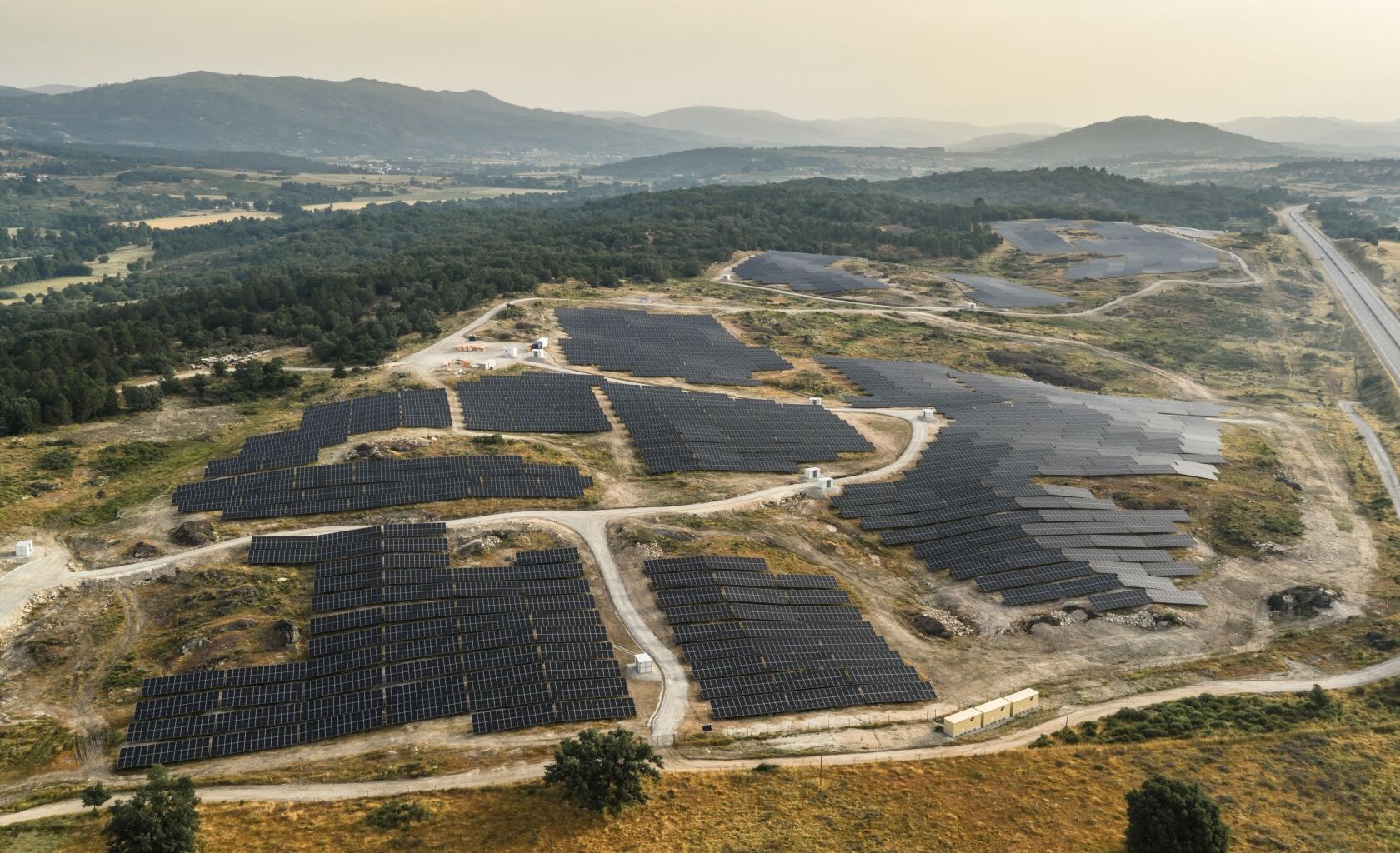
On January 31st, a demonstration is scheduled to reinforce the population’s point of view.
In the petition “Save Beira Baixa – Stop the Mega Solar Power Plants,” which has already collected more than 18,000 signatures, thus guaranteeing its discussion in plenary session at the Assembly of the Republic, the signatories demand a halt to the plans for mega solar power plants in natural areas and fragile ecosystems in Beira Baixa.
In addition, they want the Naturtejo Geopark and other areas recognized by UNESCO (United Nations Educational, Scientific and Cultural Organization) to be protected and demand that sustainable alternatives be prioritized, such as the installation of solar panels on existing artificial surfaces, rooftops, industrial zones, and the creation of energy communities.
Finally, they want residents to “have a voice in the decisions that shape their future.”
“The Beira Baixa region deserves a future where nature and people thrive together. We, residents and friends of Beira Baixa, are writing to express our deep concern about the possibility of installing several mega solar power plants in our beautiful region, especially in the municipalities of Fundão, Penamacor and Idanha [Castelo Branco district],” the document states.
On the 31st, PDPNTI is promoting a national demonstration starting at 2 pm, with the meeting point at Santa Apolónia (Lisbon).
The protest action
This protest action, called “The Interior is not for sale – No to mega solar power plants,” aims to raise awareness and bring Beira Baixa and the entire Interior to Lisbon, “not only as threatened territories, but as living spaces, full of history, culture, traditions and memories that define us.”
“We have shown that what is at stake is not just a technical or energy issue, but the human, cultural and environmental values that make the Sertão a unique place worthy of being preserved,” explains this civic movement.
Recently, the evaluation committee coordinated by the Portuguese Environment Agency (APA) rejected the Beira photovoltaic power plant project after identifying significant negative impacts on ecological systems and land use.
The project
This project contemplated the installation of 425,600 photovoltaic modules, with a total power of 266 Megawatts (MW), in an area of 524.4 hectares in the municipalities of Castelo Branco (Monforte da Beira, Malpica do Tejo, Benquerenças, União das Freguesias de Escalos de Baixo e Mata and Castelo Branco) and Idanha-a-Nova (Ladoeiro and União das Freguesias de Idanha-a-Nova e Alcafozes).
The promoting company has already expressed interest in reviewing the project and the proposed mitigation measures, so it now has six months (180 working days) to do so and introduce the changes it deems appropriate to minimize the identified negative impacts and make the project compatible with the current values.
After that, it must submit the documents relating to this review to the APA, which will be subject to “a new period of public consultation and a new technical analysis” by the evaluation committee.
As for the Sophia Photovoltaic Plant project, the respective environmental assessment is still underway.
The legally foreseen deadline for this environmental impact assessment procedure ends on February 9th.
Covered area
This photovoltaic solar power plant covers the municipalities of Fundão, Idanha-a-Nova and Penamacor, in the district of Castelo Branco, and represents an investment of around €590 million, for an installed capacity of 867 MWp (Megawatt peak).
This is a project with 390 hectares of area occupied by photovoltaic modules, 435 hectares considering all the infrastructure, and a total of 1,734 hectares of fenced area.