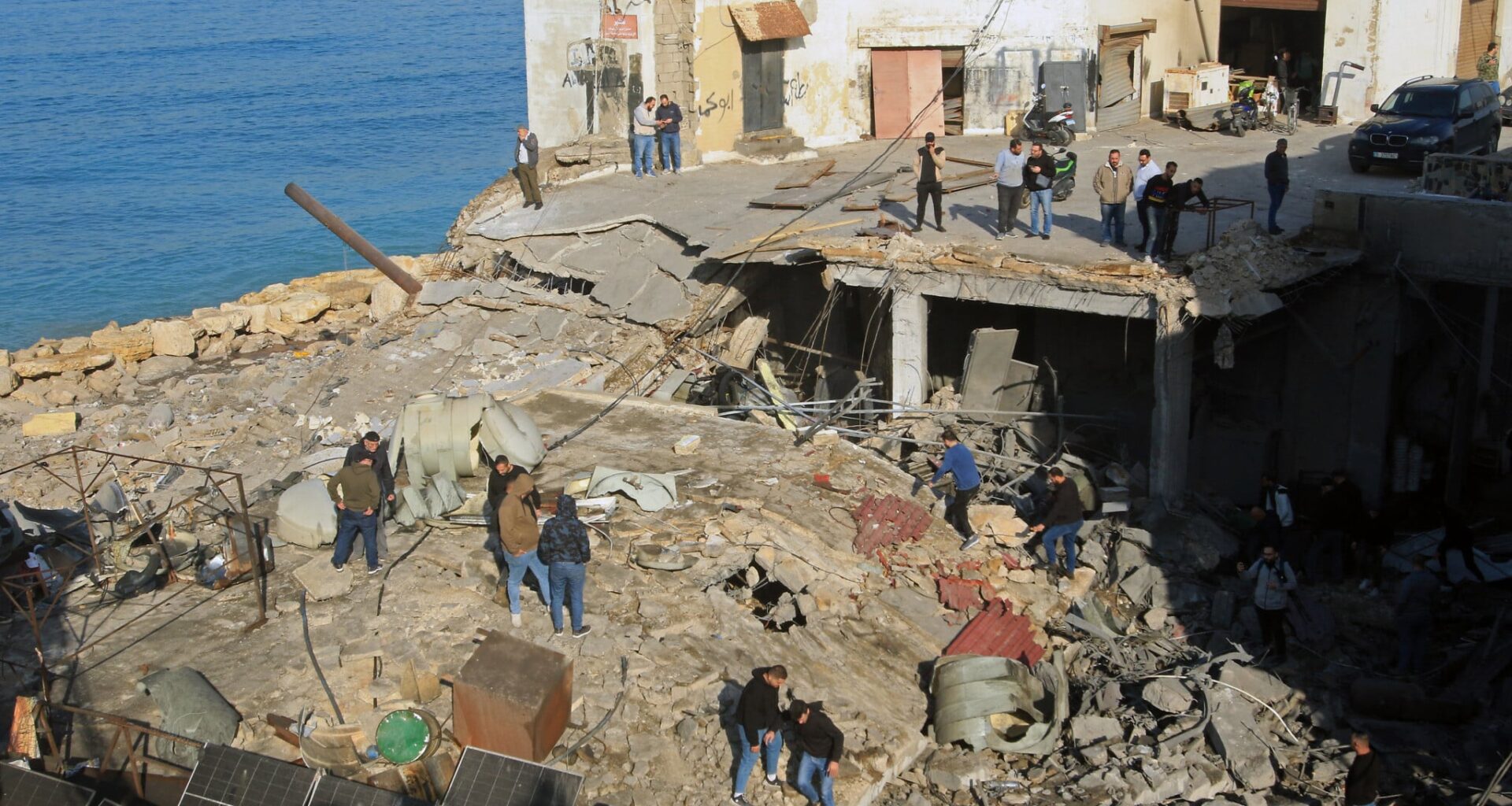
BEIRUT, Lebanon — Lebanese President Joseph Aoun on Tuesday condemned Israel’s latest strikes on his country, saying they undermine efforts to prevent escalation.
Aoun’s criticism came after Israel launched a series of strikes in southern and eastern Lebanon on Monday, saying it hit Hezbollah and Hamas terror group targets.
The attacks began with strikes on four villages where Israel had issued evacuation warnings, though later bombing, including a strike in the early hours of Tuesday, came without prior notice.
Later Tuesday, after Aoun’s statement, the Israel Defense Forces said it carried out another strike on Hezbollah operatives in the area of southern Lebanon’s Khirbet Selm in response to the terror group’s “continued violations of the ceasefire understandings.”
Lebanese media reported that two people were killed and one was seriously injured in the village of Kfardounin, located approximately two kilometers from Khirbet Selm. There was no immediate comment from the IDF on the reported casualties.

Lebanon President Joseph Aoun addresses the 80th session of the United Nations General Assembly, September 23, 2025, at UN headquarters. (AP/Pamela Smith)
In his statement, Aoun said that “Israel’s continued attacks aim to thwart all efforts made locally, regionally and internationally to stop the ongoing Israeli escalation, despite the response shown by Lebanon to these efforts at various levels.”
Despite a year-old ceasefire between Israel and Hezbollah, Israel carries out regular strikes in Lebanon, usually explaining that the terror group’s activities are in violation of the ceasefire understandings and that the agreement allows acting against security threats. It has also occasionally hit Hamas targets.
Israel has been ramping up its military operations in Lebanon in recent weeks, amid reports of a possible large-scale offensive targeting Hezbollah.
Lebanon has faced mounting pressure from the United States and Israel to disarm Iran-backed Hezbollah under the truce deal, with Defense Minister Israel Katz warning that Israel would “act as necessary” if Beirut fails to curb the group’s arsenal.
On Tuesday, the Israeli military said its operations the day before struck infrastructure “belonging to the Hezbollah and Hamas terrorist organizations in several areas in Lebanon.”
The IDF said the sites were in civilian areas and were an example of the terror groups using the population as human shields.
According to the military, the targets included “several weapon storage facilities and military structures, both above and below ground.”
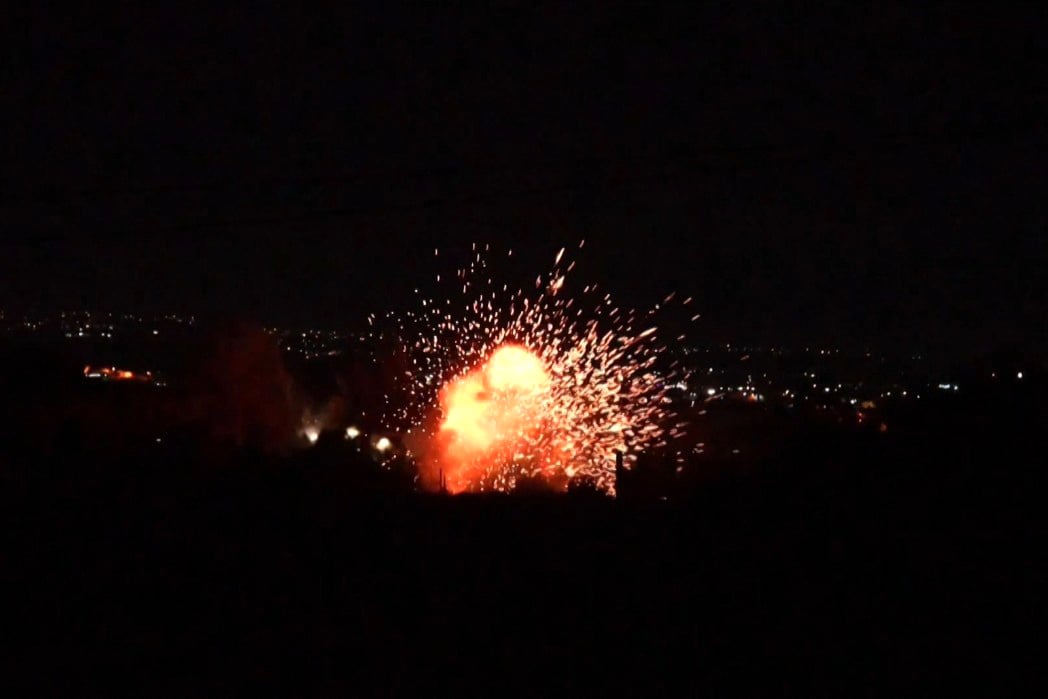
This image grab from an AFPTV footage taken on January 5, 2026, shows an Israeli strike on the village of Annan, in southern Lebanon. (AFPTV / AFP)
The strike early on Tuesday targeted Ghazieh, near the southern coastal city of Sidon, destroying a building and damaging its surroundings, causing a fire on site which firefighters deployed to combat, according to an AFP photographer.
The latest attacks come with the committee monitoring the ceasefire — which includes the United States, France, Lebanon, Israel and the United Nations — set to meet on Wednesday.
The US-brokered truce with Hezbollah came after two months of open conflict in Lebanon, including an IDF ground operation in the country’s south in a bid to enable the safe return of some 60,000 residents of northern Israel displaced by the terror group’s near-daily attacks. The rocket and drone attacks began on October 8, 2023 — a day after fellow Iran-backed terror group Hamas invaded southern Israel, sparking the war in Gaza.
According to the agreement, Hezbollah was required to pull its forces north of the Litani River and have its military infrastructure in the vacated area dismantled.
Lebanon’s cabinet will also convene later this week to discuss the Lebanese military’s progress in disarming Hezbollah.
The Lebanese army had been expected to complete the disarmament south of the Litani River — about 30 kilometers (18.6 miles) from the border with Israel — by the end of 2025, before tackling the rest of the country.
In his statement, Aoun said the government’s plan to “extend its authority over the south of the Litani” was “implemented by the Lebanese army with professionalism, commitment and precision.”
Israel has previously questioned the Lebanese military’s effectiveness and has accused Hezbollah of rearming.
Foreign Minister Gideon Sa’ar on Sunday called the disarmament efforts far from sufficient.