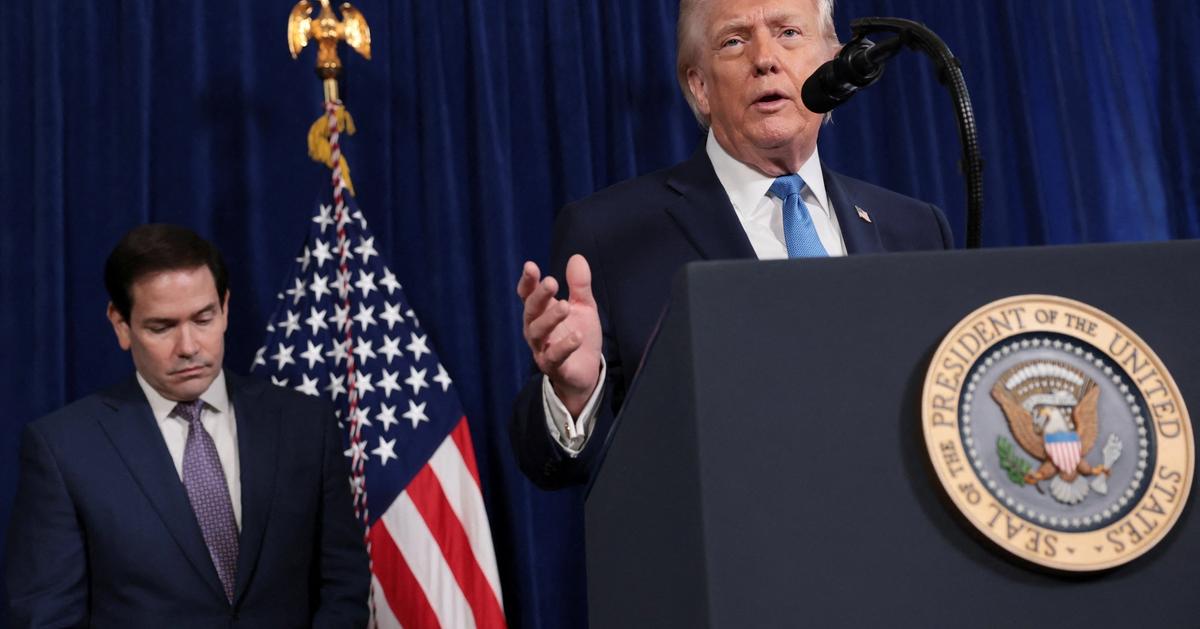
Less than 24 hours after President Donald Trump declared the US would “run” a post-Maduro Venezuela, Secretary of State Marco Rubio took to TV to soften the official line.
“What we are ‘running’ is the direction” for Venezuela’s future after the US ousted its leader, Rubio said on Sunday.
Later that evening, Trump made clear he wasn’t exaggerating, telling reporters: “We’re in charge.”
The different — and at times confusing — messaging coming out of the White House in the days following the US incursion in Venezuela has cast Rubio as a more cautious voice than the bombastic president. While Trump indicates that the US will run Venezuela for a time, Rubio has spoken in more traditional diplomatic terms, previewing a “quarantine” of oil exports designed to cajole its new leadership into falling in line with Washington’s demands.
Rubio will face questions about the next steps in Venezuela during two private Wednesday briefings with lawmakers, his second and third appearances on the Hill in 48 hours. Amid polls showing initially shaky support from the US public for Trump’s strike on Venezuela, many Republicans are inclined to listen closely to him.
Rubio is “being very careful to say” that the captured former Venezuelan leader Nicolás Maduro “was a criminal, he was under indictment in the United States, this is a law enforcement operation,’” Sen. John Kennedy, R-La., told Semafor. “I don’t take the president literally. I don’t think he’s talking about literally running the country.”
Rubio’s steady-handed reputation within the party is both an asset and a challenge. The chief diplomat is a leading player in what Trump has said would be a “group” running the transition in Venezuela, but he’s also facing plenty of headwinds dealing with interim president Delcy Rodríguez, a longtime Maduro deputy.
There are no clear answers yet for how the president might make good on his plans to “fix up the oil” in Venezuela or eventually have elections. Some Venezuelans are still hoping for a role for María Corina Machado, the longtime opposition leader whom Trump said lacks “the support within or the respect within the country” to take over — while Rubio, with characteristic nuance, called her “fantastic” but “unfortunately” not well-positioned.
“I really think there’s no plan for the way Trump phrases things. It’s a pattern. He goes way out, and then has to rein it back into a more realistic view,” said one Republican senator. That pullback, the senator added, is “what Rubio is tasked with doing.”
Importantly, the White House sees the president and Rubio as presenting complementary, not different messages.
“President Trump and Secretary Rubio have been consistent,” a senior administration official said. “Both were speaking about exerting maximum leverage with the remaining elements in Venezuela and ensuring they cooperate with the United States by halting illegal migration, stopping drug flows, revitalizing oil infrastructure, and doing what is right for the Venezuelan people.”
And many Trump allies agree with that. The detail that even GOP hawks want to keep stressing, though: No matter how the US is running Venezuela, it won’t stay that way for long.
“Trump wants to let everybody know he’s in charge. I want everybody to hear we’re in charge of Venezuela,” Sen. Lindsey Graham, R-S.C., told Semafor. “That doesn’t mean we’re going to own it forever. It’s not going to become a colony of the United States, but we’re in charge.”
The State Department referred Semafor to Rubio’s weekend comments about Venezuela on various Sunday shows.