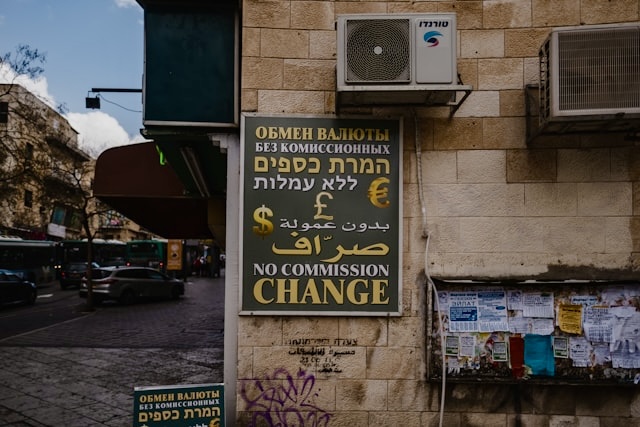
Illustration Photo: Levi Meir Clancy/Unsplash
Commentary: What should an economy look like after a year of war, mass mobilization, and missile attacks? And what would you expect from a vast, oil-rich country with safe borders? Full Story
Put yourself behind a veil of ignorance for a moment. Imagine a tiny country that’s been at war for 10 months straight. Hundreds of thousands of reservists pulled from their jobs. Flights in and out almost impossible to find.
Now add this: That same year, the country faced a direct confrontation with its archrival—the regional superpower—and endured hundreds of ballistic missiles raining down on its cities.
So tell me, how would you expect that country’s economy to look at year’s end?
This thought experiment sounds facetious, I know. But only because we’ve all grown used to the economic miracle that is Israel. So let’s take a moment to appreciate the small wonders.
At the close of 2025, Israel ranked as the third-best-performing economy in the OECD. The Tel Aviv Stock Exchange finished among the top three markets worldwide. If you’d invested $1,000 in the TA-125 on January 1, you’d be looking at about $1,540 today.
Unemployment? 3 percent.
Inflation? A manageable 3 percent.
Growth? A healthy 3.3 percent.
And for Israelis who love to travel—which is to say, all of them—a nice bonus: the shekel hit a four-year high against the dollar.
Not bad for a nation supposedly on the brink.
Now, step behind that veil again—and imagine a vast country. Safe borders. Young population. Endless oil wealth. You’d expect prosperity, right?
Meet the Islamic Republic of Iran.
Reality there is far less miraculous: falling living standards, 45 percent inflation, 20 percent unemployment, and a currency that just hit an all-time low.
Now, I’m not saying Jews control international finance—I’ll leave that to some concerningly popular podcasters—but whoever does seems to really hate it when someone attacks the Jewish state.