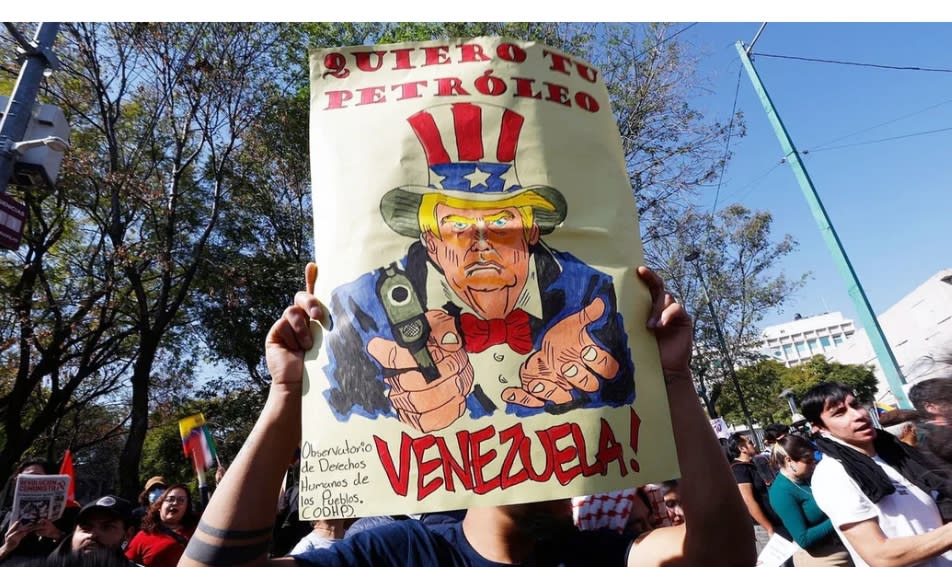
Across Latin America, governments and citizens alike are grappling with deep unease following the U.S. raid on Venezuela that led to the capture of President Nicolás Maduro. While Washington has framed the operation as a decisive blow against authoritarian rule, much of the region is focused on a different question: what happens next?
From Mexico to Argentina, leaders are watching events unfold with caution, concerned that Venezuela’s sudden destabilization could trigger political chaos, economic disruption, and renewed foreign interventionism in a region with a long and painful memory of such actions.
Venezuela’s Crisis Becomes a Regional Problem
Venezuela’s turmoil has never been confined within its borders. Years of economic collapse and political repression have already pushed millions of migrants into neighboring countries, straining public services and social cohesion.
The raid has intensified fears that instability will worsen. With Maduro removed and no clear transition authority in place, Latin American officials worry about power vacuums, internal conflict, and the potential breakdown of already fragile institutions.
For countries hosting large Venezuelan diaspora communities, renewed unrest could mean another wave of migration, compounding humanitarian and political pressures.
Historical Trauma Shapes Regional Reactions
Latin America’s response to the raid cannot be separated from history. For decades during the Cold War and beyond, U.S. interventions shaped political outcomes across the region—often with lasting consequences.
As a result, even governments critical of Maduro have been reluctant to endorse the operation openly. Many fear that normalizing such actions could reopen a chapter Latin America has worked hard to close.
“This isn’t about defending Maduro,” said one regional diplomat privately. “It’s about defending the principle that change should come from within, not through force.”
Divided Governments, Shared Anxiety
Official reactions across the region have varied, but anxiety is widespread.
Left-leaning governments have condemned the raid as a violation of sovereignty, warning that it sets a dangerous precedent. More conservative administrations have adopted cautious language, avoiding outright approval while calling for stability and dialogue.
Even countries that once supported strong pressure on Maduro now worry that abrupt regime change—without a clear plan—could make matters worse.
The lack of a coordinated regional response reflects not indifference, but uncertainty.
Economic Shockwaves and Energy Concerns
Beyond politics, Latin America is concerned about economic fallout. Venezuela remains an important player in regional energy dynamics, and disruptions to oil exports can affect prices, supply routes, and investment confidence.
Countries with energy-dependent economies fear that prolonged instability could ripple through regional markets. At a time when inflation and public debt already challenge many governments, additional shocks are unwelcome.
Businesses, too, are cautious. Investors worry that the raid signals a more unpredictable geopolitical environment, increasing risk across Latin America.
Fear of Escalation and Proxy Conflict
Another concern is escalation. If Venezuela descends into prolonged instability, it could become a stage for great-power rivalry, drawing in the United States, China, and Russia.
Latin American leaders are wary of becoming collateral damage in global power struggles. Many governments have spent years trying to maintain strategic autonomy, balancing relations with multiple partners.
A destabilized Venezuela risks undoing that balance, forcing countries to take sides in conflicts they would rather avoid.
Civil Society and Public Opinion
Public reaction across Latin America has been mixed but intense. Social media debates reveal deep divisions: some celebrate Maduro’s removal as overdue, while others fear the return of interventionism.
Human rights groups have focused on civilian risks, warning that chaos often hurts ordinary people far more than political elites. Activists stress that accountability for abuses must not come at the cost of widespread suffering.
For many citizens, the raid has revived old fears—of coups, foreign pressure, and instability spilling across borders.
Migration Pressures Loom Large
Perhaps the most immediate fear is humanitarian. Latin America has already absorbed one of the largest migration crises in modern history due to Venezuela’s collapse.
Countries such as Colombia, Peru, Ecuador, and Brazil are still struggling to integrate millions of Venezuelans. Any renewed surge would test social cohesion and political tolerance.
Officials warn that without rapid stabilization and international coordination, the human cost could rise sharply.
Calls for Regional Dialogue
In response, several Latin American leaders are calling for renewed regional diplomacy. Proposals include emergency summits, mediation efforts, and coordination with international organizations to prevent further deterioration.
There is growing support for a Latin American-led approach to Venezuela’s transition—one that prioritizes negotiation, humanitarian access, and gradual institutional rebuilding.
Whether such efforts can succeed amid intense global pressure remains uncertain.
A Precedent That Worries the Region
Beyond Venezuela itself, the raid has raised broader concerns about precedent. If forceful intervention becomes an accepted tool again, smaller nations fear their sovereignty could be vulnerable whenever geopolitical interests collide.
This anxiety transcends ideology. Even governments aligned with Washington privately acknowledge discomfort with the implications.
Latin America’s hard-won progress toward democratic norms and non-intervention is seen by many as fragile—and worth defending.
Conclusion: Waiting, Watching, and Worrying
As Venezuela enters an uncertain chapter, Latin America is watching closely—and nervously. The raid may have removed a deeply controversial leader, but it has also opened a period of instability whose consequences could extend far beyond Venezuela’s borders.
For the region, the overriding fear is not just what happens next in Caracas, but what this moment signals for the future of sovereignty, stability, and self-determination in Latin America.
In the coming weeks, the choices made by global and regional powers alike will determine whether Venezuela’s crisis becomes a path toward recovery—or another chapter of chaos with regional consequences.