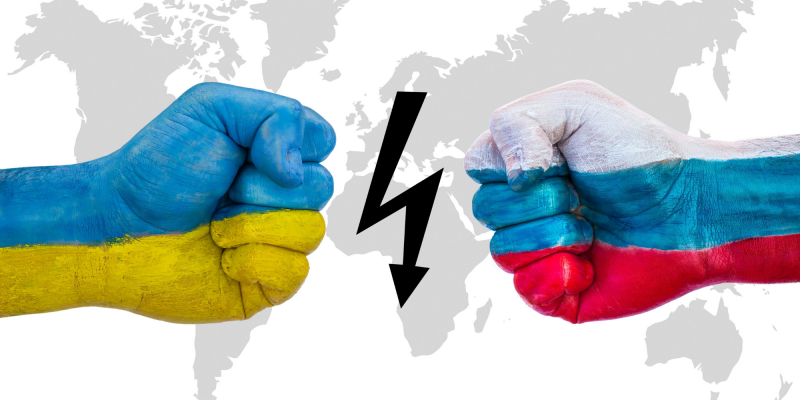
The latest 24 hours in the Ukraine–Russia conflict have delivered another reminder that the war remains dynamic, unpredictable, and deeply consequential for both countries as well as the wider international community, News.Az reports.
Fighting across multiple sectors of the frontline, continued long-range strikes, shifting diplomatic narratives, and visible strains on both militaries together paint a picture of a conflict that shows no sign of slowing. Instead, the last day has highlighted how warfare has increasingly become a test of endurance, logistics, and political resilience.
Frontline activity remains intense across key sectors
Reports from the frontline indicate that fighting continues along several stretches of the contact line, with neither side able to secure a decisive breakthrough. The last day has seen engagements around strategic settlements and contested approaches to larger urban centres. Small territorial gains, often measured in meters rather than kilometres, continue to come at a high cost.
In eastern Ukraine, trench-line warfare, drone surveillance, and artillery exchanges dominate the battlefield. Russian forces appear intent on maintaining pressure with incremental advances, while Ukrainian units focus on counter-mobility measures, defensive fortifications, and selective counterattacks. In the south, Ukraine continues efforts to deny Russia operational freedom, particularly near logistics corridors, while Russia works to reinforce supply lines and hinder Ukrainian manoeuvre activity.
Neither army has demonstrated the ability to mount the kind of rapid, large-scale offensive seen earlier in the conflict. Instead, the latest 24 hours underscore the reality of a protracted war in which territory changes slowly while attrition plays a leading role.
Long-range strikes highlight vulnerability of infrastructure
One of the continuing trends reflected again in the past day is the sustained use of long-range missiles and drones. Russian strikes have targeted Ukrainian cities and infrastructure facilities, including energy distribution points, warehouse areas, and military-linked objects. Air defence systems remain active across the country, with intercept attempts recorded in several regions.
At the same time, Ukraine has continued to carry out long-range drone and missile operations aimed at Russian logistics hubs, airfields, and industrial facilities supporting the war effort. These attacks, while not always causing visible structural damage, are designed to disrupt operational tempo, force redeployment of Russian resources, and impose financial costs.
For civilians, the situation remains precarious. Air raid alerts have sounded repeatedly in multiple Ukrainian regions, while emergency workers continue to respond to debris damage and fires caused by intercepted projectiles. The humanitarian risk — particularly during winter — remains a central concern as authorities work to maintain electricity and heating systems.
The war continues to evolve technologically
The last day also reinforces how deeply the war now depends on modern technology. Drone warfare — both reconnaissance and strike variants — is omnipresent. FPV drones, loitering munitions, and surveillance platforms are reshaping tactics, especially at the battalion and company level.
Electronic warfare has intensified, with both sides seeking to jam enemy transmissions, interfere with drone navigation, and protect their own communications. Satellite imagery, battlefield digitisation, and real-time intelligence sharing continue to influence operational decisions.
The latest 24 hours further demonstrate that the side able to rapidly adapt technologically gains tactical advantages, even when manpower and equipment are under pressure.
Logistics and ammunition remain decisive factors
Perhaps one of the clearest lessons from recent developments is the central role of logistics. Ammunition supply, spare-parts availability, maintenance capacity, and trained personnel remain critical constraints.
Ukraine continues to depend heavily on external support for advanced weaponry, air defence missiles, and artillery shells. The past 24 hours have seen renewed discussions among Western partners about maintaining support levels and ensuring the flow of essential supplies.
Russia, despite having larger stockpiles and domestic production, also faces challenges in sustaining high-intensity warfare. Transport routes, depots, and rail networks remain under periodic Ukrainian attack. Replacing destroyed equipment continues to strain industry output.
The latest day’s engagements reinforce the idea that logistics, not just battlefield tactics, will strongly shape the war’s direction.
Internal resilience matters as much as external diplomacy
The latest 24 hours also underline the political dimension of the conflict. Ukrainian leadership continues its effort to maintain public morale, strengthen civil defence, and secure further international commitments. Messaging has focused on unity, resistance, and the need for continued global backing.
For Russia, the narrative remains centred on military objectives, state control, and framing the conflict as part of a broader geopolitical struggle. Domestic messaging remains tightly managed, while political leadership signals determination to sustain the campaign.
Diplomatically, both sides continue to seek advantage — Ukraine by appealing to Western allies and international institutions, and Russia by deepening ties with non-Western partners. Statements issued in the last day show that neither side currently expects a negotiated political settlement in the immediate term.
Civilian impact remains significant and long-lasting
Beyond the battlefield, the latest 24 hours again highlight the continued hardship faced by civilian populations. Air alerts, disruptions to energy supplies, damage to homes, and ongoing displacement remain part of daily life for millions of Ukrainians.
Humanitarian agencies continue to emphasise the impact on vulnerable communities — including the elderly, children, and those in frontline regions. Winter conditions amplify these difficulties, increasing the risk associated with power outages or heating disruption.
The war’s psychological impact is also becoming increasingly visible, with constant stress, uncertainty, and loss affecting civilian resilience. Social systems — from education to healthcare — continue operating under severe strain.
Military strategy remains focused on attrition and pressure
The latest developments indicate that both sides remain committed to strategies built around gradual pressure rather than immediate decisive victory. Russia continues to leverage advantages in manpower and artillery to grind forward incrementally. Ukraine prioritises defending key lines, inflicting losses, and selectively striking deep targets to slow Russian operational momentum.
This strategic environment means that time has become a weapon. Each side seeks to extend the war on terms favourable to its political and military capacity, hoping that the other weakens first.
International assistance and sanctions play a defining role
The latest 24 hours again show that international support — whether military, economic, or political — remains essential to sustaining Ukraine’s war effort. Western governments continue debating aid packages, air defence replenishment, and long-term security commitments.
For Russia, sanctions continue to shape economic behaviour, trade routes, and industrial output. While Moscow has adapted portions of its economy to wartime conditions, sanctions pressure influences everything from technology procurement to budget allocation.
The latest policy statements from key capitals show that international dimensions of the war will continue to be decisive in the months ahead.
Economic pressures deepen on both sides
The most recent reporting also illustrates the financial burden being carried by both combatants. Ukraine faces reconstruction challenges, loss of economic activity, and continuing reliance on international financial support. Russia’s wartime economy has seen increased defence spending, currency volatility, and pressure on key industries even as revenues from energy exports remain significant.
Inflation, labour-market disruption, and resource prioritisation all play into decision-making — and the latest day shows these pressures remain constant rather than easing.
Risk of escalation persists, but major shifts remain controlled
The latest 24 hours show no evidence of sudden escalation into a broader regional conflict. However, the risk remains whenever long-range strikes occur, military aircraft approach sensitive borders, or rhetoric intensifies.
Both sides appear aware of escalation dangers and continue operating within an unspoken framework intended to avoid direct conflict between Russia and NATO. Still, unpredictability remains — and the last day’s developments confirm that the potential for miscalculation cannot be dismissed.
A war of endurance with no immediate end in sight
Taken together, the most recent 24 hours in the Ukraine–Russia conflict reveal a war that has settled into a grinding phase defined by attrition, technology, logistics, and political will. Gains are incremental, losses are constant, and momentum shifts are measured rather than dramatic.
For Ukraine, the immediate priorities remain securing sustained international assistance, protecting civilians, and holding defensive lines. For Russia, the focus appears to be maintaining pressure, consolidating gains, and signalling resolve.
What remains unchanged is the human and geopolitical cost — and the reality that, despite fatigue on all sides, the conflict shows no signs of nearing a resolution. The past day reinforces the conclusion that this war will continue to challenge global security, international law, and regional stability for the foreseeable future.