Anti-migrant narratives worsen inequality while diverting attention from policy failures.
By Fred Alvarado
Fred is a LJI Community Journalist with FOCUS MEDIA ARTS CENTRE
Across Canada, more than three million migrants and undocumented people are living and working without permanent status, often in the lowest-paid and most precarious jobs. Despite their essential role in the food system, care economy, construction, and service sectors, migrants are increasingly blamed for rising rents, inflation, and the broader affordability crisis.
For residents of Regent Park—and neighbouring communities like St. James Town and Moss Park—this scapegoating is not abstract. These are communities already facing housing insecurity, racial inequities, and economic pressure, yet public frustration is too often redirected toward newcomers instead of the policies and systems that created these conditions.
As far-right ideas gain traction and refugee protections are weakened, migrants are being pushed into deeper vulnerability. Cuts to status pathways and labour protections leave workers exposed to exploitation while reinforcing the false narrative that migrants are the problem, rather than part of the solution.
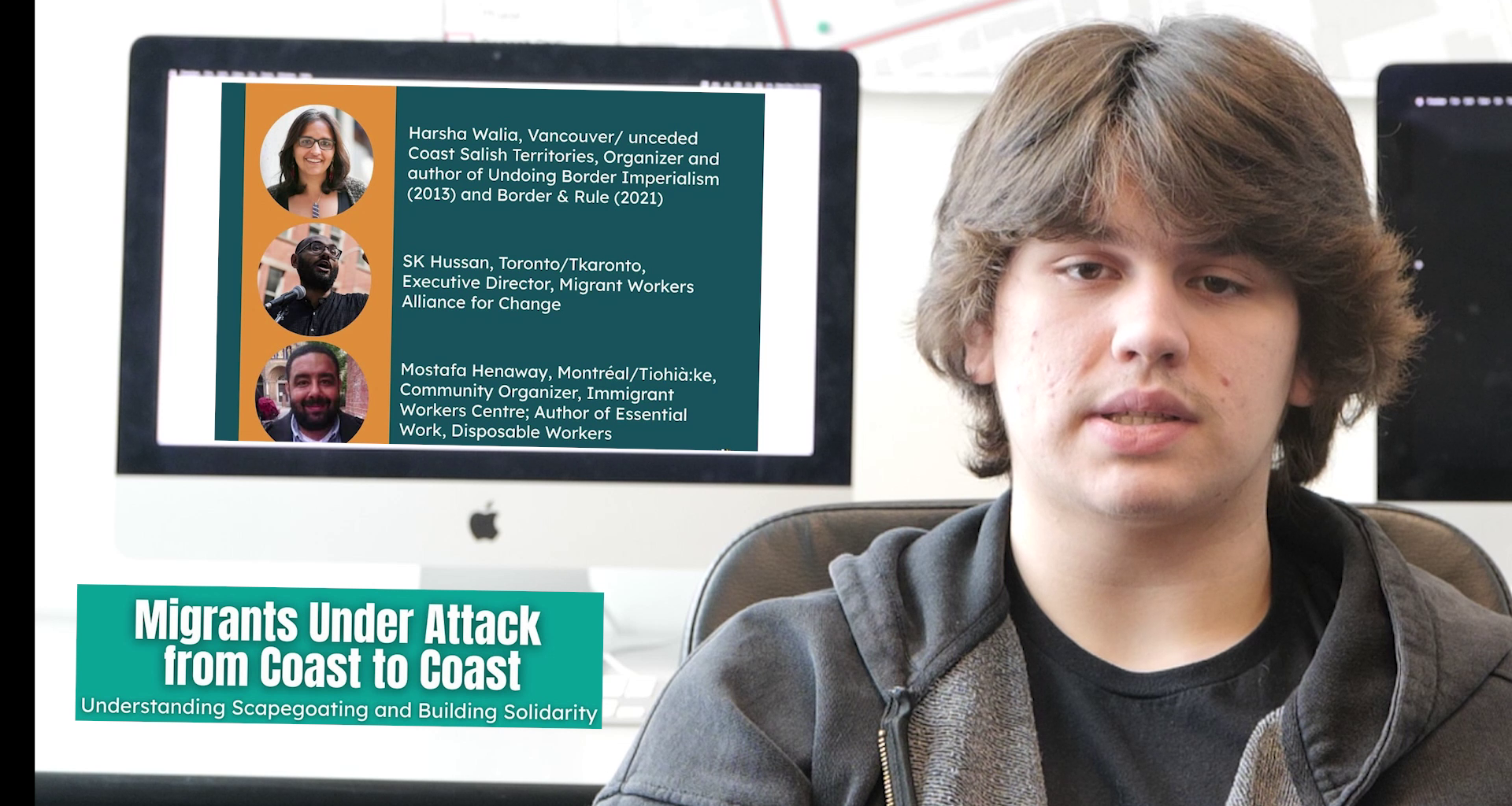
These issues were examined in a recent virtual panel hosted as part of Toronto’s Anti-Racist Webinar Series, featuring migrant justice organizers S.K. Hussan of Migrant Workers Alliance for Change, author and organizer Harsha Walia, and Mostafa Henaway of the Immigrant Workers Centre in Montreal. The panel unpacked how political scapegoating divides communities and obscures the real drivers of inequality.
The discussion also pointed toward solidarity as a necessary response. For Regent Park, where many residents are migrants themselves, confronting scapegoating is about protecting workers, strengthening community ties, and insisting on systemic solutions—not blame.