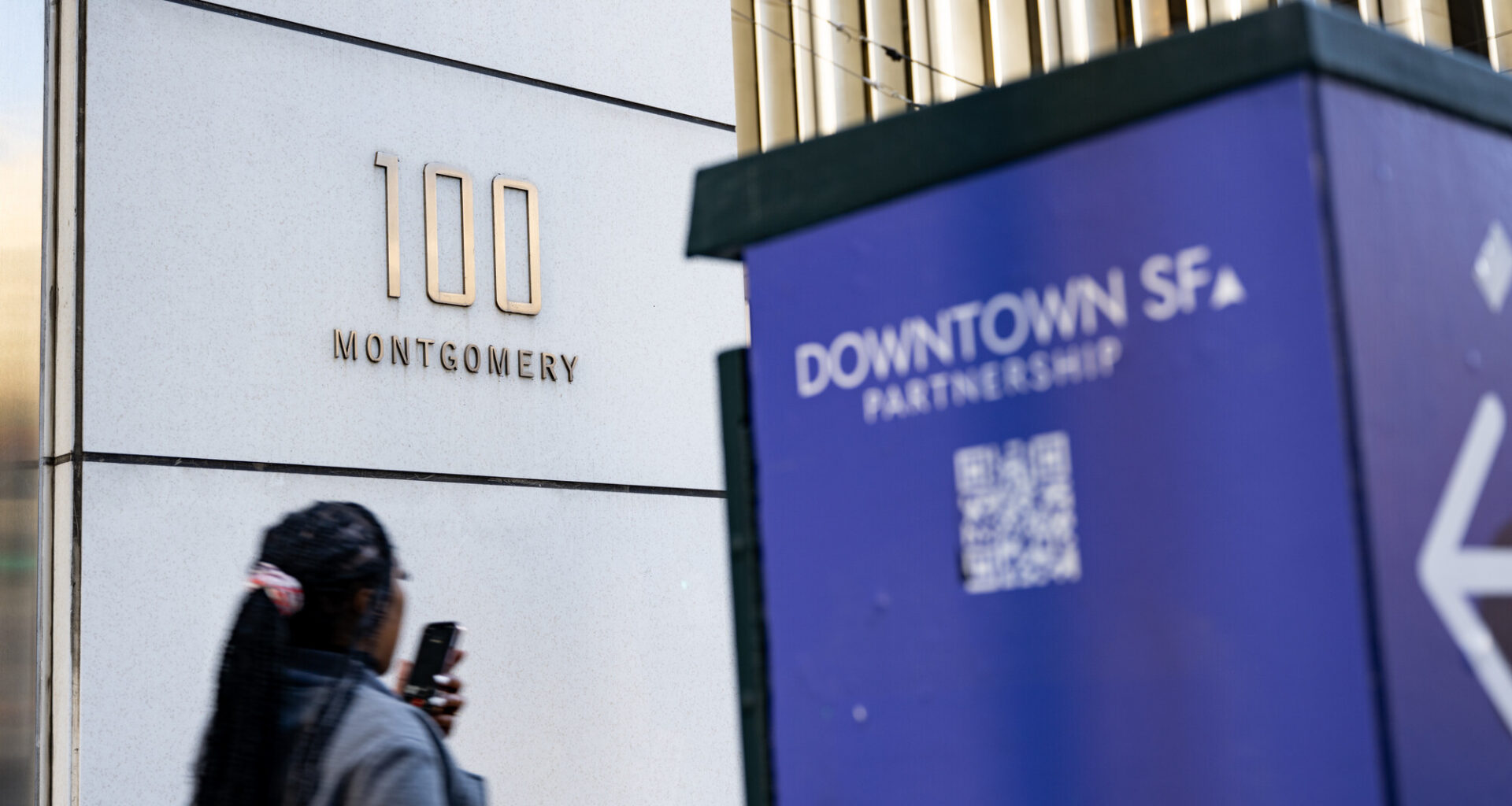
The San Francisco court, which is the largest of three that hear cases from the Central Valley to the Oregon border, has a backlog of 120,000 cases.
Another in Concord, which opened in 2024 and was expected to grow to a similar size, has just seven judges. Sacramento’s smaller court shrunk from six to three judges last year. The two locations are responsible for around 90,000 more cases.
On Wednesday morning, the line of people waiting for check-in appointments outside the ICE field office on Sansome Street, about half a mile from the court, extended down the block and around the corner. Martens said some of the people standing outside the federal building, holding folders of legal paperwork and bundled against the early morning cold, had also been lined up Monday or Tuesday but hadn’t made it through the long, slow-moving queue.
The Rev. Deborah Lee, who heads the Interfaith Movement for Human Integrity, said she sees the closure of San Francisco’s court as part of a series of moves by the Trump administration to dismantle the immigration judicial system.
Last spring, ICE officers began arresting immigrants outside courtrooms where they had mandatory hearings, a tactic that was previously unprecedented. DOJ attorneys would move to have asylum-seekers’ cases dismissed, while officers waited in courtroom hallways to take them into detention if they were. The DOJ used similar tactics to detain immigrants who reported to ICE check-in appointments like those held at 630 Sansome St.
If asylum-seekers fail to appear for a mandatory hearing or appointment, their case can be dropped altogether.
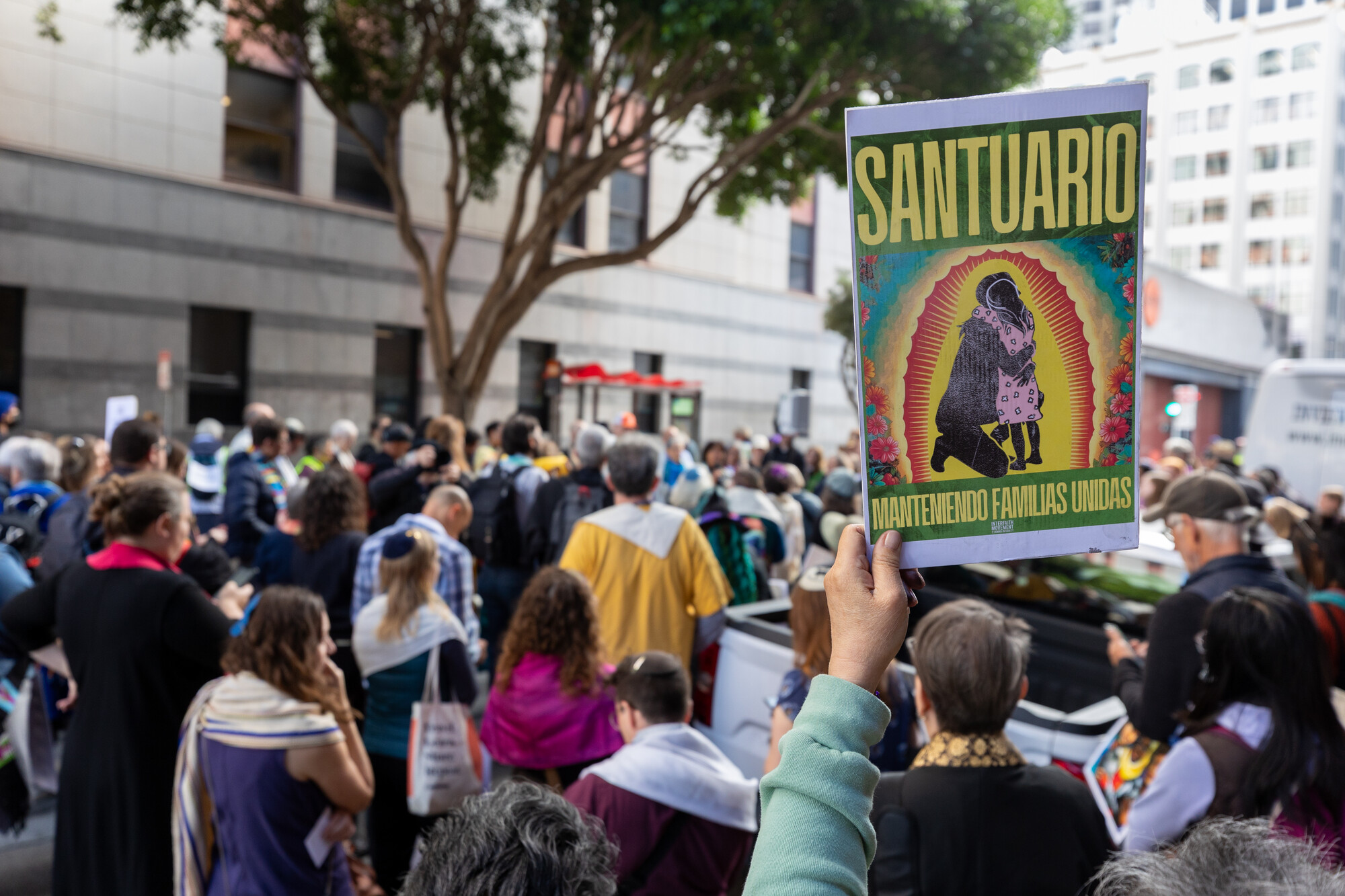 A demonstrator holds a sign reading “Santuario: Manteniendo Familias Unidas” (“Sanctuary: Keeping Families United”) during the Faith in Action “Walking Our Faith” vigil outside the San Francisco Immigration Court on Nov. 6, 2025. The multi-faith gathering called for compassion and protection for immigrant families. (Gustavo Hernandez/KQED)
Marks said prosecutors have also increasingly moved to deny cases before immigrants have a hearing and offer asylum cooperation agreements, under which people can go to a country other than their home country if they agree to leave the U.S., without taking the necessary legal steps.
“What this current administration has been doing is almost like a smash-and-grab robbery. They’re not following any of the established rules … providing flimsy and transparent justifications, or just disregarding the rules,” Marks said. “Some might not hold up with litigation, but they aren’t waiting.”
Milli Atkinson, who directs the Immigrant Legal Defense Program at the Bar Association of San Francisco, said it is possible that the DOJ could shift some hearings in the city to three courtrooms in the Sansome Street building, which is federally owned and not expected to close. But no judges are located at the site, and the communication sent to Montgomery Street staff suggests that operations will be consolidated to Concord.
“Logistically, it’s just going to be a nightmare,” she said. “It is going to be chaotic for several months, where people are not going to know if they have a hearing scheduled, where the hearing is scheduled, who their judge is, if their case is going to be moved.”
Amanda Maya, the asylum program director at the Lawyers’ Committee for Civil Rights, said the move also backpedals on the goal of opening Concord’s court: easing access for immigrants in the East Bay and Central Valley.
“It was an incredible development for people who were already in the East Bay and were having to travel to San Francisco, where it didn’t make sense, or people in the Central Valley who unfortunately don’t have an immigration courthouse,” Maya said. “But now we’ve created the problem that existed, but for people on the Peninsula or people who live in the South Bay.”
Maya also said that many of the Bay Area’s legal resource centers and nonprofits are based in San Francisco because of its proximity to the court. Programs like the Bar Association of San Francisco’s Federal Pro Bono Project, through which immigrants can get legal advice from attorneys, have spent years building relationships with the city’s judges and court staff.
Marks said it’s not unheard of for the immigration court to move to a new location when its lease expires, but she said eliminating what has been perceived as one of the most liberal courts nationwide feels calculated.
“For a long time, it has been seen as a thorn in the side of more restrictive immigration policies,” Marks said. “The only rationale I can find to justify closing the San Francisco court instead of relocating it in the close area … is that it’s an effective way to close down a more liberal court.”
KQED’s Tyche Hendricks contributed to this report.