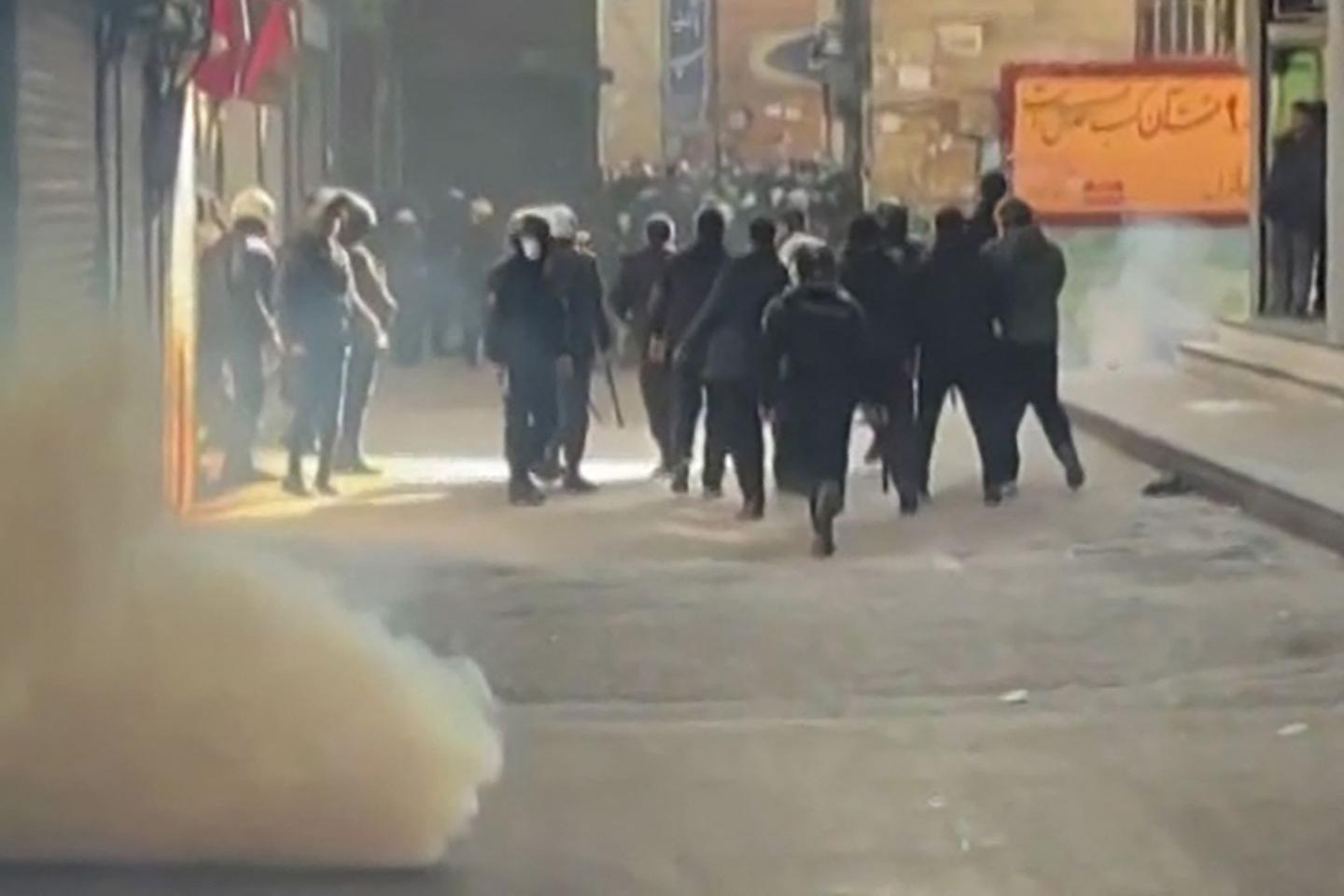
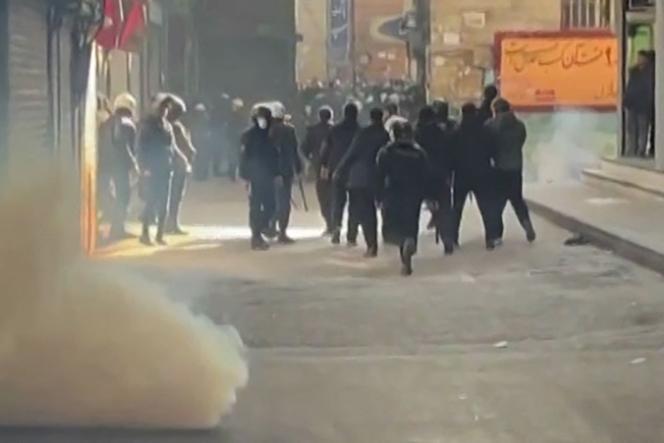
 Footage circulating on social media shows Iranian security forces dispersing protesters in the bazaar of Tehran, Iran, January 6, 2026. AFP PHOTO/UGC/ANONYMOUS
As Tehran sinks deeper into a state of mounting strategic paralysis, tensions are growing between Iran, the US and Israel. The episode is unfolding against the backdrop of a fresh wave of protests throughout the country over the past 10 days, as well as US forces’ abduction of Venezuelan president Nicolas Maduro – an ally of Tehran – on Saturday, January 3.
The Iranian Defense Council, a body created after the June 2025 war between Iran and US-backed Israel, said in a statement on Tuesday, January 6, that it no longer ruled out the use of preemptive strikes against Tehran’s enemies.
“Within the framework of legitimate defense, the Islamic Republic of Iran is not confined to a reaction after the action” of an enemy, the statement read. It also denounced Iran’s “long-standing enemies” and stated that “the repetition and intensification of threatening rhetoric and interventionist positions constitute hostile behavior” toward Tehran, making explicit references to the US and Israel.
US warning
On Sunday, January 4, US President Donald Trump reaffirmed his support for Iranian protesters, who have mobilized since December 28, 2025. Aboard Air Force One, he told reporters: “If they [Iranian leaders] start killing people like they have in the past, I think they’re going to get hit very hard by the United States.” He thus reiterated a warning published two days earlier on his social media platform, Truth Social, in which he asserted that Washington would directly support peaceful protesters if Iranian authorities resorted to violent repression.
You have 77.24% of this article left to read. The rest is for subscribers only.