There is a lot more to the UAE’s recently announced US$150 billion turbo-boost to its gas sector than meets the eye. It is true that it should deliver multiple economic benefits for the Middle Eastern country on a scale disproportionately larger than its small geographical size. One is gas self-sufficiency by 2030; another is increased feedstock for high-value petrochemicals production; and a third is powering a dramatic expansion in its artificial intelligence capabilities. However, it is also true that such major build?out of its gas sector will push the UAE rapidly up the ranks of global liquefied natural gas (LNG) suppliers — and with that comes a host of geopolitical ramifications. So, what exactly does the gas expansion look like, and what precisely is the UAE planning?
The bare bones of the plan are straightforward enough, but nonetheless impressive for that. The UAE will spend around US$30 billion a year for the next five years through its key state energy firm, the Abu Dhabi National Oil Company (ADNOC). Industry analysis suggests this will raise its gas output from around 6 billion cubic feet per day (Bcf/d) to about 9 Bcf/d — an increase of 50%. Over the same period, ADNOC forecasts that UAE gas consumption will rise by 25% at most, leaving a net surplus of 25%. This comes against the broader backdrop of a modest increase in recent years in the UAE’s conventional natural gas reserves from 290 trillion cubic feet (Tcf) to 297 Tcf, giving it the seventh-largest in the world. The initial focus of this investment will be the giant Ghasha offshore gas concession — including both the Ghasha and Hail sites — which is expected to see a rise in output from 1.5 Bcf/d to 1.8 Bcf/d by 2028. The project successfully secured US$11 billion in structured financing in December. Among all these numbers, one fact stands out: the UAE’s US$30 billion a year in gas?sector capital expenditure exceeds the US$27–29 billion total capex estimated to have been spent last year by U.S. oil and gas giant ExxonMobil.
Related: Equinor Not Planning Venezuela Return after Maduro Capture
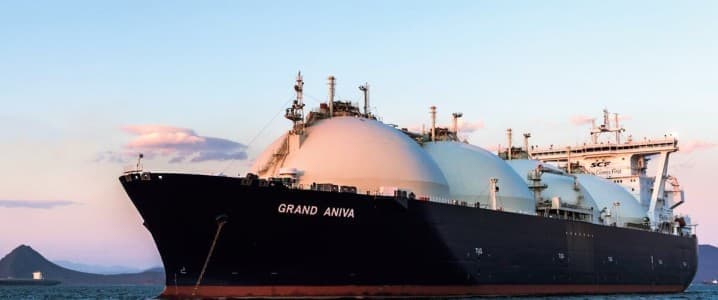
A primary focus of the UAE’s soon-to-be gas surplus will be LNG, according to statements from participating firms. Unlike pipelined gas, LNG can be quickly bought in the market and then shipped expeditiously to wherever it is required, which has made it the world’s key emergency energy source since Russia invaded Ukraine on 24 February 2022. With either a supernatural degree of ‘good luck’ or very good advance information, China signed multiple long-term LNG contracts at preferential prices in the 12-month run-up to the outbreak of war, as analysed in full in my latest book on the new global oil market order. This left Beijing in an exceptionally advantageous position to weather the ensuing storm of spiralling energy prices. Since then, Washington and London have ensured that those countries that had been highly dependent on Russian gas supplies – notably several in Europe – have been able to secure long-term LNG contracts with other suppliers. Meanwhile, forecasts indicate that artificial intelligence, cloud, and heatwave-driven power needs will drive 40-50% of incremental global gas demand through to 2040 at minimum. Moreover, industry projections suggest that by that point, data centre-related demand could add 150–200 billion cubic metres a year globally, a 3.6-4.9% increase over current global gas demand projections.
This said, even before Russia’s invasion of Ukraine heightened the appeal of the UAE as a new source of LNG supplies, the country was already front and centre in Donald Trump’s strategy for the Middle East and beyond during his first term as president. Occupying a key geographical position next to Saudi Arabia and Oman, with coastlines in both the Persian Gulf and the Gulf of Oman, the UAE is an ideal energy hub between the West and the East. This advantage is reinforced by its extensive network of ports and storage facilities spread across the seven constituent emirates of Abu Dhabi, Ajman, Dubai, Fujairah, Ras Al Khaimah, Sharjah, and Umm Al Quwain. At least as important to Washington at the time was the UAE’s close relationship with India — China’s principal economic and political rival in the Asia?Pacific region, a theme also fully analysed in my latest book on the new global oil market order. A clear indicator of this was ADNOC being selected as the only overseas company permitted to store crude oil in India’s Strategic Petroleum Reserves (SPR), with New Delhi even allowing the UAE firm to export that oil to provide greater operational flexibility. By 2020, a slew of new oil and gas sector deals between the UAE and India was being prepared, underscored by comments from ADNOC chief executive Sultan Ahmed Al Jaber. He noted in early 2020: “Today, Indian companies represent some of Abu Dhabi’s key concession and exploration partners… [and…] As we continue to work together, I see significant new opportunities for enhanced partnerships.” At that time, the U.S. administration viewed the UAE as a potential vital link between meeting India’s rapidly growing oil and gas needs and strengthening New Delhi’s challenge to Chinese influence in the Asia?Pacific, as part of a broader U.S.-aligned strategic framework. Moreover, Trump believed the UAE could also act as the key early player in his plan to re-establish U.S. influence in the Middle East through a series of ‘relationship normalisation’ deals between major Arab states and Washington’s main ally in the region — Israel. To this end, the UAE was the first major Middle East country to sign such a deal, on 13 August 2020.
That said, the U.S.’s strategy for the UAE has not always gone to plan. Most notably, Christmas 2021 saw news break that China had been building a secret military facility in and around the big UAE port of Khalifa. Based on classified satellite imagery and human intelligence data, U.S. officials stated that Beijing had been working for several months to establish a military foothold in the country. UAE authorities said they were unaware of the extraordinary level of activity being conducted by China at one of their biggest ports, including months of unusually heavy movements of large Chinese vessels in and out of the facility day and night. Under subsequent U.S. President Joe Biden, the relationship showed no signs of improving, with the UAE’s leader, Sheikh Mohammed bin Zayed Al Nahyan, refusing to take a phone call from his U.S. counterpart during the early phase of the Ukraine war, when was seeking help to stabilise spiralling energy prices. However, since Trump’s second presidential term, the U.S. strategy appears to be on track. U.S. institutions will be helping finance the UAE’s conventional gas push and have been instrumental in providing hydraulic-fracturing expertise to ADNOC as it develops its own shale oil and gas resources. On the other side of the equation, UAE-based firms Dana Gas and Crescent Petroleum are paying a key role in the Khor Mor gas expansion project in the semi-autonomous Kurdistan Region of Iraq, while Dana Gas has also recently signed a major deal with Syria’s state oil company to look at redeveloping that country’s natural gas fields too.
By Simon Watkins for Oilprice.com
More Top Reads From Oilprice.com