Governments have historically used family separation as a tool to disempower specific racial and ethnic communities. Examples include slavery, Native American boarding schools, Japanese-American incarceration, and what we are currently witnessing with the mass incarceration and deportation.
Today, families are being separated under the guise of national security, much like the WWII incarceration of Japanese Americans from Hawaii. West Coast Japanese Americans were largely incarcerated as family units. In Hawaii, when fathers were arrested, mothers and children were left to provide for themselves.
A Big Island family’s incarceration story reveals another disturbing fact of family separation. Government agents told a mother with a 21-month-old daughter if she were willing to go to the mainland, they would be reunited with her husband. She agreed. However, she and her young daughter were sent to the incarceration camp in Jerome, Ark., which according to Densho (densho.org.) held over 800 inmates from Hawaii, the largest contingent sent to a war relocation camp. Her husband, a Zen Buddhist priest, classified without evidence as a “known dangerous Group A suspect,” was held at an all-male camp in Sante Fe, N.M. The government deliberately misled her and other mothers with children from Hawaii.
She was separated from her husband for roughly a year. She petitioned the government to reunite her with her husband, and this is the reply (in part) that she received on July 2, 1942:
“It is not known by this office how soon family internment space will be available for families from Hawaii whose husbands and fathers have been interned. This office, however, has called attention to the Department of Justice to the need for family internment in Hawaiian cases and has sent to the Department of Justice a list of cases in which family internment should be brought about as soon as possible. This list includes your husband’s name. — Director, Prisoner of War Division”
This letter confirms that the government’s promise of family reunification was not its intention.
Don’t miss out on what’s happening!
Stay in touch with breaking news, as it happens, conveniently in your email inbox. It’s FREE!
There were Japanese Americans in incarceration camps with the attitude “shigata ga nai” (it cannot be helped). It was a way to cope with the harsh conditions and the emotional strain of the incarceration camps.
But the dehumanizing family separation policy and the generational trauma it inflicted took its toll. According to the National Library of Medicine, family separation and other factors have caused psychological stress, which proved too much to bear for some inmates. On-stie suicides were estimated to be four times higher than the pre-incarceration of Japanese Americans.
The United States Holocaust Memorial Museum in Washington, D.C., has an exhibit on the Japanese-American incarceration of WWII. The exhibit includes a March 1942 public opinion poll by the National Opinion Research Center with this Q&A: Do you think we are doing the right thing of moving Japanese aliens (those who are not citizens) away from the Pacific coast? 93% said, YES. According to the National WWII Museum, about two-thirds of the 120,000 inmates were American citizens.
Currently, polls are consistently showing that majority of Americans disapproves of the government’s mass incarceration and deportation policy.
Today, shigata ga nai does not stand. Thousands of people around the country are protesting the inhumane treatment that’s traumatizing children and parents every day because of race. Protests were lacking during the Japanese American incarceration. So, in that sense, history is not repeating itself — perhaps the people are demonstrating resistance because of it.
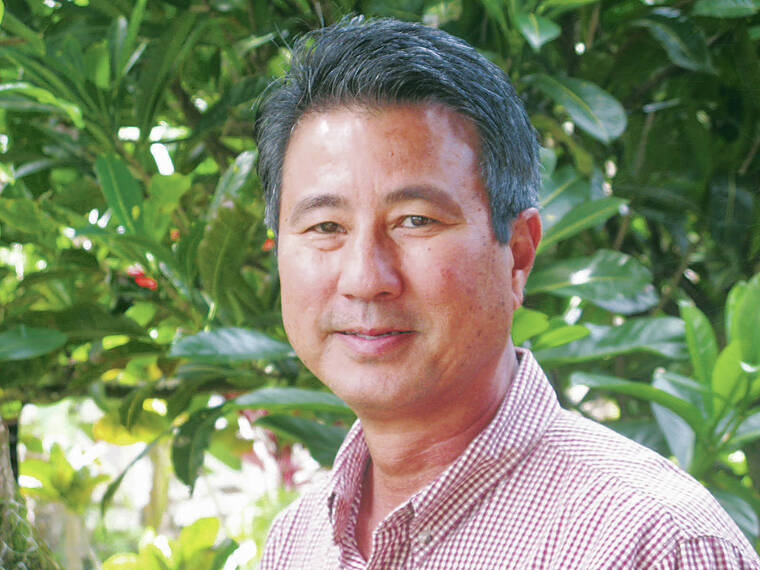
Dan Nakasone is a guest writer for an online Japanese-American journal, and producer for a PBS series featuring Hawaii’s multicultural community.