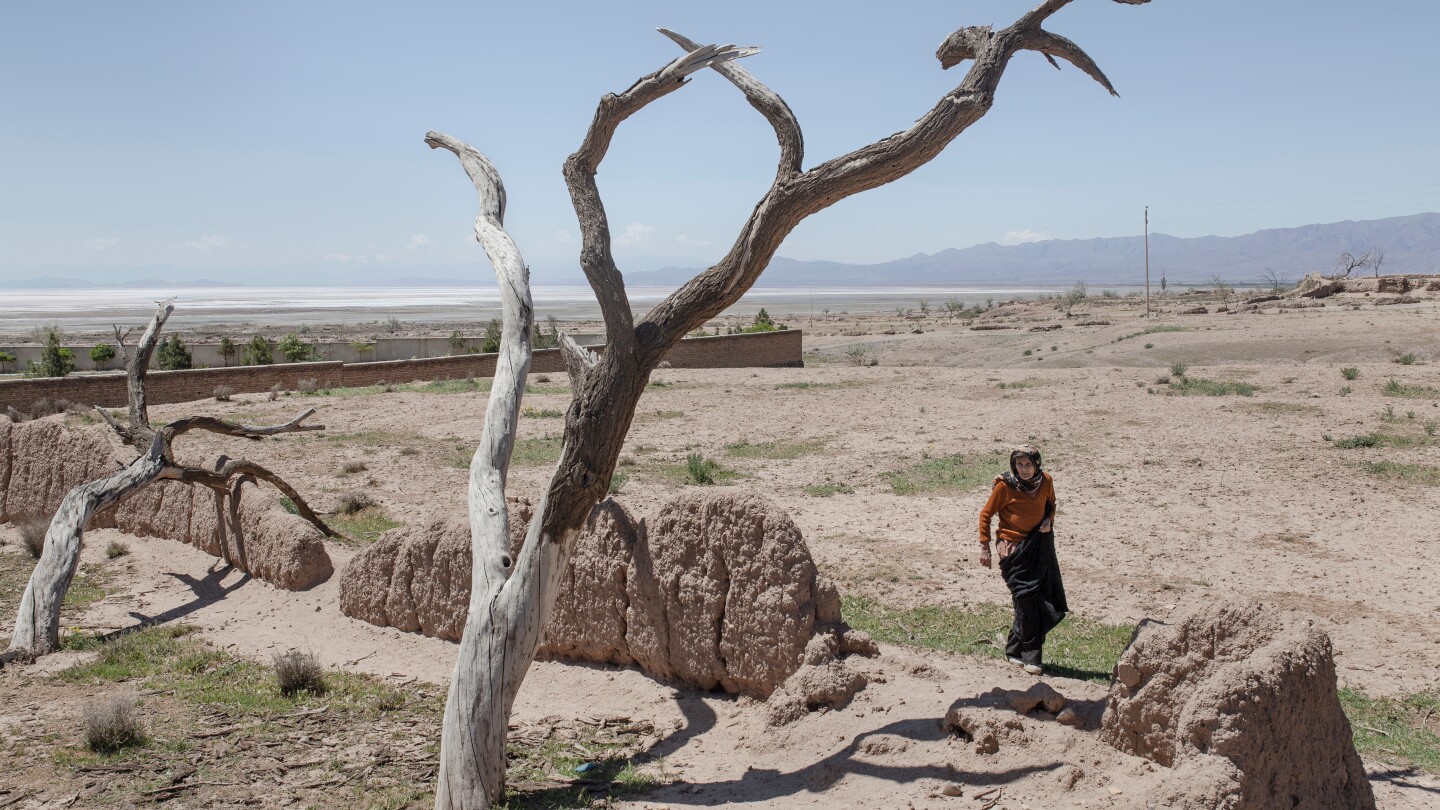
Many Iran-watchers with growing excitement await the Islamic Republic’s downfall: a system that has ruled for nearly forty-seven years, shown little mercy to opponents, degraded minorities and—by exploiting post-revolution euphoria and early public support—pushed the country toward what American philosopher Hannah Arendt called the banality of evil.
The infrastructural and ecological wreckage left by the regime will be vast. The Islamic Republic did not just crush politics; it made millions of Iranians poorer. And at the center of that wreckage sits a power structure too many analysts still dismiss as a punchline: the “water mafia.” They are not joke but, rather, steer major slices of the national budget into megaprojects—often with minimal oversight—funneling billions into entrenched patronage systems, including entities linked to the Islamic Revolutionary Guard Corps.
The infrastructural and ecological wreckage left by the regime will be vast.
For anyone tracking Iran’s water crisis, the truth is that dam-building and inter-basin transfers sold as “helping the people” have done the opposite: deepened scarcity, driven migration, worsened unemployment and poverty—and inflamed regional tensions. For decades, the regime has concentrated the largest megaprojects in the country’s southwest. They pitched dams on headwaters to local communities as job engines and guarantees of permanent water for agriculture. In many cases, what they delivered were short-term construction jobs, long-term water stress, and political patronage.
Much of this machinery has run through Khatam al-Anbiya as a dominant contractor and Mahab Ghodss, a key consulting arm. The outcome is visible across the Zagros foothills and plains: hardship, towns supplied by water tankers, and communities that once lived alongside major rivers now facing rationing and dry taps. As surface flows shrank, farmers tapped groundwater—until that lifeline began to fail, too. Meanwhile, persistent investigations suggest that some water has been diverted away from communities to support strategic industrial and security sites, including facilities tied to the nuclear sector.
Iran endured for millennia with disciplined groundwater management. Since the mid-twentieth century, it has shifted toward instability: over-extraction has burned through the country’s water reserves and triggered land subsidence in multiple provinces. In dense urban areas—especially where seismic risk is high—subsidence raises the odds that the next major earthquake becomes a mass-casualty event.
Yet the earthquake shaking Iran now is political, rooted in decades of economic misrule and catastrophic water governance. There is a pattern to the geography of recent clashes and protests: many hotspots overlap with areas that have suffered severe water stress in recent years. The bigger question is whether anyone is preparing for stability after a collapse.
Many aquifers are depleted. In that condition, recovery becomes a narrowing window—not a guaranteed outcome.
Iran is approaching extreme water bankruptcy. Financial bankruptcy can be managed: institutions restructure debt, inject liquidity, buy time. Water bankruptcy is harsher: consumption has exceeded the true balance, there is no credible plan to reduce demand, and officials keep promising supplies that do not exist. Many aquifers are depleted. In that condition, recovery becomes a narrowing window—not a guaranteed outcome.
Yes, desalination along the southeastern coast may cover part of the deficit. Expensive seawater fixes alone cannot save the rest of the country. The rational path is demanding management, flood capture and aquifer recharge, wastewater reuse, and ending incentives that reward overuse. Contrary to the water mafia’s long-running sales pitch that “more dams” will save Iran, the backbone of Iran’s supply has always been groundwater. That national water savings account is mostly dry—and it needs to be replenished, not looted. Groundwater depletion helped justify billion-dollar contracts, but it also left millions so vulnerable that many now feel they have nothing left to lose.
Water shortage will become food shortage. And even if sanctions lift after the regime falls, Iran’s ports and logistics systems will not magically reboot to supply what the country needs. Some believe that once the regime is gone, former Crown Prince Reza Pahlavi and his team—armed with slogans and foreign backing—will fix the country. But even if experts endorse his plans, the facts on the ground will not bend to wishful thinking. Iran’s future requires sustainable resource governance and a serious strategy to rescue the land in a hotter, drier climate—so millions are not pushed into migration by drought, hunger, and collapsing services. Planning has to start now, guided by experts, not flatterers orbiting a would-be savior.