The conversation around artificial intelligence is shifting from what systems can do to how autonomously they can act. As agentic AI pushes decision-making, coordination and execution deeper into the fabric of modern technology, expectations are rising — not just for scale and performance, but for tangible, real-world impact.
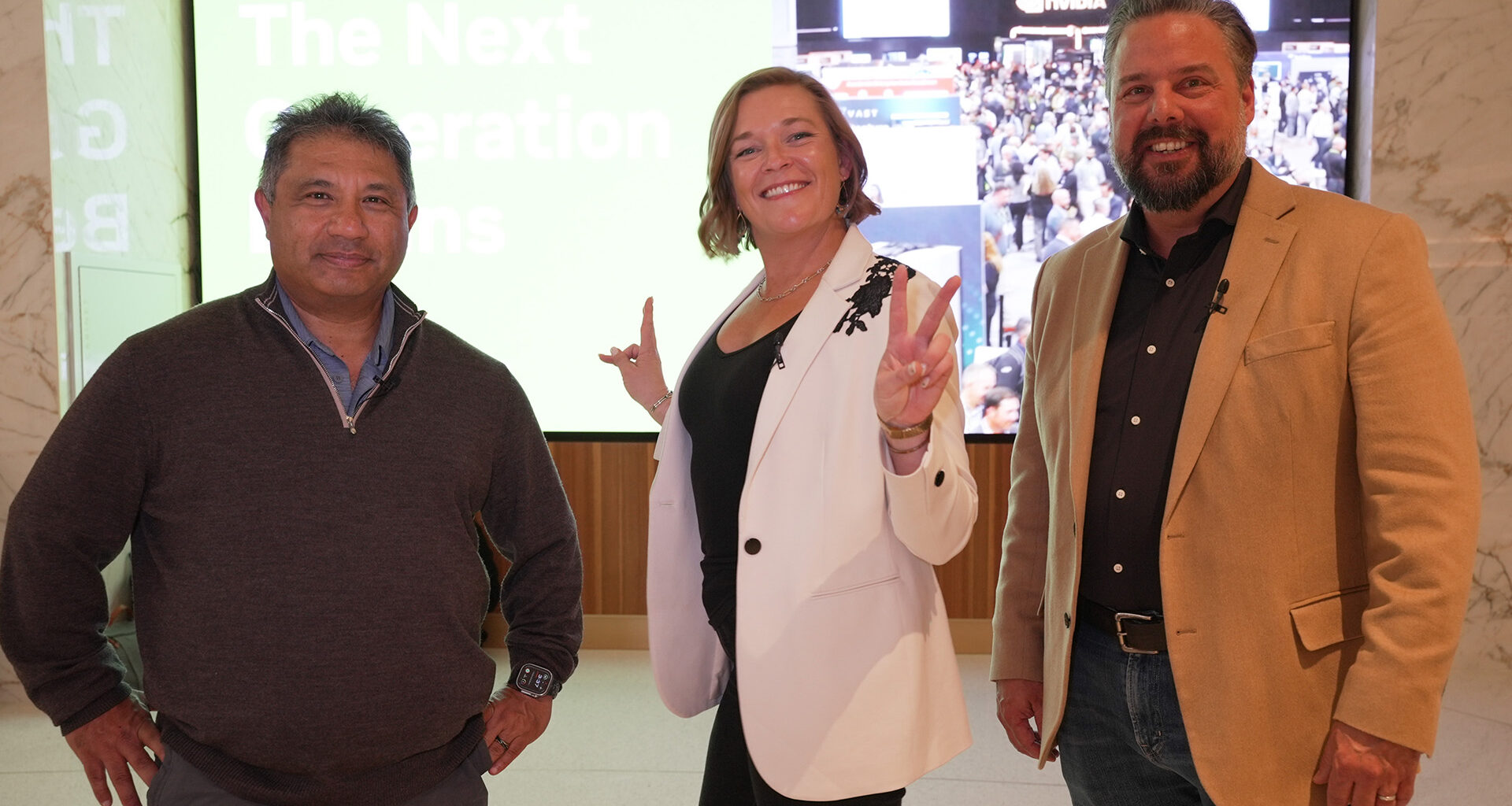
Agentic AI is increasingly taking shape as a system-level shift rather than a standalone capability. Nvidia Corp. CEO Jensen Huang, who kicked off CES 2026 as a keynote speaker, has positioned agentic AI as an interface layer for future applications, embedded across platforms and infrastructure rather than delivered as a single product. Backed by aggressive investment in compute, models and full-stack design, the strategy emphasizes autonomy at scale — while also raising questions about how clearly that impact is communicated, according to Zeus Kerravala (pictured, left), principal analyst at ZK Research.
“That interface to every application we use will be AI, will be agentic,” Kerravala said. “AI is going to be at the heart of everything we do, very much like the internet is today. I think that if you connect all those dots together, the internet will change, AI will change.”
Kerravala spoke with Savannah Peterson (center) and Rob Strechay (right) at CES 2026, during an exclusive broadcast on theCUBE, SiliconANGLE Media’s livestreaming studio. Their discussion explored how agentic AI is evolving into core infrastructure — and why its significance is not always obvious to audiences outside the technology industry.
Agentic AI and the gap between systems and impact
One of the challenges facing agentic AI is that it is increasingly framed as invisible infrastructure rather than something users directly interact with. Intelligence is being embedded into platforms, workflows and services that operate behind the scenes, which makes its value harder to demonstrate — even as its importance grows, Peterson explained.
“There is a discommunication between how the industry talks about AI and the potential impact and the way that the consumer world understands it,” she said. “There’s a chasm right now between some of the biggest companies in this space and the consumer.”
As agentic AI matures, the competitive conversation is shifting toward openness, model strategy and how platforms are assembled end to end. These decisions shape not only how systems scale, but how adaptable and accessible they become as AI moves from experimentation into long-term infrastructure, according to Kerravala.
“What [Huang] did was he laid out the fact that Nvidia has delivered more open models than anybody to date,” he said. “Then you look at what this company has become, it is a large enterprise hyperscaler company that delivers an awful lot of infrastructure, AI infrastructure to the biggest companies in the world.”
That positioning reflects a broader evolution in how Nvidia is perceived. The company is increasingly viewed not just as a chipmaker, but as a hyperscale infrastructure provider underpinning enterprise and AI systems, Kerravala added.
“I think this is the difference between say a Jensen keynote now and a John Chambers keynote back in the early days, where John would actually come out and talk about how the internet is going to change the way we live,” he said. “It’s going to allow women in Middle Eastern countries that can’t work to work for U.S. companies. It’s going to democratize education, things like that. They would talk a lot about the societal impact. I think where, and this has sort of been Nvidia’s style, they talk a little bit about it at a high level and then boom, they get down on it.”
At the same time, agentic AI underscores a move toward system-level thinking, where hardware, software and models are inseparable. That integration is what enables autonomy at scale, even if its benefits are not immediately visible.
“[Huang is] about the plumbing, the infrastructure and the tech and all of these different pieces coming together,” Strechay said. “It wasn’t just a chip. It was a set of systems.”
Here’s the complete video interview, part of SiliconANGLE’s and theCUBE’s coverage of CES 2026:
Photo: SiliconANGLE
Support our mission to keep content open and free by engaging with theCUBE community. Join theCUBE’s Alumni Trust Network, where technology leaders connect, share intelligence and create opportunities.
15M+ viewers of theCUBE videos, powering conversations across AI, cloud, cybersecurity and more
11.4k+ theCUBE alumni — Connect with more than 11,400 tech and business leaders shaping the future through a unique trusted-based network.
About SiliconANGLE Media
SiliconANGLE Media is a recognized leader in digital media innovation, uniting breakthrough technology, strategic insights and real-time audience engagement. As the parent company of SiliconANGLE, theCUBE Network, theCUBE Research, CUBE365, theCUBE AI and theCUBE SuperStudios — with flagship locations in Silicon Valley and the New York Stock Exchange — SiliconANGLE Media operates at the intersection of media, technology and AI.
Founded by tech visionaries John Furrier and Dave Vellante, SiliconANGLE Media has built a dynamic ecosystem of industry-leading digital media brands that reach 15+ million elite tech professionals. Our new proprietary theCUBE AI Video Cloud is breaking ground in audience interaction, leveraging theCUBEai.com neural network to help technology companies make data-driven decisions and stay at the forefront of industry conversations.