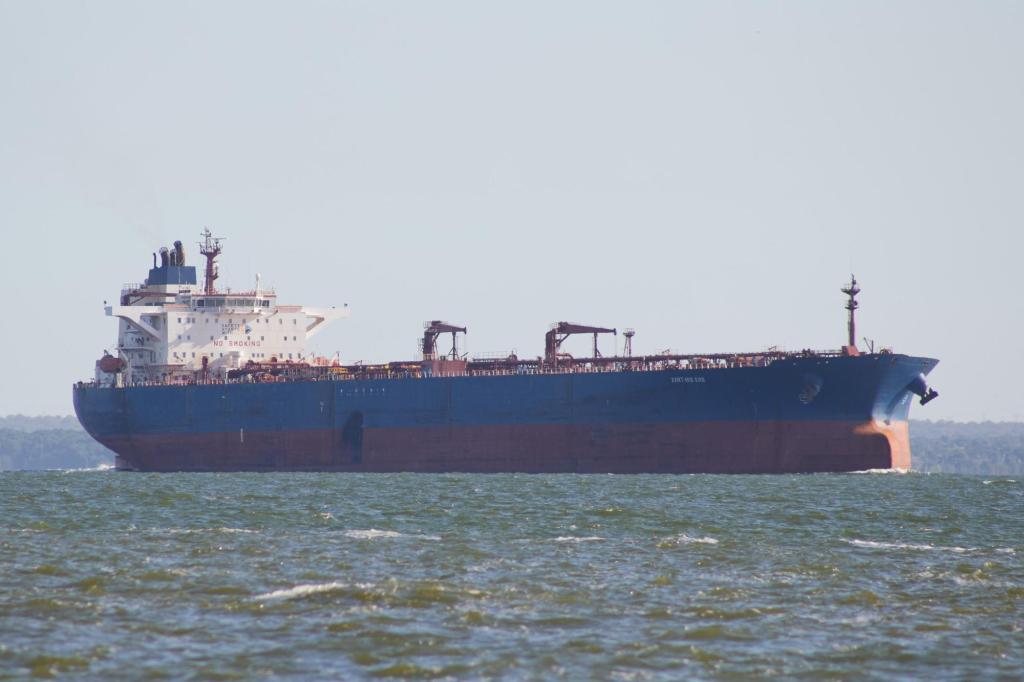
Rep. Mike Levin, a Democrat from Southern California’s 49th Congressional District, plans to bring a bill to Capitol Hill that he says will prevent taxpayer dollars from being used by oil companies in Venezuela.
The announcement comes amid questions about what happens to the South American country’s petroleum industry in the aftermath of a raid on Saturday approved by President Donald Trump that nabbed Venezuelan strongman Nicolás Maduro.
“I will be introducing new House legislation to prevent American taxpayer dollars from being used to rebuild Venezuela’s oil infrastructure,” Levin said in a statement. “Americans’ money should never be used for backroom deals or other schemes that help Big Oil companies turn a profit on the Trump administration’s operation in Venezuela.”
Asked about Levin’s plans, a White House official said in an email to the Union-Tribune, “The President remains committed to developing the right incentives for investment in Venezuela. While multiple options are being considered, there are no plans to use taxpayer dollars to reimburse infrastructure investments in Venezuela.”
Right after Maduro’s ouster, Trump said investing in Venezuela’s oil-rich energy sector is one of his administration’s primary long-term goals.
“We’re going to have our very large United States oil companies — the biggest anywhere in the world — go in, spend billions of dollars, fix the badly broken infrastructure, the oil infrastructure,” Trump said during a news conference Saturday.
But questions have been raised about the extent of U.S. efforts and how they will be carried out with the existing leadership in Venezuela, as well as any potential successors in Caracas.
According to a story in the Wall Street Journal on Wednesday, the Trump administration is considering a plan that would exert “some control” of Venezuela’s state-run oil company, Petróleos de Venezuela SA, that would include acquiring and marketing the bulk of the company’s production of crude.
The U.S. earlier this week seized two tankers linked to “illicit” oil exports from Venezuela for reported violations of sanctions — a Russian-flagged vessel in the North Atlantic and another tanker in the Caribbean.
Trump is scheduled to have a White House meeting on Friday with oil executives from companies that include Exxon Mobil, Chevron and ConocoPhillips.
Venezuela has the potential be one of the world’s top oil producers. It holds more proven reserves of crude oil — an estimated 303 billion barrels — than any other country, even more than Saudi Arabia.
But under Maduro and his predecessor, Hugo Chávez, the country’s energy sector is in free-fall. As late as 2001, Venezuela produced more than 3 million barrels of petroleum products per day. By 2024, that figure had fallen to 903,000 barrels a day, according to data from the U.S. Energy Information Administration.
Fuel analysts say resuscitating the industry won’t be easy.
Rystad Energy, an international consulting firm, predicts it will take $110 billion to increase output to 2 million barrels a day by the early 2030s.
“There’s going to have to be a tremendous amount of rebuilding of infrastructure that’s fallen into disrepair,” said Patrick De Haan, head of petroleum analysis at GasBuddy. Energy blackouts are a regular occurrence across Venezuela.
“Taxpayers should not be on the hook for risky foreign oil projects that boost Big Oil profits and won’t lower costs at home,” Levin said in a news release.
Sen. Jeff Merkley, D-Ore., says he will introduce a companion bill in the U.S. Senate.
The Union-Tribune also reached out to the U.S. State Department about Levin and Merkley’s plans, but a spokesperson said the department does not generally comment on pending legislation.
Talking to reporters Wednesday, Secretary of State Marco Rubio said officials in the current government in Venezuela “understand that the only way they can move oil and generate revenue and not have economic collapse is if they cooperate and work with the United States.”
The Senate on Thursday advanced a resolution that aims to block Trump’s ability to conduct any further military operations in Venezuela without congressional approval. The 52-47 vote included “yes” votes from five Republicans.
“If the president should determine, ‘You know what? I need to put troops on the ground of Venezuela,’ I think that would require Congress to weigh in,” said Josh Hawley, R-Mo.
In a social media post, Trump said, “This Vote greatly hampers American Self Defense and National Security, impeding the President’s Authority as Commander in Chief,” adding that the Republicans who voted in favor should “never be elected to office again.”
The resolution has virtually no chance of becoming law because it would require Trump to sign it, and the resolution still has to pass through the House of Representatives, where the GOP holds a slim majority.
The Associated Press contributed to this story.