Kaleigh Harrison
Consumers Energy has officially brought the Muskegon Solar facility online, marking its largest solar project to date and a major investment in Michigan’s renewable infrastructure. Built on repurposed land at the Muskegon Resource Recovery Center, the site spans roughly 1,900 acres and adds 250 megawatts of solar capacity—enough to power around 40,000 homes and businesses.
The project highlights how regulated utilities are accelerating utility-scale solar deployments as part of long-term grid planning, shifting renewables from a niche role into a core generation asset. Consumers Energy has framed Muskegon Solar as a key step in its broader energy transition strategy, which aims to balance decarbonization goals with growing demand and reliability requirements across its service territory.
The project also had a notable regional impact during construction, employing over 200 workers and drawing on local expertise to complete a build of this scale. Construction and engineering firm Burns & McDonnell noted the complexity of the site and the importance of leveraging Michigan’s skilled trades to meet tight timelines.
Solar Technology at Scale Reflects Changing Utility Strategy
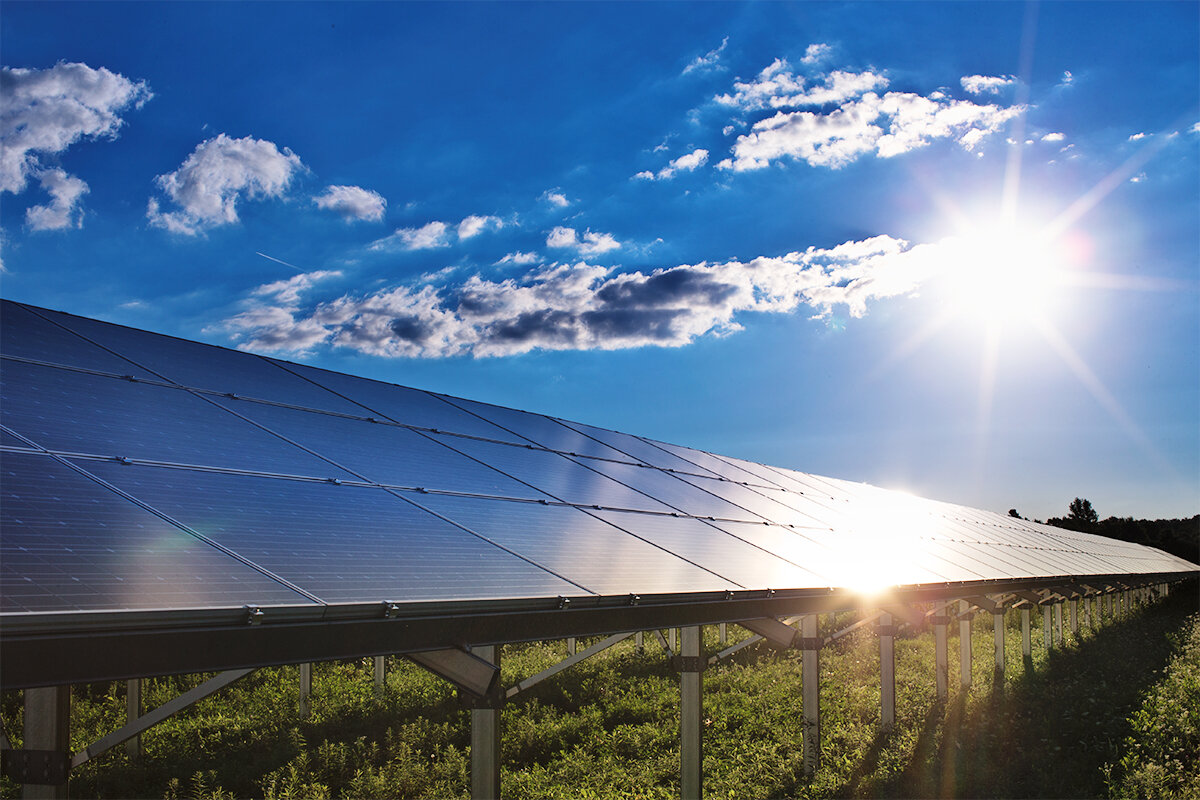
The Muskegon Solar facility is equipped with more than 550,000 solar panels installed across 5,200 rows. Each row is outfitted with single-axis tracking systems that follow the sun throughout the day, significantly increasing output compared to fixed-tilt systems. This design decision reflects a utility-scale focus on optimizing generation efficiency and supporting grid performance.
Consumers Energy’s approach doesn’t rely on solar alone. The company continues to pursue a diversified mix, integrating wind, natural gas, and battery storage to manage intermittency and maintain system reliability. Muskegon Solar is part of a growing solar footprint that includes projects tied to institutions like Western Michigan University, Grand Valley State University, and the city of Cadillac.
With Muskegon Solar now operational, Consumers Energy is positioning utility-scale solar as a central component of Michigan’s evolving grid. The use of previously industrial land minimizes land-use conflict and speeds up development, while the project serves as a reference point for how large regulated utilities can bring renewables online at scale within complex regulatory and economic frameworks.