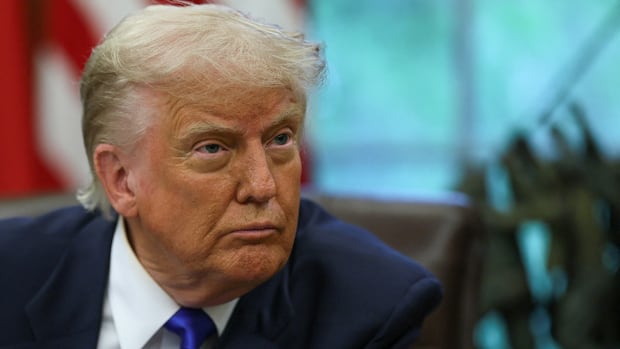
Company executives, customs brokers and trade lawyers are bracing for a Supreme Court ruling on the legality of U.S. President Donald Trump’s sweeping global tariffs — and a potential fight over obtaining a possible $150 billion US in refunds from the U.S. government for duties already paid by importers if he loses.
Anticipation that the court will strike down the tariffs Trump imposed under the International Emergency Economic Powers Act of 1977 rose following November arguments in the case when conservative and liberal justices alike voiced skepticism about whether that law gave him the authority to levy the duties.
The court is expected to issue rulings on Friday but, as is customary, has not said what case or cases will be acted upon.
Some companies anticipate that even if the court invalidates Trump’s tariffs, the Republican president will not make it easy for them to get refunds.
“It’s not in the government’s DNA to give back money. And Trump would not want to give back money,” said Jim Estill, CEO of Danby Appliances, a Canadian company that sells small refrigerators, microwaves and laundry equipment through big-box stores, including Home Depot.
The products are made in China and other Asian countries targeted by the Trump tariffs. If Danby can get its $7 million back, Estill said he is also concerned Home Depot and its customers will want a cut.
“It’s just going to be a dog’s breakfast,” Estill added.
Close to $150 billion US collected
Trump is the first president to invoke the International Emergency Economic Powers Act, or IEEPA, to impose tariffs. This law historically had been used for imposing sanctions on U.S. adversaries or freezing their assets.
His IEEPA-related tariffs generated $133.5 billion US in estimated collections between Feb. 4 and Dec. 14, 2025, the date of the most recent data from U.S. Customs and Border Protection (CBP). The current total is estimated to be approaching $150 billion US based on continuation of the average daily collection rates from late September through mid-December, as calculated by Reuters.
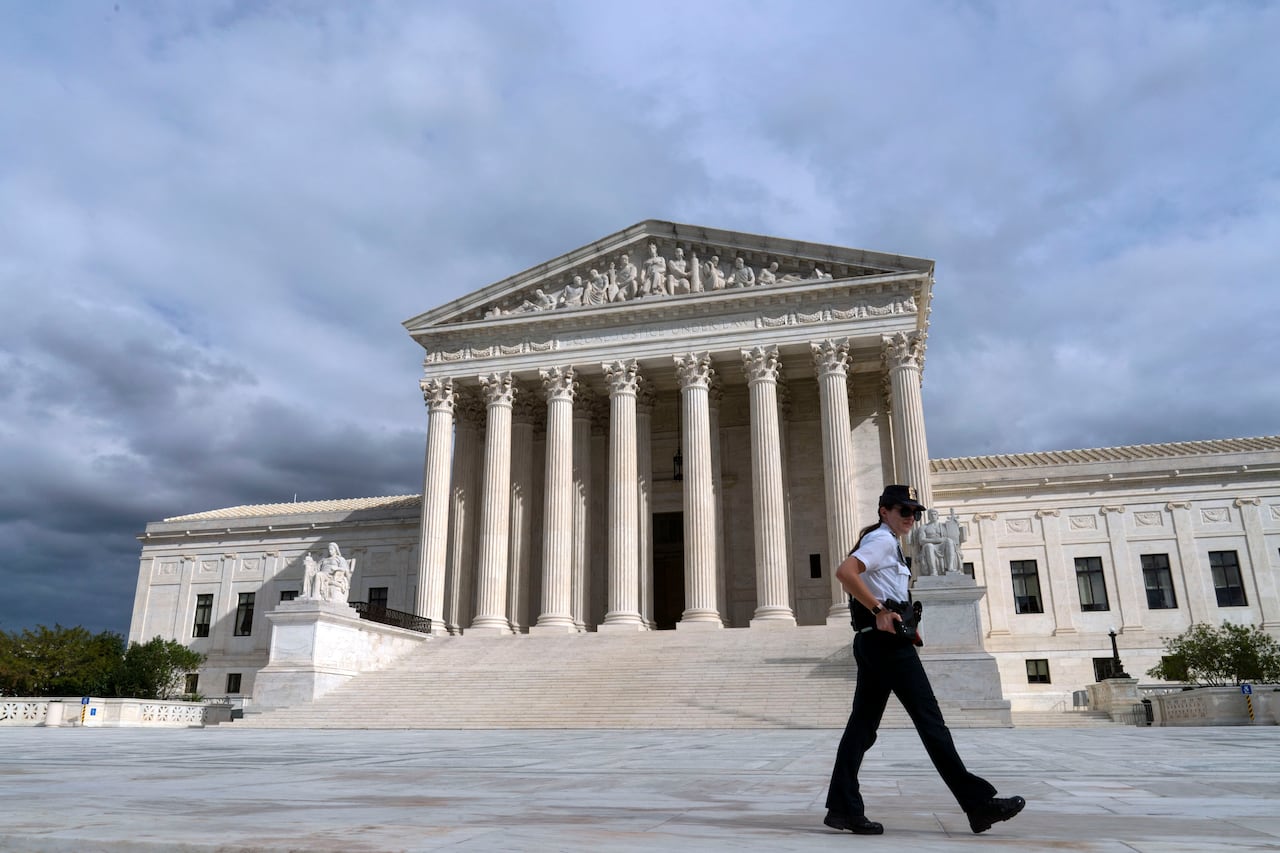
Supreme Court justices debated the legality of Trump’s tariffs last November. The Court is expected to issue rulings on Friday but has not said which cases might be acted upon. (Jose Luis Magana/The Associated Press)
U.S. Treasury Secretary Scott Bessent has voiced confidence that the Supreme Court will back Trump.
And U.S. Trade Representative Jamieson Greer has said that Treasury and CBP would need to sort out any refund rights, and expressed confidence that any lost revenues could be replicated with new tariffs levied by Trump under other legal authorities.
Trump imposed IEEPA-related tariffs in two ways. Last April, he announced “reciprocal” tariffs on goods imported from most U.S. trading partners based on a national emergency he declared concerning U.S. trade deficits. In February and March, he imposed tariffs on China, Canada and Mexico, citing trafficking of the painkiller fentanyl and illicit drugs as a national emergency.
Companies eager for refunds, but not optimistic
Any refund process would heavily depend upon whether the Supreme Court provides instructions on refunds or instead remands that matter to a lower court, likely the Court of International Trade, according to Joseph Spraragen, a New York customs lawyer with the firm Grunfeld, Desiderio, Lebowitz, Silverman & Klestadt.
Importers typically have 314 days to make corrections to their imports before they are “liquidated” and no refunds are allowed. This deadline has passed for imports from China hit with tariffs in February 2025.
The National’s At Issue panel breaks down what U.S. President Donald Trump’s threat to pull out of CUSMA/USMCA early means for the future of trade negotiations. Plus, Mark Miller returns to cabinet and quickly rubs Quebec’s premier the wrong way.
Some companies, including warehouse-club operator Costco, have filed preemptive lawsuits against the CBP to preserve their rights to potential refunds. Costco in a legal filing called the action necessary because even if the Supreme Court finds the duties unlawful, importers that have paid IEEPA-related duties “are not guaranteed a refund for those unlawfully collected tariffs” without judicial relief.
Tuna canner Bumble Bee Foods, cosmetics maker Revlon, Ray-Ban eyeglass maker EssilorLuxottica, Kawasaki Motors and Yokohama Tire have filed similar suits.
Jay Foreman, CEO of Basic Fun!, which sells Tonka trucks, Care Bears and K’Nex construction toys, expressed skepticism that the company will see any of the $6 million US in tariffs it had paid before the Christmas selling rush. Foreman said he expects the Trump administration to “obfuscate or delay” refund payments even if ordered to make them.
Pete Mento, a trade advisory director at the Baker Tilly consulting firm, said his best advice is for companies to maintain meticulous records and move quickly. Mento said he anticipates that companies will need to prove that they paid IEEPA-based tariffs before they can get a refund.
“The people that get their claims in early and have them done correctly are the ones who are going to reap the benefits the fastest,” Mento said. “And, knowing the way the processes work in Washington, it could be years before you see that money.”
AÂ technical change disclosed by CBP on Jan. 2 that will shift all tariff refunds to electronic distribution effective Feb. 6 is raising hopes for an orderly process.
While the move stops short of hopes by importers for a fully-automatic refund process, “it does kind of signal that Customs is fully prepared to move forward with refunds, if the Supreme Court does, in fact, rule that way,” said Angela Lewis, global head of customs at freight forwarder and logistics firm Flexport.
A CBP spokesperson did not respond to questions regarding how the agency would handle a ruling against Trump’s tariffs, if that ends up happening.