Published on
January 10, 2026
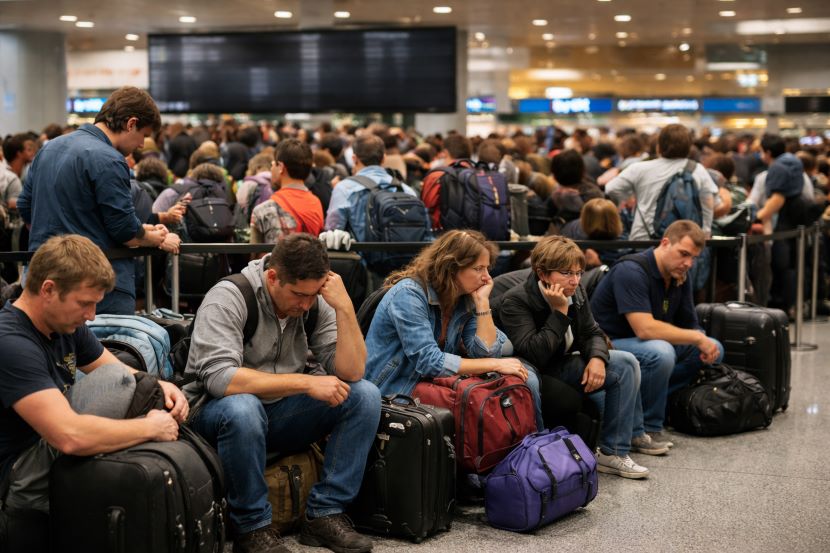
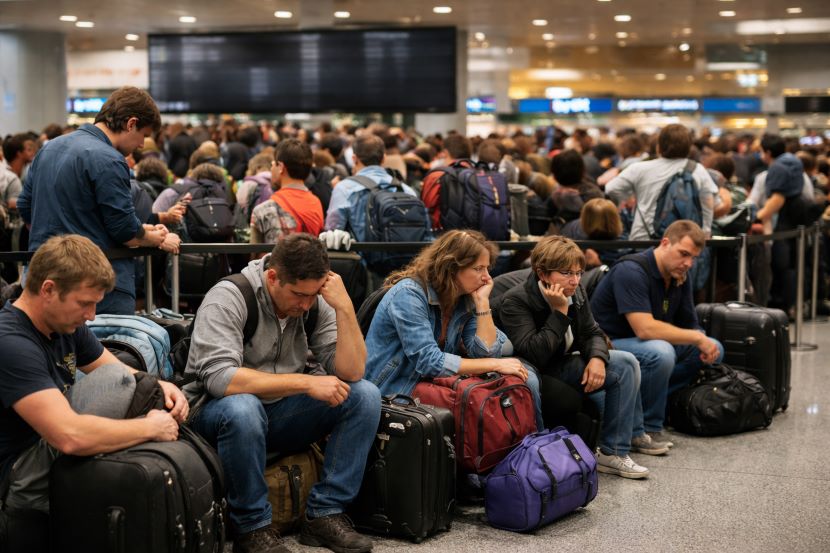
Europe is currently experiencing one of its most chaotic travel periods in recent memory. Thousands of travelers across major airports in Finland, France, Germany, the UK, Italy, Turkey, and Israel have been left stranded, with 64 flight cancellations and a staggering 715 delays wreaking havoc on their travel plans. The disruption has primarily been caused by flight cancellations and delays from Pegasus Airlines, Finnair, HOP!, Wizz Air, and Vueling, all of which have been scrambling to manage an overwhelming number of affected passengers.
Airports in Helsinki, Paris, Hamburg, London, Rome, and other major European hubs are facing severe congestion, while passengers are left waiting for hours – and in some cases, days – to find out the status of their flights. From last-minute cancellations to long-standing delays, the situation is a perfect storm of air travel chaos, leaving travelers in limbo. With many people already struggling with the financial and emotional stress of travel disruptions, the outlook for the next few days is uncertain.
Airlines at the Eye of the Storm
The primary carriers at the center of this disruption have been Pegasus Airlines, Finnair, HOP!, Wizz Air, and Vueling, each grappling with a mixture of technical failures, operational inefficiencies, and weather-related obstacles that have contributed to the chaos. Here’s a closer look at how each airline has been affected:
Pegasus Airlines: A Sky of Delays and Cancellations
Pegasus Airlines, one of the largest low-cost carriers in Turkey, has been the most severely impacted, with 301 delays and 18 cancellations reported. Its operations between Istanbul Sabiha Gokcen (SAW) and Imam Khomeini International (IKA) in Tehran, as well as several other domestic and regional routes, have faced significant disruptions. The airline’s inability to manage the storm of cancellations has left passengers stranded across key cities like Istanbul, Tehran, and Tabriz. The airline is struggling to rebook affected travelers, with some passengers reporting a complete lack of communication from customer service.
Finnair: A Winter of Woes
Finnair, the Finnish national airline, has also been deeply affected, with 20 cancellations and 78 delays. Passengers on flights between Helsinki-Vantaa (HEL) and popular destinations like Kittila (KTT) and Vienna (VIE) have experienced long waiting times, making what should have been a smooth journey an ordeal. The winter weather in Finland has compounded the problem, slowing down operations and affecting ground services. Many passengers have been stuck in Helsinki for hours, trying to find new flights or secure hotel accommodations.
HOP!: Regional Woes for French Passengers
The French regional carrier HOP!, a subsidiary of Air France, reported 9 cancellations and 81 delays, primarily affecting domestic flights within France and neighboring countries. Flights between Paris Charles de Gaulle (CDG) and Biarritz (BIQ) have been especially hit hard, with passengers facing delays ranging from a few hours to nearly an entire day. The disruption has left travelers frustrated, especially those with connecting flights or important appointments to attend.
Wizz Air: Europe’s Budget Traveler’s Nightmare
Wizz Air, the budget airline based in Hungary, has had a rough day with 11 cancellations and 191 delays across its European routes. Popular flights such as those from Vilnius Int’l (VNO) to Ben Gurion Int’l (TLV) and Larnaca Int’l (LCA) to London Luton (LTN) have been significantly delayed. Wizz Air’s low-cost model doesn’t always allow for immediate compensation or rebooking, which has made it even harder for stranded passengers to get back on track. Vilnius and Larnaca have been particularly affected, as travelers scramble to find alternatives amid a sea of disrupted connections.
Vueling Airlines: Stranded in Spain
Vueling Airlines, another low-cost carrier based in Spain, reported 6 cancellations and 64 delays on its domestic and international flights. Flights from Barcelona El Prat (BCN) to Rome Fiumicino (FCO) and London Gatwick (LGW) were among the worst hit. Although the number of cancellations was lower compared to other carriers, the sheer volume of delays left Barcelona and Rome airports overrun with passengers. Many passengers have taken to social media to express frustration with the airline’s lack of updates and the minimal support they received.
Major European Airports Facing Heavy Congestion
Airports in Helsinki, Paris, Hamburg, London, and Rome have borne the brunt of the chaos. With delayed and cancelled flights flooding in from all directions, these airports have become overcrowded, with passengers reporting extremely long queues at check-in counters, security lines, and boarding gates. Many passengers have been forced to sleep in the terminal, with limited access to food, water, or basic amenities.
Helsinki-Vantaa (HEL), in particular, has become a hotspot for stranded travelers, with Finnair and other carriers unable to depart on time. Similarly, Paris Charles de Gaulle (CDG) and London Gatwick (LGW) have also faced severe delays as ground crews work overtime to manage the backlog.
What Affected Passengers Can Do Now
The sudden storm of delays and cancellations has left many passengers confused and helpless. However, there are steps passengers can take to better manage the situation and mitigate their stress:
1. Monitor Your Flight Status
It is essential for passengers to check their flight status regularly via the airline’s website or mobile app. Pegasus, Finnair, Wizz Air, and Vueling all offer real-time updates, but these can sometimes be delayed. Staying in touch with airline representatives at the airport or through social media can also help get quick answers.
2. Know Your Rights
Under European Union law (EU 261/2004), passengers are entitled to compensation if their flight is delayed by more than three hours or if it is cancelled. Compensation varies depending on the flight’s distance. Airlines are obligated to provide meals, refreshments, and accommodation for long delays.
3. Consider Alternative Travel Routes
For those with flexible travel plans, it may be worthwhile to look for alternative routes to their destination. Consider booking flights on other airlines or looking for nearby train or bus connections that can take you to your destination.
4. Social Media for Faster Updates
In many cases, airlines are responding faster through social media channels like Twitter and Facebook. Passengers stuck at airports can use these platforms to get updates or make complaints about poor service.
5. Claim Hotel and Meal Vouchers
In cases of long delays, airlines are required to provide passengers with meal vouchers and hotel accommodation if the disruption exceeds certain hours. Passengers should inquire about these entitlements directly from airline representatives.
Conclusion
Europe’s airports have been overwhelmed by a perfect storm of cancellations and delays, with Pegasus Airlines, Finnair, HOP!, Wizz Air, and Vueling struggling to manage the ripple effects of these disruptions. As thousands of passengers find themselves stuck in Helsinki, Paris, Hamburg, London, Rome, and beyond, the lack of communication and clarity from these airlines has only made matters worse. While some passengers have taken matters into their own hands by seeking alternative travel options, others are left uncertain about when they’ll reach their destinations.
As the situation continues to unfold, travelers are advised to remain calm, stay informed, and know their rights in case of further delays or cancellations. With thousands of flights still disrupted, it could be some time before normalcy returns to Europe’s busy skies.
Source: Different airports and FlightAware
