ANCHORAGE, Alaska (KTUU) – Alaska lawmakers are bracing for budget impacts after President Donald Trump announced Friday that up to 50 million barrels of Venezuelan oil could flow to the United States.
Trump asked oil and gas executives Friday to invest $100 billion in Venezuelan oil production but left the meeting without a deal, according to CNN.
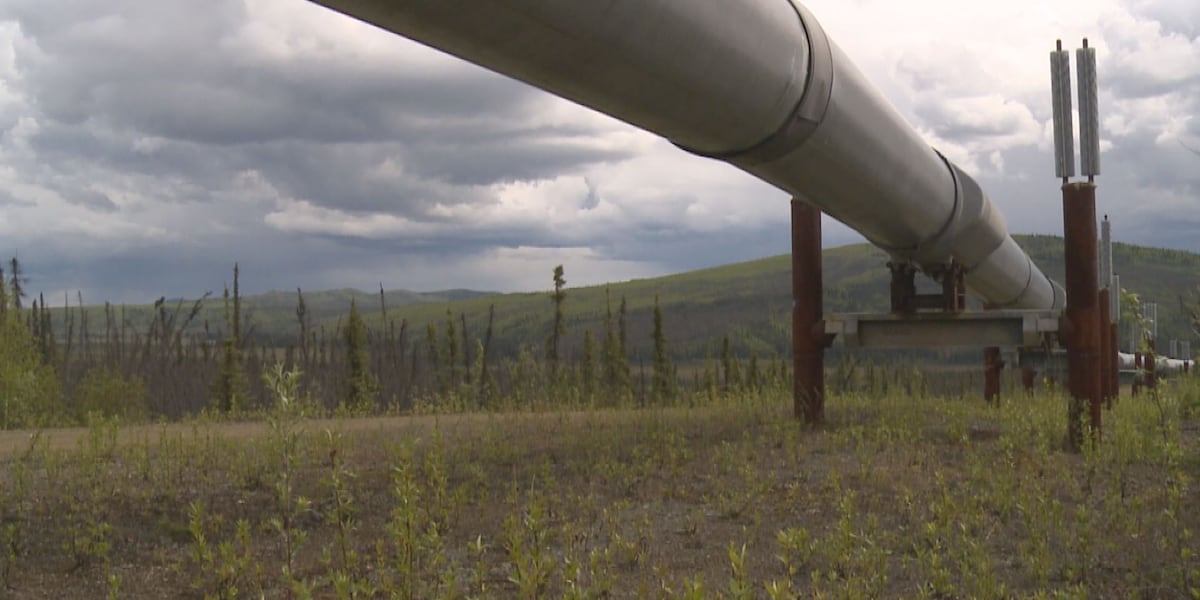
Alaska’s economy is heavily dependent on oil, which Dr. Brett Watson calls “a major contributor to the state government coffers.” Watson is a professor at the University of Alaska Anchorage’s Institute of Social and Economic Research. Watson said oil prices have remained stable since the capture of Venezuelan President Nicolas Maduro, which preceded Trump’s announcement.
“Oil prices have essentially moved sideways,” Watson said. “What that to me suggests is that the market’s reaction to this is mostly a shrug. They are unsure of how to interpret this news and are probably waiting for more information from the White House of exactly how this situation is going to develop.”
Alaska’s News Source contacted multiple state legislative leaders and the governor’s office for their reactions. Those who responded are quoted below.
House Minority Leader DeLena Johnson, R-Palmer, said she is looking for stability as the legislative session approaches.
“Volatility does not help our state budgets,” Johnson told Alaska’s News Source during the president’s meeting with oil executives.
“There’s a lot of uncertainty. And there’s some things in Alaska that are certain. We have new development. We anticipate Pikka bringing on up to 80,000 barrels this year.”
Rep. Genevieve Mina, D-Anchorage, offered a similar assessment in an interview earlier this week.
“I don’t think it’s going to make an immediate impact on our state budget,” Mina said. “But also we’re in a very precarious and unpredictable geopolitical situation.”
Prior to the president’s Friday meeting, Senate Majority Leader Cathy Giessel, R-Anchorage, said in a statement Wednesday that an increase in supply could lower oil prices.
“My concern with the Venezuela oil (is) it will certainly increase global supply, thus lowering selling price for Alaska North Slope Crude,” she said. “We balanced the current budget on $64/barrel oil. The price on Jan. 6 was $61.57. Every $1 change in the price of a barrel of oil means about a $30 million change, up or down, in Alaska state revenue.”
The price of oil has long been a double-edged sword for Alaskans.
Higher oil prices mean more state revenue but increased consumer costs. Lower prices reduce gas costs for consumers but tighten the state budget.
“As oil price falls, Americans and Alaskans enjoy lower prices at the gasoline pump for their vehicles and home budgets,” Giessel said. “Here in Alaska a lot of folks depend on heating fuel to heat their homes so a decrease in cost helps them as well.”
Higher oil prices, Watson emphasized, do have one benefit for Alaskans: larger Permanent Fund Dividends.
“When oil prices go up, it allows the state to pay out larger dividends,” Watson said.
Last year’s PFD was one of the lowest in history, adjusted for inflation, at $1,000.
Gov. Mike Dunleavy included a full statutory dividend worth $3,650 for Alaskans at in his proposed budget. With decreasing oil revenues, state lawmakers say it may not be possible to deliver.
“It’s going to be extremely difficult to hold a $1,000 dividend in the next couple of years if oil prices dip,” Sen. Bert Stedman, R-Sitka, told Alaska Public Media in December. “If they stay where they’re at and go lower, particularly if they get in the high fifties. We’ve got to make payroll.”
Trump said he wants to push oil prices down to $50 per barrel. Alaska crude prices were just above $62.87 per barrel Friday, according to the Alaska Department of Revenue.
See a spelling or grammar error? Report it to web@ktuu.com
Copyright 2026 KTUU. All rights reserved.