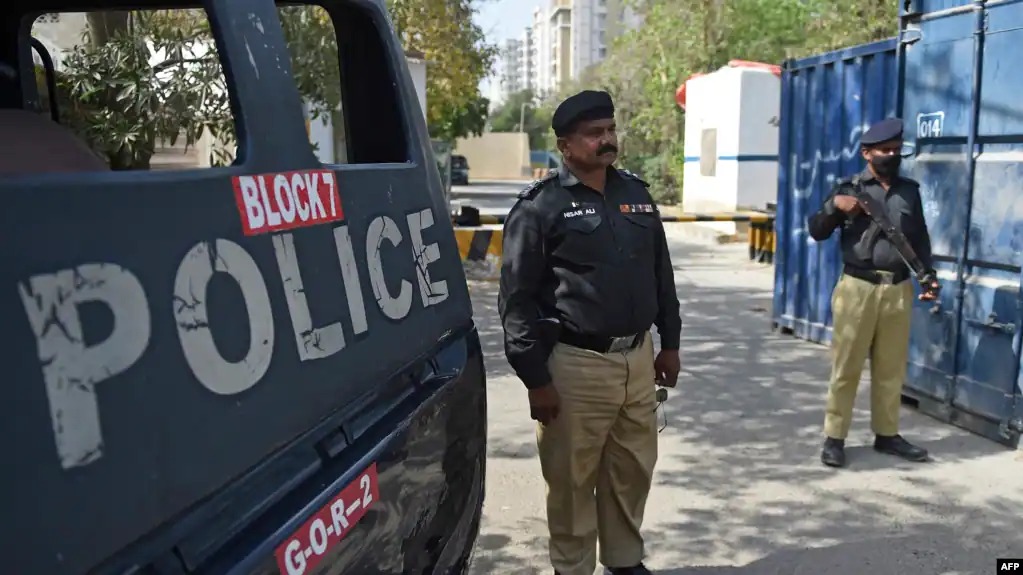
In recent months, Pakistan’s police have tightened restrictions and intensified their actions against asylum seekers, pushing thousands of children into a constant state of fear. Field reports by the Hasht-e Subh Daily reveal that stalled visa renewals, house-to-house raids, and repeated threats of forced deportation have shaken family security and deeply damaged children’s mental health and social development.
Many asylum seekers say the visa renewal process for citizens of Afghanistan has either stopped entirely or faced long delays, while police pressure has increased at the same time. They describe officers arriving at homes to check documents and, in some cases, spreading fear by taking family members away or releasing them only after money is paid. Most of these families fled to Pakistan after facing threats from the Taliban and now wait in uncertainty as they try to reach a third country.
Nasima Sama (pseudonym), a mother of two living in exile, describes a fear that never leaves her. “Among all my worries, forced deportation to Afghanistan frightens me the most,” she says. “Because of my work as a journalist, my life and my family’s lives would be in danger there. More than the physical threats, I worry about what this constant fear is doing to my children. Children raised in fear, instability, and deprivation carry these wounds into the future. My children deserve safety, education, and a normal life, yet those basic rights are being taken from them.”
She continues, her voice heavy with concern. “My older daughter jumps at the smallest sound, a doorbell or footsteps in the hallway. She keeps asking, ‘Is the police coming?’ I cannot send her to school because I do not know how to get her there when the police are everywhere. The children cannot play outside or go to parks. Their world has shrunk to closed rooms with no sense of freedom. Their anxiety has grown, they struggle to sleep, and they cling to me more each day. I can see parts of their personalities slowly breaking.”
Nora Hakimi (pseudonym), a mother of one child, shares a similar experience. “My visa had expired, and about two months ago, the police came to my home,” she recalls. “I ran away and stayed elsewhere until I received my visa. Even now, when there is any noise in the apartment hallway or the door moves, my child speaks before I do. She says, ‘Mom, the police have come. Do not raise your voice. They will take us away.’”
Asylum-seeking families say this constant security pressure has stripped them of freedom of movement. Many children no longer go to school, courses, parks, or even simple daily outings. Parents explain that their own fear seeps into their children’s lives, leading to clear signs of distress. Children withdraw socially, suffer from insomnia, become aggressive, and struggle to concentrate, problems that have grown sharply in recent months.
Najla Barkzai (pseudonym), a psychologist, warns about the lasting effects of these conditions. “Children who grow up surrounded by fear, instability, and exclusion from education and play face chronic anxiety, sleep disorders, and declining self-confidence,” she says. “When play is limited to indoor spaces and social interaction disappears, childhood freedom fades. Over time, this damages personality development and mental well-being.”
Human rights activists also warn that the recent tightening of restrictions has narrowed daily life for asylum-seeking families to a breaking point. Many children have lost access to their most basic rights, including education, play, and a sense of safety. Activists stress that ongoing threats of forced deportation, combined with the lack of support systems, will leave deep psychological scars on an entire generation growing up in exile.
Zarina Baha, a human rights activist, describes the situation in stark terms. “What asylum-seeking families face in Pakistan today is not just an administrative or migration issue. It is a clear pattern of systematic human rights violations,” she says. “When fear of arrest or deportation keeps children away from schools, parks, and healthcare, their fundamental rights are stripped away. These include the right to education, security, and healthy development. The international community and responsible institutions must not stay silent, because forced deportations and a climate of fear will leave behind a generation of deeply traumatized children.”
At the same time, the Human Rights Commission of Pakistan has said it is alarmed by the treatment of asylum seekers from Afghanistan in Sindh, Islamabad, Balochistan, and Khyber Pakhtunkhwa. The commission reports that these policies have led to the deportation of minors and the separation of children from their families. Despite strong criticism from civil society and international organizations, the Pakistani government has continued these actions, violating customary international law. The commission has urged the government to reverse this wrong approach and has stressed that children must never be separated from their parents under any circumstances.
You can read the Persian version of this report here:
نسلی با کابوس پولیس؛ کودکان پناهجوی افغانستان در پاکستان قربانی سیاستهای اخراج