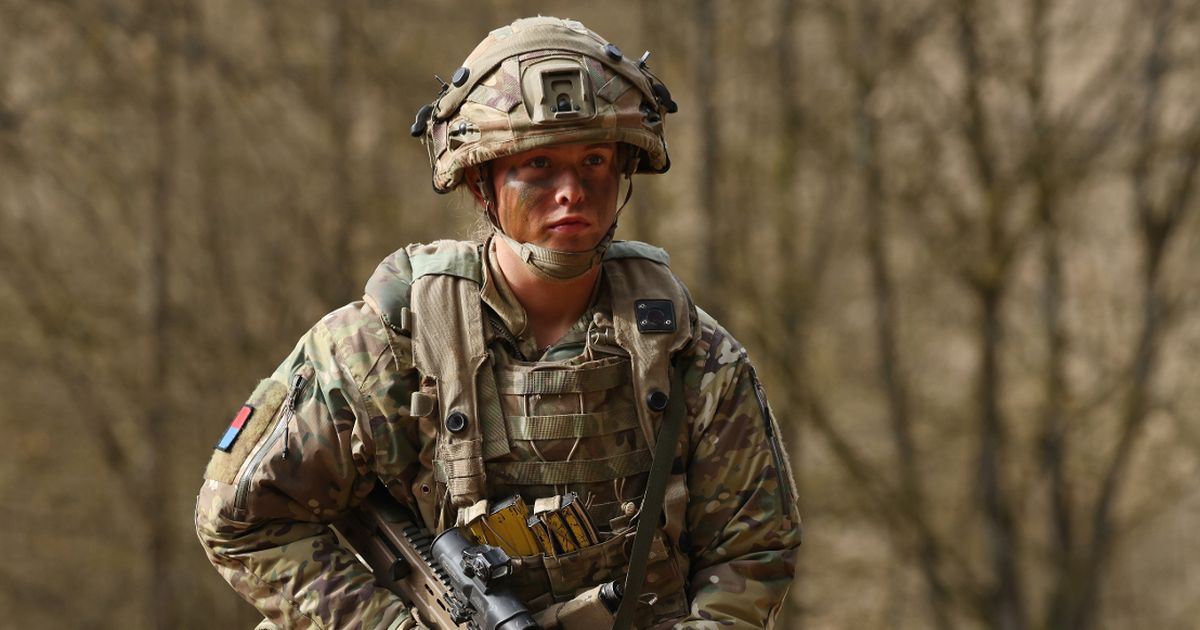
Certain women may be drafted for the army if Britain goes to war(Image: Getty Images)
With increasing warning signs that Vladimir Putin is preparing for a bigger conflict in Europe, Brits have been urged to prepare “for the scale of war our grandparents or great-grandparents endured.” But what could that really look like in the UK?
While Prime Minister Keir Starmer insisted last year that “nobody is talking about conscription” in Britain, experts fear that army numbers are not high enough if we were to go to war now, with Anthony Professor Glees, an expert on European affairs from The University of Buckingham, telling us: “One of the most important and cheapest ways we have of countering and addressing these myriad real threats to our way of life, increasing the size of our armed forces through some form of conscription, is totally ignored.”
According to a recently published National Security Strategy report, facing the danger of nuclear weapons will be “more complex than it was even in the Cold War” – a prospect that will no doubt send a shudder down the spine of those who lived through these uncertain times. Describing the nation as being in a period of “radical uncertainty”, Prime Minister Keir Starmer has pledged to spend five per cent of GDP on national security within a decade, in a bid to bring together civilian and military priorities “in a way not seen since 1945”.
If conscription did come into force in the UK, certain job roles would likely be exempt but for the most part, everyone would be encouraged to do their bit. The UK has never called up women to serve in direct combat – but recent polling suggests the public thinks that this should change if World War III ever broke out. A YouGov poll earlier this year found that 72 percent supported women being conscripted as well as men in the event of the measure ever being reintroduced.
READ MORE: WW3 warning – five groups most likely to be called up if UK brings back conscription

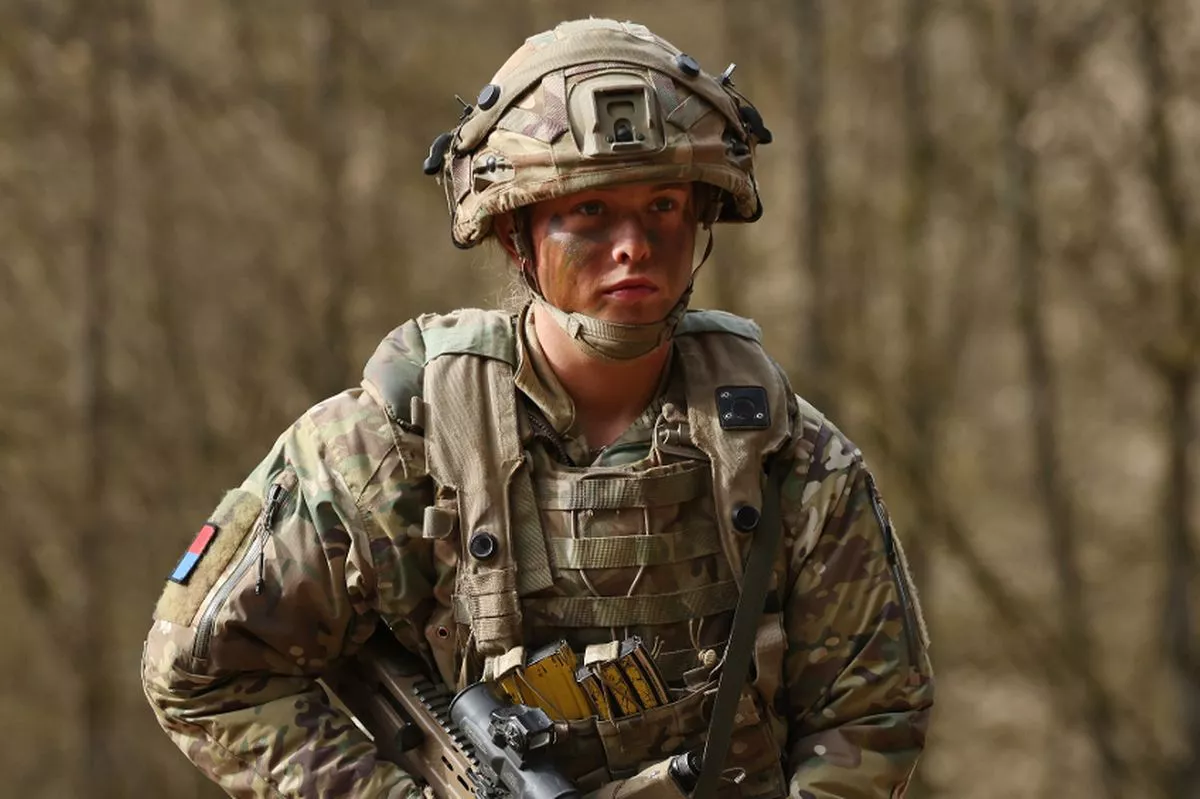
Women nowadays can apply for all roles in the army – but if conscription was to come in, many women could be drafted in(Image: Getty Images)
During World War II, when Britain went to war with Nazi Germany in 1939, all men aged 18 to 41 had to register for the National Service (Armed Forces) to boost numbers. There was then a second National Service act passed in 1941 which called for single women and widows aged 20 to 30 – without children – to be called up.
By the middle of 1943, almost 90% of single women and 80% of married women were carrying out essential work towards the war effort, according to the BBC. However those deemed medically unfit, along with men in essential industries such as farming, medicine, baking and engineering, were exempt. As the war went on, people aged up to 51 were also drafted, while those aged 52 to 60 also had to take on a role in civil defence, so no one could escape responsibilities.
Before the conflict began, many women were a part of the Women’s Land Army or civil defence, including in Air Raid Precautions and Women’s Voluntary Services. But after the war, mandatory enlistment ended, with Britain’s armed forces now made up of professional volunteers only.
A system of National Service continued until May 1963, when the last serviceman was discharged. However women now can qualify for all roles in the armed forces, including in combat and in the Royal Marines, after all limits were lifted in 2018.
In modern day Britain, the government are reportedly looking for new and inventive ways to incentivise young people to train as soldiers via a new scheme. Open for recruitment in March 2026, it’s said that under-25s will be able to access a new ‘gap year’ military programme, in a bid to boost army recruitment and help young people build life skills amid the backdrop of Russian threats. As reported by The iPaper, the scheme, which is modelled on a similar initiative in Australia, will kick off with a small cohort of 150, with hopes that it will eventually reach more than 1,000 each year.
The reported gap year scheme will no doubt prove to be a welcome development for many experts, including Professor Anthony Glees, who spoke with The Mirror about the possibility of national conscription, following the publication of the National Security Strategy report last June.
While this report highlighted that the danger of nuclear weapons would be “more complex than it was even in the Cold War”, there was no reference to national conscription in the report, a factor Professor Glees found to be both “revealing and depressing”.
Professor Glees told us: “One of the most important and cheapest ways we have of countering and addressing these myriad real threats to our way of life, increasing the size of our armed forces through some form of conscription, is totally ignored.”
For decades, National Service has been a topic of heated debate; however, successive governments have repeatedly ruled out the possibility of military conscription. This is primarily based on the idea that armed forces are best staffed by those who have voluntarily put themselves forward to defend their country. But with a shifting global security landscape, there are those who believe National Service is now “absolutely vital”.
Professor Glees explained: “A well-trained, resourceful UK land army of young and spirited Brits will deter Putin where nukes fear to tread, because as his attack on Ukraine shows, our nukes do not deter him, any more than his nukes deter Ukraine.”
In December, one of Vladimir Putin’s propagandists issued a chilling threat to Europe as he listed the capital cities that could be targeted. TV host Vladimir Solovyov took to the airwaves to threaten the West once again, mentioning the likes of Berlin, Paris and Vienna as potential targets, should Russia launch an attack.
The leading Kremlin propagandist also told viewers on his nightly show that “a nuclear strike on Britain is inevitable”. The threat renewed fears of a widespread conflict, which could have implications worldwide.