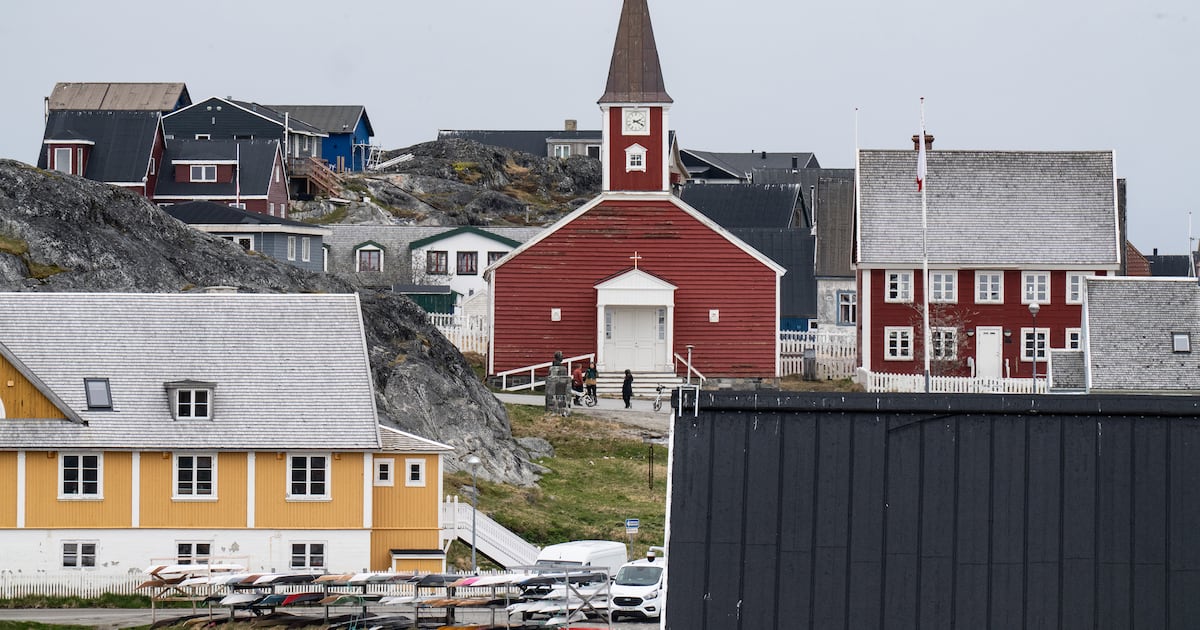
Greenland’s foreign minister has proposed direct talks between her government and Washington to resolve tensions over the future of the Arctic island.
Vivian Motzfeldt spoke ahead of claims by US president Donald Trump that, if he is unable to make a deal to acquire the Arctic territory “the easy way” then he will have to “do it the hard way”.
“We are going to do something in Greenland, whether they like it or not,” Mr Trump on Friday, “because if we don’t do it, Russia or China will take over Greenland, and we’re not going to have Russia or China as a neighbour.”
Greenland’s political leaders have disputed claims of Russian and Chinese incursions and, in a joint statement across party lines, asserted their independendent identity.
“We do not want to be Americans, we do not want to be Danes, we want to be Greenlanders,” the statement said. “The future of Greenland must be decided by the Greenlandic people.
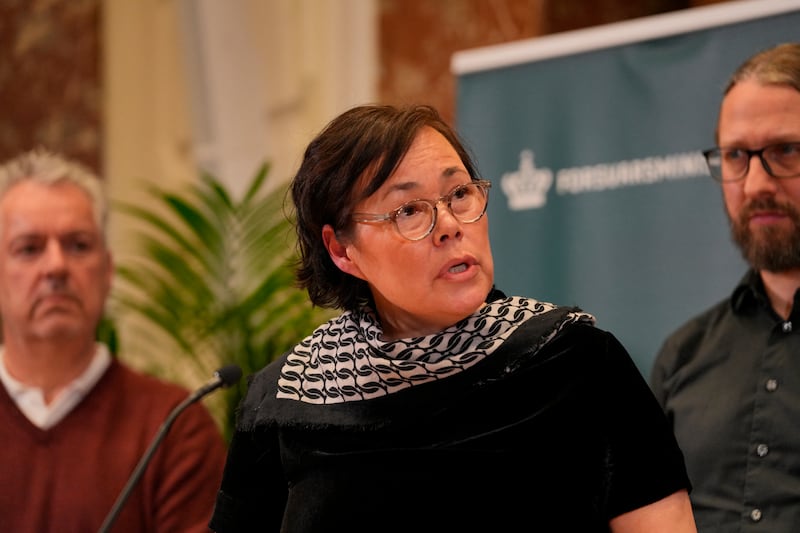 Greenland’s minister for independence and foreign affairs Vivian Motzfeldt. Photograph: Emil Helms/Ritzau Scanpix AFP
Greenland is a semi-autonomous territory, alongside the Faroe Islands, in the three-nation Danish kingdom. It has full autonomy in most areas except key areas such as foreign policy and defence. After three centuries of Danish rule, with ample tension and resentment on both sides of the Atlantic, Ms Motzfeldt said her country was working towards independence – including on foreign policy – but was “not there yet”.
Constitutional provisions allow Greenland operate representations around the world, mainly within areas of full jurisdiction including trade, industry, fisheries and mining.
However Greenlandic officials are not allowed speak to foreign leaders without Danish officials present. Despite the status quo – that foreign policy is conducted from Copenhagen – Ms Motzfeldt said “it should be Greenland that takes the lead and speaks with the United States”.
“From our side, it is clear that Greenland needs the US and that the US needs Greenland,” she told Danish broadcaster DR. “That responsibility must be taken seriously … what would be wrong with us holding meetings with the US alone?”
Plenty, according to Danish officials. Since Mr Trump’s first-term expressions of interest in Greenland, they have feared Washington will try to drive a wedge between Copenhagen and Greenland’s capital, Nuuk.
As fears grow that this strategy is now in play, Ms Motzfeldt and Danish foreign minister Lars Løkke Rasmussen will meet their US counterpart Marco Rubio next week. US officials insist Denmark has neglected the security of Greenland – which Danish politicians reject strenuously – and that the island’s untapped mineral wealth makes it worth taking by force if necessary.
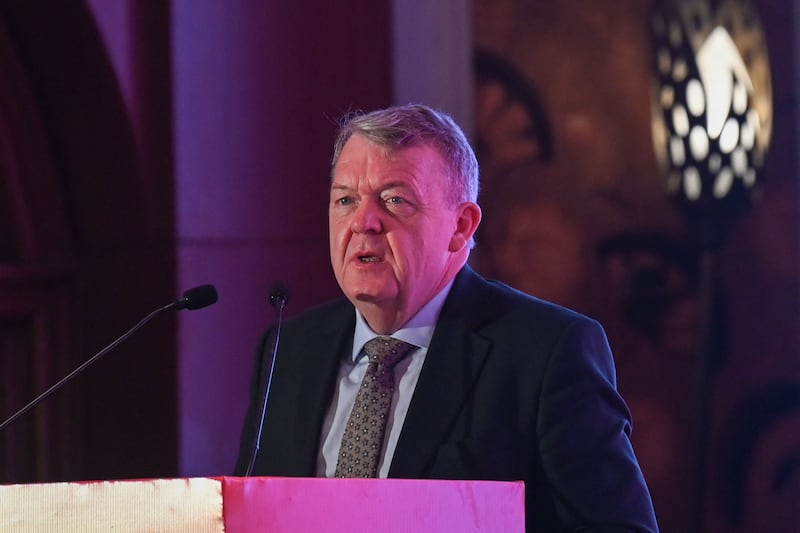 Danish minister of foreign affairs Lars Løkke Rasmussen. Photograph: Money Sharma/AFP
Such remarks have caused alarm in Greenland and Ms Motzfeldt told Greenland’s Sermitsiaq daily newspaper that her “greatest hope is that the meeting will lead to a normalisation of our relationship” with the US.
Ms Motzfeldt has been foreign minister for three years and is chairwoman of the Siumut party, with a social democratic background. She and other government parties are facing pressure from Greenland’s opposition parties to take the lead in three-way stand-off with Washington and Copenhagen.
Opposition leader Pele Broberg, a long-time backer of independence, denounced Denmark for allegedly “antagonising both Greenland and the US with their mediation” in the crisis.
“People should back off Greenland and say let the Greenlanders talk to the US and let them figure out what they want,” said Mr Broberg, head of Naleraq opposition party, to Canada’s CBC.
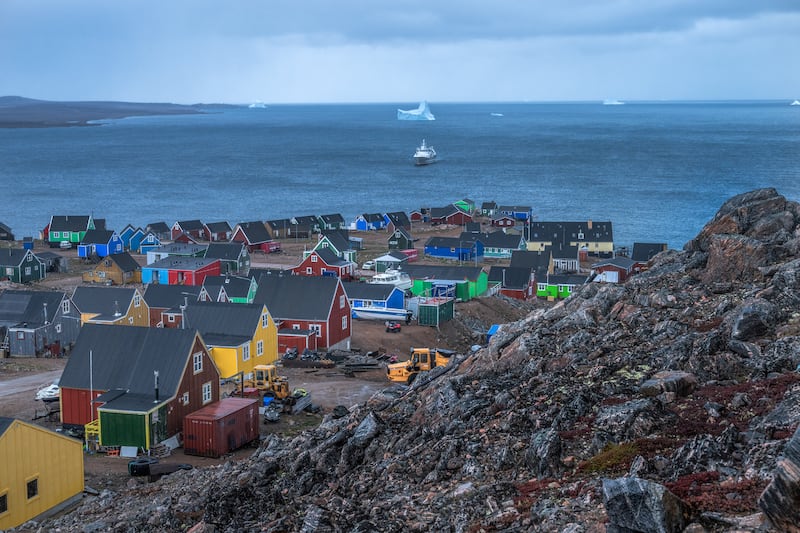 The remote town of Ittoqqortoormiit, Greenland. Photograph: Esther Horvath/The New York Times
Washington’s ramping-up of pressure has exposed and aggravated long-running tensions between Nuuk and Copenhagen. Particularly damaging have been recent revelations of forced adoptions and birth control treatments involving the native Inuit population – prompting a state apology from Denmark.
According to Danish media, a recent joint video meeting of the Greenlandic and Danish foreign affairs committees ended in angry disagreement. Greenlandic foreign affairs committee head Pipaluk Lynge, whose party is part of the coalition government, accused Denmark of holding talks behind their backs.
“It is a neo-colonial way of excluding us,” she reportedly told her Danish colleagues, according to DR public television.
While polls show a majority of Greenlanders would back independence, most people agree it is unrealistic until the island finds a way to replace Danish transfers of around €600 million annually – around one fifth of its annual income.
Separate polls show a vast majority do not want to become part of the US. Ahead of next week’s talks, speculation is growing that the US may offer Greenland’s 53,000 residents one-off cash payments of up to $100,000 if they secede from Denmark and join the United States in some form. The US operates one military base on Greenland and, five years ago, reopened its consulate there after a 67-year hiatus.