
An interview with Valeria Yakushko, who is pursuing a PhD in Sociology at the University of Western Ontario. Her research focuses on the Ukrainian refugee crisis and integration of Ukrainian refugees in host countries.
January 9, 2026 –
Andrii Kutsyk
Valeria Yakushko
– 
Interviews
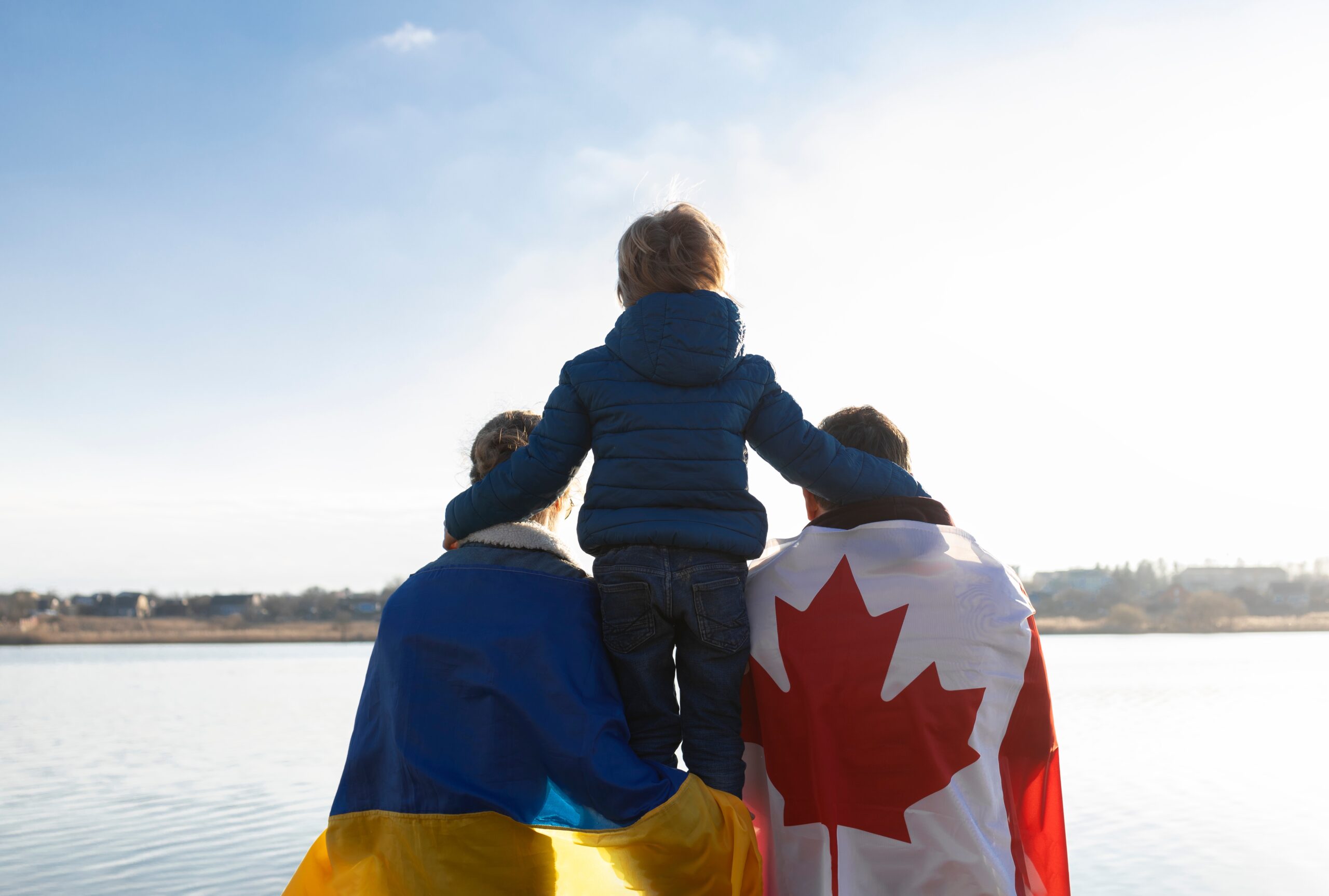
Photo: Anna Pasichnyk / Shutterstock
ANDRII KUTSYK: Since the start of the full-scale Russian invasion of Ukraine, many Ukrainian refugees have arrived in Canada. How many of them have stayed and integrated into Canadian society, and how many have returned to Ukraine or moved to other countries?
VALERIA YAKUSHKO: According to the Government of Canada, approximately 298,000 Ukrainian refugees have arrived in Canada under the CUAET (Canada-Ukraine Authorization for Emergency Travel) programme. Unfortunately, we do not have data on how many have already left the country. Currently, the results of only one survey conducted among Ukrainian refugees is publicly available. The results of this survey offer important insights into the integration and plans for future of Ukrainian refugees in Canada. What is crucial to understand about the profile of Ukrainian refugees in Canada is that it differs from the profile of those who arrived in European countries. The data show that those who arrived in Canada predominantly have an intermediate level of English proficiency and are generally between 26 and 40 years old. Moreover, these individuals largely relied on their own skills and financial resources, as the program provided only one-time financial assistance. Understanding this distinction is crucial because it reflects their human capital, which has a direct impact on their integration.
In the context of employment, data from 2024 show that 80 per cent of recently arrived Ukrainians are employed. However, it is still difficult to assess their career and whether they are working in the same industry and occupation as in Ukraine, as labour market integration takes time. Research I have conducted indicates that Ukrainian refugees in south-western Ontario are integrating quite successfully – they have jobs, secure housing, and established social networks. However, they do face challenges, the most significant of which is obtaining permanent residency. Around 92 per cent of those who arrived express a desire to apply for permanent residency and consequently stay in Canada permanently. Ukrainian refugees are not legally recognized as refugees or asylum seekers in Canada. Instead, they hold temporary resident status under the CUAET programme, meaning they must obtain permanent residency through economic pathway or family reunification. This represents one of the biggest challenges facing newly arrived Ukrainians in Canada. As the war and, consequently, insecurity in Ukraine continue, Ukrainian diaspora organizations – particularly the Ukrainian World Congress – are calling for pathways to permanent residency for Ukrainian refugees.
What level of English proficiency did most Ukrainian newcomers have upon arrival in Canada, and how did their language skills affect their employment prospects?
Most Ukrainian refugees who arrived in Canada already had an intermediate level of English. My research shows that this level of language proficiency level was sufficient for everyday communication and securing employment. However, many reported lacking Business English, – that is, the specialized language skills and vocabulary required for their occupations. However, they were able to improve their skills, as Ukrainian refugees were granted free access to settlement services that provide free English language training. Existing data and research show that language skills and proficiency in English or French (in French-speaking provinces) are crucial for the successful integration of immigrants in Canada.
Are there any special programmes for the integration of Ukrainian refugees at the federal government level in Canada or at the provincial level, particularly in the province of Ontario?
In general, at the federal level, Ukrainians were granted free access to settlement services until March 2025. They were eligible to attend workshops and training sessions designed to help them improve their language skills, find employment, and gain cultural knowledge about Canada. Various programs also existed at the provincial level. For example, Western University in Ontario offered a program for Ukrainian female refugees, providing them with paid internships at the university. Participants attended English language courses in the morning and worked in the dining hall in the afternoon. This program was particularly valuable because it combined part-time employment with language learning. As a result, many participants were able to continue working even after completing their English courses. Overall, they reported significant benefits, including improved language skills, experience in a multicultural workplace, and Canadian work experience.
In Europe, particularly in Poland, Ukrainian refugees have received and continue to receive financial aid. What is the situation with social aid for Ukrainians in Canada?
Under the CUAET program, Ukrainian refugees were eligible for a one-time financial support of 3,000 Canadian dollars (2,580 euros) per adult and 1,500 per child. Currently, Ukrainians do not receive any financial support from the government. It is worth mentioning that the lack of financial aid attracted a very different profile of Ukrainian refugees to Canada compared with Europe. These are individuals who, upon arrival in Canada, had to rely on their own skills, and financial resources.
Under the influence of the spread of far-right populism in the US, Europe, and particularly in Poland, anti-immigrant and, in particular, anti-Ukrainian narratives and trends are growing in popularity. Is this also happening in Canada?
It is important to emphasize that Canada has historically been an immigrant-receiving country. However, recent data show that more than half of Canadians (58 per cent) believe the country accepts too many immigrants – the highest proportion reporting this sentiment since 1998. This concern is primarily driven by the state of the economy, the housing crisis, and perceptions of how the immigration system is managed. It is important to highlight that these data show that Canadians are primarily concerned with an ineffective immigration system, not with the immigrants themselves. Despite these challenges and the global shift toward far-right populism, Canada remains a welcoming country for immigrants. This is evidenced by survey results showing that Canadians are more likely to say immigration makes their local communities better (32 per cent) rather than worse (14 per cent).
🎙️ Listen to the latest Talk Eastern Europe podcast episode:
Have you noticed any cases in the Canadian media where issues related to Ukrainian migrants were presented in a manipulative context – one that partly echoes Russian disinformation narratives?
I have not encountered such narratives in the media, nor have I seen studies suggesting that such narratives are spreading across Canada. There are two main reasons for this. First, it is difficult to accuse Ukrainian refugees of not working and relying solely on welfare – the basis of anti-Ukrainian narratives in European countries – because they do not receive social assistance in Canada, and, as noted earlier, most are employed. Second, Canada has the largest Ukrainian diaspora, with well-established and influential organizations that consistently work to highlight the situation in Ukraine within Canadian media and public discourse.
Do you think there is a risk that the level of support for Ukraine from Canada will decrease – even to the level we are currently seeing in the US?
I believe that even if there are changes in the level and amount of aid, such changes would not indicate that Canada lacks support for Ukraine. Currently, Canada faces several critical challenges, both domestically and in its relations with the United States, which could become priorities for the government. However, I believe there is no evidence to suggest that Canada’s support for Ukraine will decrease. Since the beginning of the full-scale invasion, Canada remains actively engaged in supporting Ukraine through the defense industry and humanitarian assistance.
Is there a threat that populism will spread in Canada and that anti-immigration sentiments may arise here over time, similar to those observed in the US and some European countries?
As I mentioned earlier, we are indeed seeing a rise in concerns regarding how immigration is being managed in Canada. However, I believe that whether these concerns continue to grow or decline will depend on how pressing challenges, such as the housing crisis, are addressed by the Canadian government.
Historically, immigration has played a crucial role in Canada in addressing labor demands and supporting population growth. Like many Western countries, Canada faces an aging population and low birth rates, meaning natural population growth is limited. Migration is therefore essential to sustain and increase the population. However, as Canada has recently started to limit migration, it has begun facing the consequences: recent data show that between October 2024 and July 2025, the Canadian population declined for the first time since the pandemic due to these limits on migration. Furthermore, Canada has long relied heavily on migrant workers to meet its labor needs. A recent report by Ministry of Immigration, Refugees and Citizenship of Canada shows that immigrants make a significant contribution to the supply of highly skilled workers in Canada and also promote entrepreneurship in the country.
Andrii Kutsyk holds a PhD in Philosophy of Media (Lesya Ukrainka Volyn National University/Adam Mickiewicz University in Poznań) and a Master’s Degree in Eastern European Studies (University of Warsaw). He is currently a Research Fellow at the Institute of Political Science at the University of Gdańsk, a member of the Research Institute for European Policy, and secretary of the European Journal of Transformation Studies. In 2024, he also received the Ivan Vyhovsky Prize.
Valeria Yakushko is a PhD student in Sociology at the University of Western Ontario. She holds an MA in Sociology from the University of Western Ontario and a BA in Sociology from the National University of Kyiv-Mohyla Academy. In 2023, she was a Research Fellow at the Osteuropa Forum Basel at the University of Basel (Switzerland). Her current research focuses on Ukrainian refugee crisis, international and forced migration.
New Eastern Europe is a reader supported publication. Please support us and help us reach our goal of $10,000! We are nearly there. Donate by clicking on the button below.

Canada, Russian invasion of Ukraine, Ukrainian refugees