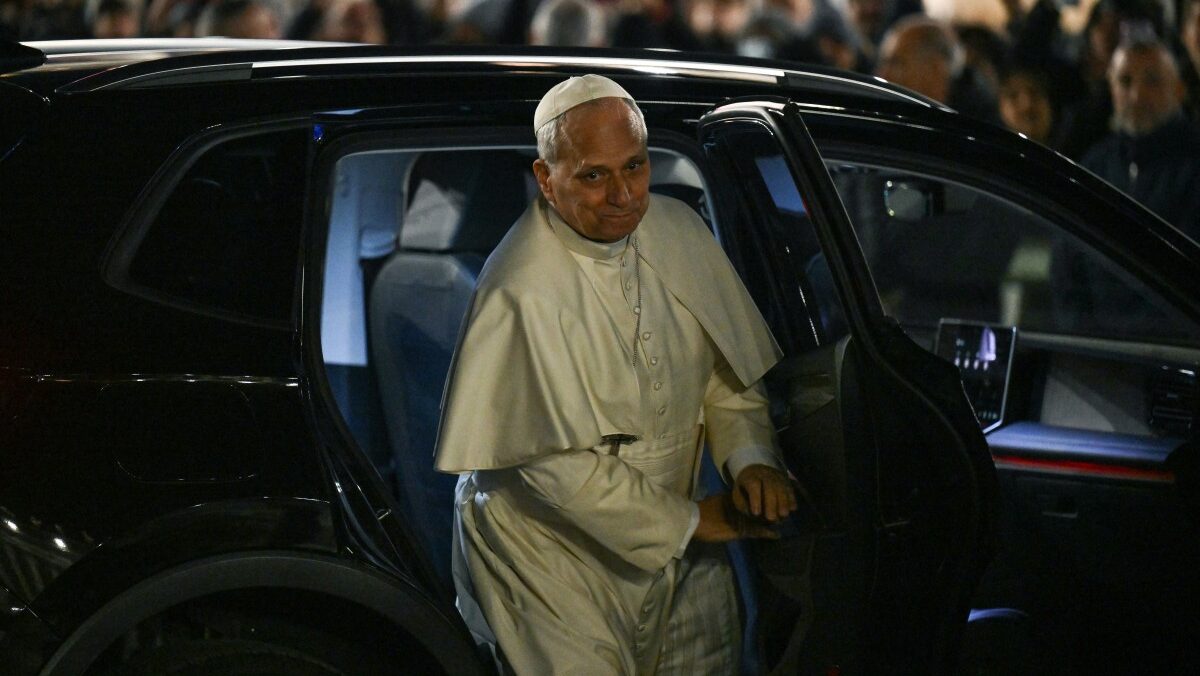
Fun fact: Pope Leo was included by Vogue magazine among the 55 best-dressed people of 2025. Could wearing a chasuble and mozzetta become fashionable?
It is amusing to note that Leo XIV finds himself alongside Rihanna and Jennifer Lawrence in the ranking. Who would have thought it?
But the most interesting thing about this is the motivation behind the leading international fashion magazine’s decision. The American magazine, founded in 1892, points out in its annual ranking that Leo XIV has broken “with the modest tastes of his predecessor,” Pope Francis, by preserving “the papal heritage of impeccably crafted liturgical vestments.”
As the “best outfit of 2025,” the magazine chose the total look selected for his first appearance as pope on 8 May in the central loggia of St. Peter’s Basilica: a red satin mozzetta and a wine-coloured stole, embroidered with gold and adorned with a pectoral cross held in place by a golden silk cord.
For the uninitiated—including myself until recently, I must admit, as pontifical attire is not one of my areas of expertise—the mozzetta is a cape that falls from the shoulders to the elbows and is worn as a sign of authority. The chasuble is the outer liturgical garment worn over the alb and stole, the colour of which changes according to the liturgical season.
Pope Francis chose not to wear these garments after his election in 2013 as a gesture of “simplicity.” Ironically, this simplicity and desire for discretion have made him stand out even more. The most important thing was no longer the papal office but the personal choice of a certain Mr. Bergoglio. This time, the approach is different. Pope Leo has chosen to revive the great tradition, and outside observers, including non-believers, have not been mistaken, perhaps against their will: they sensed that something infinitely greater was at stake than the sartorial preferences of a certain Mr. Prevost.
By honouring the pope in its list of winners, Vogue has made an unusual choice. Today, the outfits of ‘celebrities’ attract media attention when they shock or provoke, or when they spark debate. With or without fur? Ethical manufacturing or Chinese mass production? Plunging necklines and flowing dresses, a desire to ‘break the rules’—these are the criteria that tend to justify media attention. Nothing of the sort this time. And yet, this did not prevent Vogue’s commentator from being touched by grace and bowing down before what truly matters. The classic ceremony is beautiful, and beauty elevates and impresses. And paradoxically, it is when the classic ceremony is respected in all its pomp that it is most humble.
A few days ago, photos of Pope Leo blessing the faithful were circulating on the web, linked to some great Baroque sculptures and paintings of former pontiffs in all their splendour. What strikes one when looking at these photos is the majesty of the gesture, when the timelessness of the office takes precedence over the man—whereas Francis’ choices sadly ended up boiling down to his individual person and him alone.
Some may think that this is all just a matter of rags. Precisely. It is because we have become accustomed to forgetting how useful these kinds of rags are that everything is going down the drain. Thank you to Pope Leo—and to Vogue—for reminding us.