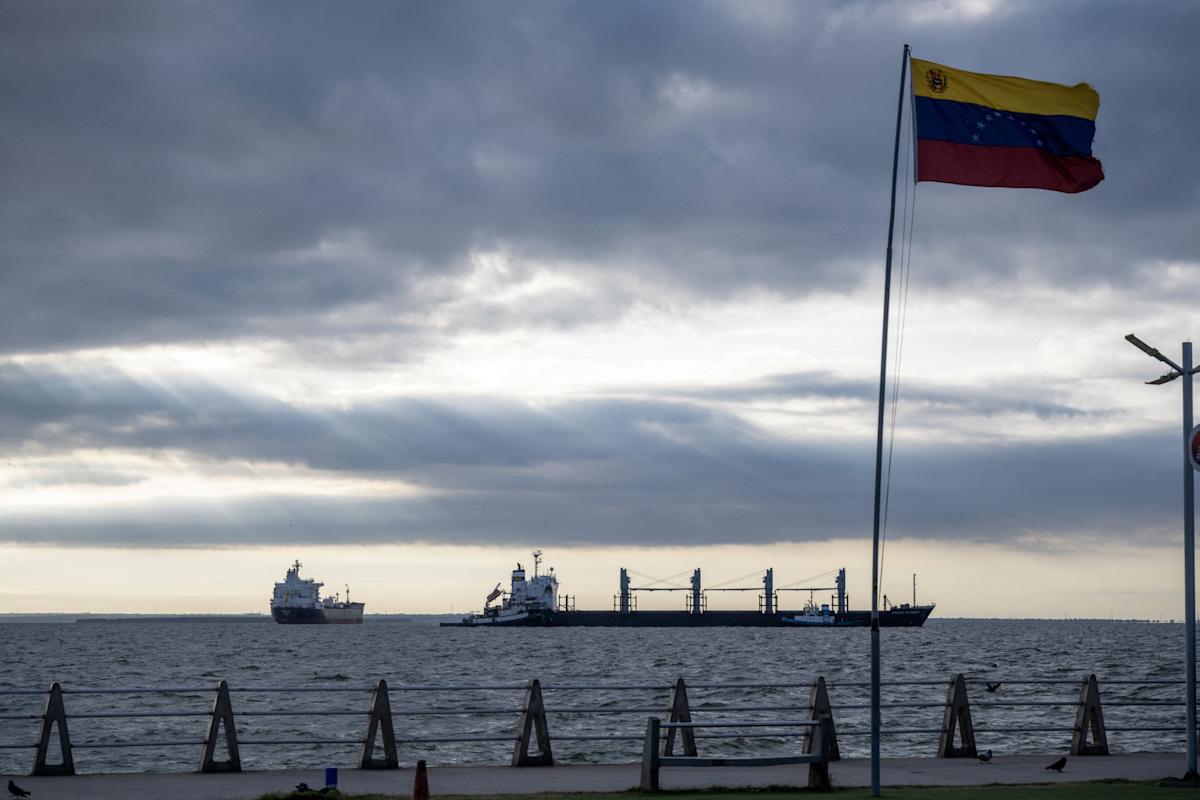

Photographer: Maryorin Mendez/AFP/Getty Images
(Bloomberg) — President Donald Trump is targeting billions of dollars of investment from US energy companies in Venezuela’s oil industry, and said it will make the people of the South American nation rich.
For investors hoping to get in on the bonanza, however, the calculus isn’t so simple. And the list of risks is a long one.
Most Read from Bloomberg
At the top are questions about how long it will take — and how much it will cost — to boost energy production significantly, and how enthusiastic oil executives will be to make the necessary investments. And the timeline will likely extend well past Trump’s tenure in the White House, raising concerns about whether the political will shall remain both in the US and Venezuela to see his plans reach fruition.
Then there is the basic fundamental outlook for a petroleum market that arguably is already over-supplied.
“Right now, global capital spending in oil is declining because supply is abundant and demand is lower than expected,” said Edward Morse, adviser to Hartree Partners and former global head of commodities research at Citigroup Inc. “Venezuela is trying to reopen during a down cycle rather than an up cycle.”
On the back of it all rides a slew of ancillary investment themes outside the oil patch — from other commodity markets to bonds and foreign exchange — each with its own set of risks.
Below is a guide to how investors are approaching the sudden opportunity set created by Trump’s decision to topple Nicolás Maduro, the longtime leader of Venezuela, and lay claim to what is purported to be the world’s largest oil reserves.
Betting on Oil
Trump’s vision includes encouraging US companies to rebuild Venezuela’s deteriorated oil infrastructure and revive production. For starters, Trump said Tuesday that Venezuela would relinquish as much as 50 million barrels of oil for the US to sell, valued at roughly $3 billion at current prices.
In the longer term, the president’s hope is that US companies will rebuild an oil-production infrastructure that’s in tatters after years of underinvestment, corruption and mismanagement under Maduro and his predecessor, Hugo Chávez, a period that also saw some foreign oil producers pushed out, all resulting in a precipitous decline in crude output.
Chevron Corp. is currently the only major US producer still operating in Venezuela, so it naturally has a head-start if Trump can deliver on his goal. The company could grow its cash flow by as much as $700 million annually if Venezuela production gets back to previous levels, according to Jason Gabelman, an analyst at TD Cowen.