Marketing is entering a phase where the conversation has shifted beyond efficiency and automation. As artificial intelligence becomes embedded across creative, strategic, and operational workflows, the real differentiator is no longer access to technology, but how it is used.
For marketers, the challenge now cuts across creativity, judgment, and trust—understanding where AI can expand thinking, and where human insight must remain firmly in control.
As AI accelerates ideation, testing, and personalization, it also raises deeper questions about originality, cultural relevance, and responsibility. In a landscape increasingly shaped by shared tools, shared data, and shared prompts, sameness has become a real risk.
advertisement
The brands and teams that stand out are those that treat AI not as a shortcut, but as a collaborator—one that sharpens ideas without diluting meaning, and scales creativity without stripping it of context or empathy.
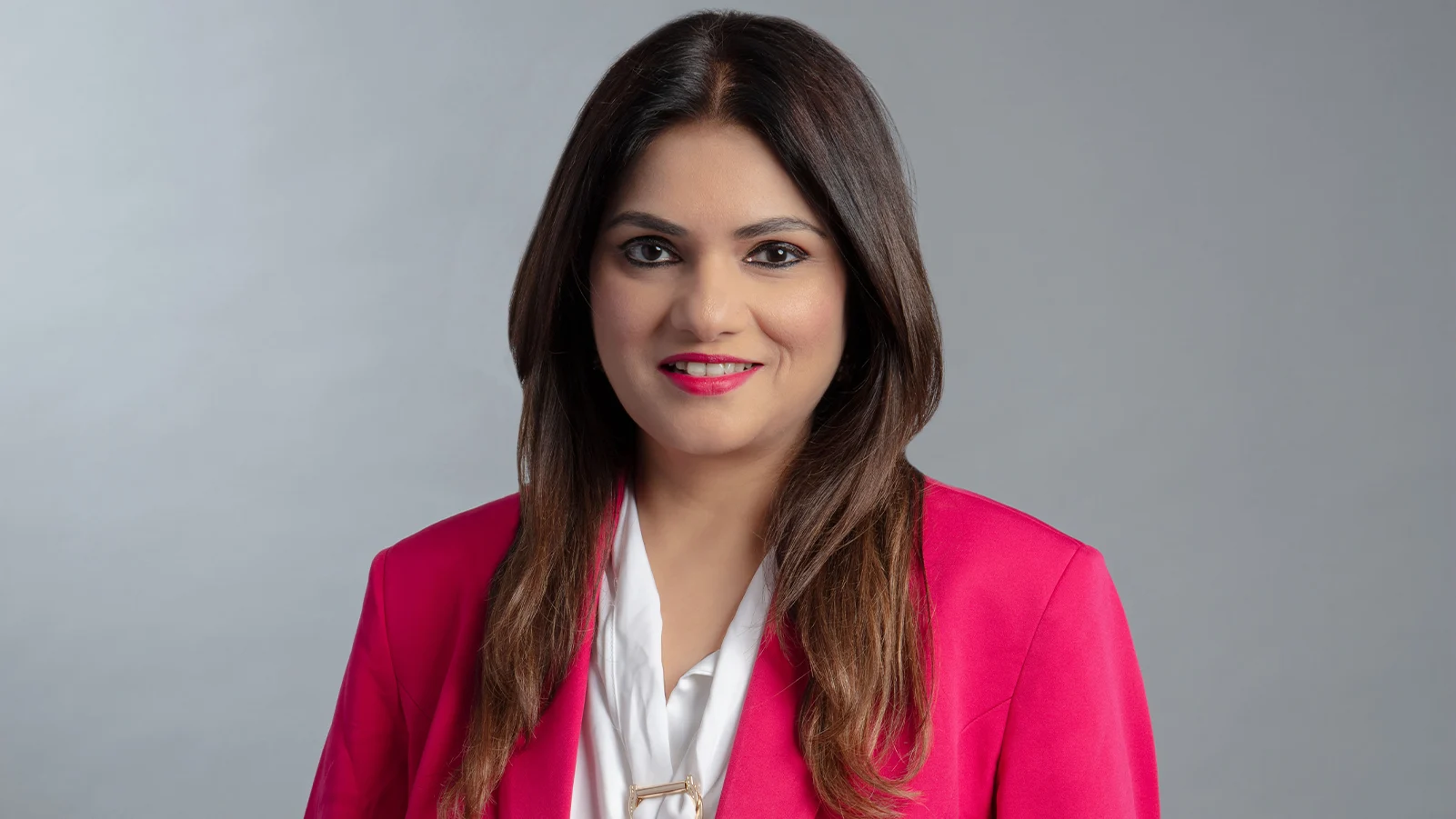
To learn more, we spoke with Tuhina Pandey, Director of APAC Communications and Marketing, India and South Asia at IBM. Over the course of our interview, she discusses how AI is evolving from an automation tool into a creative thought-partner, why trust and human oversight are becoming central to modern marketing, and the mindset and skills marketers will need to remain distinctive, responsible, and unmistakably human in the years ahead.
How is the shift from AI as an automation tool to AI as a creative collaborator changing how teams work together and structure their idea development process?
Think of a world where agentic AI has disrupted workflows completely, and human-AI augmented workflow is the new operating principle. In that world, Automation powers the AI flywheel. Every idea trains the system, and every output sparks the next cycle of breakthrough.
advertisement
AI has definitely evolved from being a time‑saver to a thought‑partner, and it’s transforming how individuals and teams create content, marketing assets, understand and respond to client needs in real time.
AI will amplify and enable creativity, helping marketers test faster, think bigger, and collaborate more widely. AI’s role in marketing has expanded, not by moving away from automation but by building on it.
Think of a world where agentic AI has disrupted workflows completely, and human-AI augmented workflow is the new operating principle.
It’s not a question of automation or creativity. It’s about automation enabling creativity, and creativity guiding automation. The best teams are not outsourcing creativity to AI. They are orchestrating intelligence, with humans firmly accountable for meaning and outcome.
In the early, exploratory stages of campaign thinking, where do you see AI adding the most value — and where does it risk narrowing the field too quickly?
AI is most powerful when it functions as applied anthropology at scale.
It allows marketers to observe millions of signals simultaneously — behaviours, conversations, sentiment shifts, emerging communities and translate them into multiple potential campaign outcomes with speed and precision.
The understanding of customer and societal needs has always been about more than observation. It’s about interpretation, inference and reading it in the layered context in which they exist and operate.
The moment creativity is fully outsourced to AI, differentiation disappears. When prompts are not sharp, output is blunt. When AI’s data diets are generic and limited, results drift into a sea of sameness. AI is only as imaginative as the questions we ask and as diverse as the data we feed it.
AI can dramatically widen the field, but humans must still guide with context, culture, and connect the dots.

As AI becomes embedded in day-to-day creative work, how do you draw the line between decisions that must remain firmly human and those that can be meaningfully informed by machine-generated insight?
In marketing, the line is clear- humans own judgment, empathy, and brand integrity. AI excels at pattern recognition, scaling ideas and increasingly more as a thought-partner. The sweet spot is augmentation—using AI to surface insights and expand creative possibilities while humans decide what resonates, what’s ethical, and what stays true to the brand’s story.
Insights from IBM CMO’s Study consistently show that while leaders see AI as a critical growth driver, they also recognize the need for clear human oversight. In practice, this means building ‘human-in-the-loop systems’ where AI supports decisions but never replaces responsibility.
The sweet spot is augmentation—using AI to surface insights and expand creative possibilities while humans decide what resonates, what’s ethical, and what stays true to the brand’s story.
What is also interesting is that AI is also the audience. With Digital marketing, SEO optimised data and algorithms engaging with other algorithms and humans, there is a need to relook on how we approach this ‘augmented world’. The complexity and opportunities are both in abundance.
Your background spans journalism, public affairs, and global communications. How does that experience influence the way you think about narrative craft when AI can generate content at scale?
Culture is local, but emotions are global- this has been a big learning for me through my journey. Ultimately, it’s about understanding and connecting with people, solving for people. APAC, for instance, is one of the most culturally diverse regions in the world, a true melting pot of ideas, innovation and cultures. Nuance here is imperative. However, when you zoom out you will see that human emotions like love, sadness, anger frustration are same, it is the way that is expressed or processed is defined by the cultural context.
My experience in journalism taught me that every (tech) story has a big heart. Across cultures and mythologies, stories have always been how societies transmit values, identity and intent — long before technology entered the equation. You need to take complex ideas and simplify them and tell it in a way that remembered, acted upon, and shared.
Culture is local, but emotions are global- this has been a big learning for me through my journey.
When AI can generate content endlessly, narrative craft becomes an editorial discipline. It’s about framing ‘why’ and ‘what’ matters, what travels across cultures, and what must be deeply local. The content in context makes all the difference and that context is squarely in human realm.
This is also where Responsible AI becomes critical. At IBM, we anchor Responsible AI in pillars of trust: transparency, fairness, explainability, robustness and privacy. These principles apply as much to marketing and communications as they do to technology. We have to be responsible for the outcomes and putting in the hard yards in ensuring data integrity, ethical practices can go a long way.
AI is a powerful growth and efficiency lever, but it requires cultural intelligence, talent readiness and data readiness. Today, only about 1% of enterprise data is actually being used by Ai and a lot of it is unstructured. The real opportunity is ahead of us.
Surveys show marketers are enthusiastic about AI, while many consumers are still wary. How do you see that gap playing out, and what can marketers do to close it?
In the enterprise space, both marketers and consumers are optimistic about AI, but equally aware of the risks of moving too fast without trust. The gap isn’t a lack of enthusiasm—it’s a shared sense of responsibility, and at the core of it all is data-related postures. Marketers can close it by prioritising transparency, clear value, and responsible, human‑centered AI use.
Consumers don’t reject AI. They reject irrelevance and intrusion. Trust is built when AI makes interactions more meaningful, respectful, and human, not just faster.
AI in advertising has drawn criticism from consumers, including recent high-profile work that audiences felt missed the mark. Can you share any campaigns this year that you feel used AI well?
When conversations around AI in advertising turn critical, it helps to look at notable examples, recent and from the past few years, that demonstrate what has consistently worked. The most effective AI-enabled campaigns did not make technology the hero. Instead, they show a range of creative outcomes from long-form brand storytelling to speed marketing, to the amplification of a distinctive brand voice, with AI largely staying backstage.
A powerful example of brand storytelling is Nike’s Never Done Evolving campaign, created in 2021 for the brand’s 50th anniversary and released alongside Serena Williams’ retirement announcement. Using AI, Nike simulated a match between Serena at two defining moments of her career — her first Grand Slam win in 1999 and her 23rd title at the 2017 Australian Open.
What made the campaign compelling was not the technology itself, but the story it unlocked — a reflection on excellence, evolution and legacy.
What’s notable is that the human behaviors this campaign tapped into in 2021 continue to hold true in 2025. The IBM Sports Survey 2025 shows that sports fans are increasingly gravitating toward more dynamic digital content experiences, with AI, personalization and real-time features playing a central role in how they engage with sport.
The underlying preference, however, remains unchanged: audiences respond most strongly when technology deepens insight, emotion and meaning rather than calling attention to itself. Nike’s work anticipated this shift by putting story first and intelligence second.
At the other end of the spectrum is speed marketing, where AI enables brands to respond to cultural moments with agility.
Many other examples …. But the lesson is consistent: when AI becomes the spectacle, creativity often feels hollow; when it quietly enables relevance, resonance or responsiveness, it elevates the work. Audiences ultimately respond to ideas, emotion and intent, not the tech by itself.
For people already in the industry and those just entering it, what strategic mindset and skills are becoming essential in an increasingly AI-driven landscape?
We are already living through a sea of sameness.
The same tools. The same data. The same prompts. The same outputs.
What will differentiate marketers going forward is not just technical fluency, but authenticity and authorship.
What will differentiate marketers going forward is not just technical fluency, but authenticity and authorship. You are unique and that is your biggest differentiation; the ability to bring a clear point of view, curiosity, make deliberate choices, and judgement.
The post-AI marketer must think like an anthropologist and build like an architect.
But above all, they must remain unmistakably human.
Quick Hits:
Most useful app or tool you’ve started using recently:
One tool I’ve found particularly useful is IBM Consulting Assistants, part of IBM Consulting Advantage.
Built on IBM’s AI platform, watsonx, these are enterprise-safe AI assistants, designed to automate or augment workflows across functions like HR, finance, supply chain, etc.
From a marketing and communications perspective, it’s a productivity multiplier. The assistants are designed around specific personas and contexts, which means the AI understands who is asking, why they’re asking, and what constraints matter. That allows teams to move faster without losing rigor. It also enables a wide range of practical use cases, from document builders and structured narratives to chart generation, visual assets and even video. The result is not just speed, but consistency, accuracy and confidence.
For me, that’s the real value. AI should reduce friction, not add risk. Tools like this allow marketers and communicators to focus less on assembling outputs and more on shaping meaning, judgement and impact which is where human creativity still matters most.
Book, podcast, or resource you recommend:
The Intelligence Trap: Why Smart People Make Dumb Mistakes by David Robson. While it is not the style of writing that I usually pick, but the book is revealing – Before you become intelligent, you need to be stupid. And stupid, more often.
Something you want to learn or wish you were better at:
Standup Comedy. Comedy is, without a doubt, the most nerve-racking form of public speaking anyone can voluntarily subject themselves to. As a storyteller, I already look at things from a different perspective and as a comedian I will add a layer of: “what is it about these everyday life experiences that are peculiar, pique my interest, or make me laugh?”