A broad majority of EU member states backed the trade agreement, though international reports indicate that France, Poland, Austria, Ireland, and Hungary voiced their opposition. Media outlets also report widespread protests from French and Irish farmers against the deal.
“This represents a rare geopolitical win from Brussels’ perspective, particularly against the backdrop of recent trade frictions with both China and the US,” BRS Shipbrokers head of dry bulk research Wilson Wirawan told Riviera.
“The agreement eliminates tariffs on a wide range of South American agricultural goods, materially expanding market access for the four Mercosur nations,” he added.
On 9 January, the European Council adopted two decisions authorising the signature of both the EU-Mercosur Partnership Agreement (EMPA) and the Interim Trade Agreement (iTA) between the two blocs. “These agreements mark an important milestone in the EU’s long-standing relationship with Mercosur partners – Argentina, Brazil, Paraguay and Uruguay,” the Council said.
The agreements will still require the consent of the European Parliament before they can be formally concluded by the Council. Ratification by all EU member states will also be needed for the EMPA to enter into force.
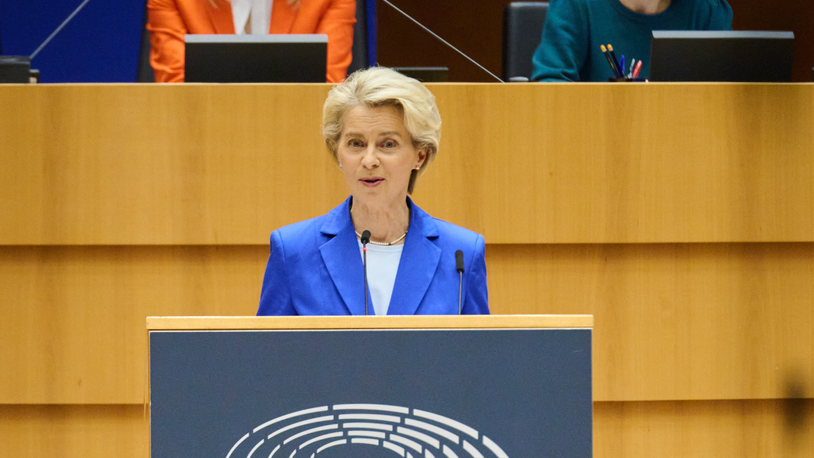
European Commission President Ursula von der Leyen will travel to Paraguay on 17 January to sign the agreement, accompanied by European Council President António Costa.
“With the Mercosur agreement, we are creating a market of 700M people – the largest free trade zone in the world. Our message to the world is this: Partnership creates prosperity and openness drives progress,” Ms von der Leyen said in a statement.
Shifting trade dependencies
The agreement is expected to help both sides diversify their trade flows. “For exporters such as Brazil and Argentina, the deal helps reduce overdependence on China for grains and agricultural products,” Mr Wirawan noted. “This vulnerability could be exposed should China pivot back toward US supplies under geopolitical pressure, or scale back imports for economic reasons.”
He added that the deal can also be seen as an unintended consequence of the Donald Trump-era tariffs.
“Negotiations between the EU and Mercosur had largely stalled after the 2019 framework agreement faced strong opposition from key EU member states,” he explained. “However, with US tariffs taking effect by summer 2025, pressure intensified for the EU to diversify its trade partnerships, reviving momentum toward ratification.”
Focusing on the dry bulk market, Mr Wirawan highlighted that on paper, the agreement should support higher transatlantic trade flows, particularly for sub-Capesize vessels moving between the East Coast of South America and Europe. This would strengthen the overall demand profile in the South Atlantic.
Long-term growth prospects
According to the European Council, the EMPA brings together political dialogue, co-operation, and comprehensive sectoral engagement under a single framework. It also includes a trade and investment pillar, which will become fully applicable once the agreement is concluded and enters into force.
These provisions are expected to deepen co-operation in areas such as sustainable development, environmental and climate action, digital transformation, human rights, mobility, counter-terrorism, and crisis management.
“The political dialogue provisions will foster closer co-ordination on global challenges such as climate change, peacekeeping and migration,” the Council said.
The iTA reflects the trade and investment liberalisation pillar of the EMPA and will function as a stand-alone agreement until the full EMPA enters into force.
The agreement offers tariff reductions and opens access to new markets for a wide range of goods and services. Key sectors such as agriculture, automotive, pharmaceuticals and chemicals are set to benefit from improved trade terms.
The EU is Mercosur’s second-largest trading partner, accounting for nearly 17% of the bloc’s total trade in goods in 2024.
In that year, EU-Mercosur trade in goods exceeded €111Bn (US$129Bn): €55Bn in exports and €56Bn in imports, with total goods trade between the two blocs increasing by more than 36% since 2014.
Shipping industry backs the agreement
The European Community Shipowners’ Associations (ECSA) welcomed the approval of the agreement, calling it a “strong signal in support of open, rules-based trade at a time of heightened geopolitical uncertainty.”
“By advancing free and fair trade through agreements such as EU-Mercosur, Europe strengthens its economic security and resilience, while ensuring that European shipping can continue to deliver for citizens, industry and global partners,” said ECSA secretary general Sotiris Raptis.
European shipowners are now urging the European Parliament to proceed swiftly to adopt the agreement.