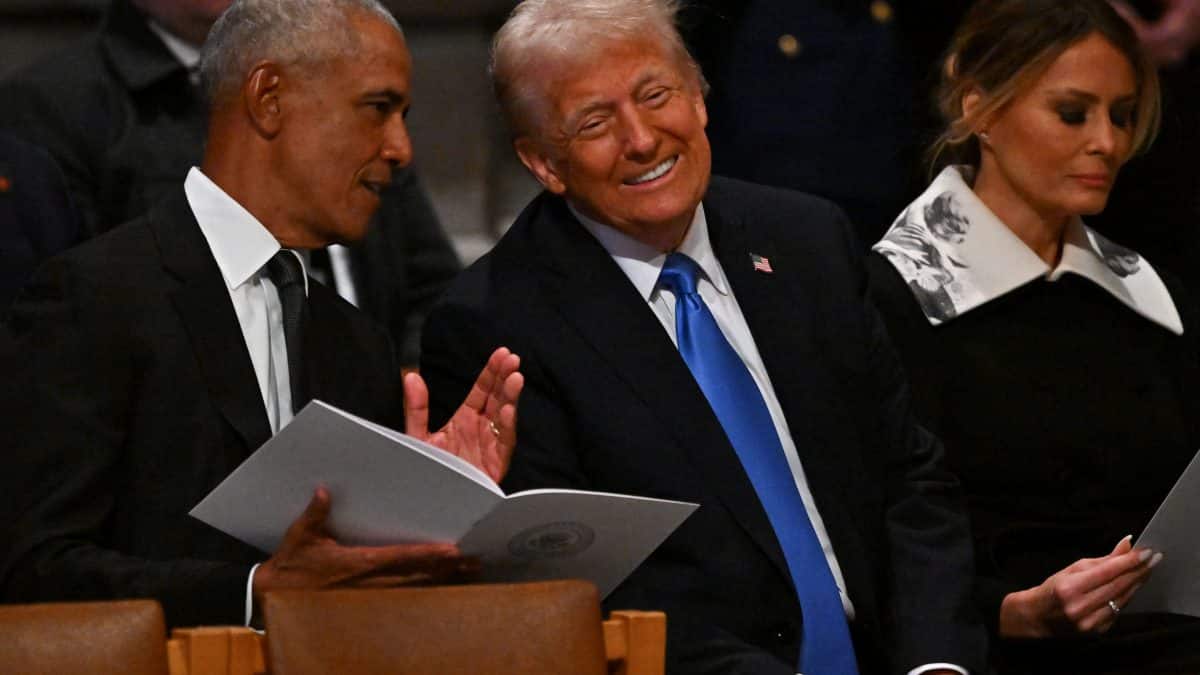
Trump has repeatedly drawn comparisons with Barack Obama, from occupying the Oval Office to seeking the Nobel Peace Prize. As Trump renews his criticism of Obama’s record, questions are being raised over whether his approach to Iran will differ from the caution shown by his predecessor.
From the presidency to the Nobel Peace Prize, US President Donald Trump has spent years pursuing milestones closely associated with Barack Obama. While he has matched Obama in occupying the Oval Office and now seeks similar global recognition, whether Trump will mirror Obama’s caution on Iran remains an open question.
Trump’s political journey is often traced back to a White House Correspondents’ Dinner where Obama publicly mocked him. The episode is widely seen as a turning point that hardened Trump’s resolve to enter politics. Once in office, Trump appeared determined not merely to defeat Obama politically, but to surpass his legacy altogether.
His refusal to concede defeat after losing the 2020 presidential election, and his resistance to leaving the White House, reflected an ambition to secure two consecutive terms — a distinction Obama achieved.
Undoing Obama at home
Beyond elections, Trump has consistently targeted Obama’s legacy. Domestically, he sought to dismantle Obamacare, one of Obama’s signature policy achievements, presenting it as a symbol of everything he opposed.
The Nobel fixation
Internationally, Trump has openly pursued the Nobel Peace Prize — an honour Obama received early in his presidency. Trump has repeatedly argued that his diplomatic record deserved similar recognition, while criticising Obama’s award as undeserved.
Speaking to reporters at the White House, Trump accused his predecessor of “doing nothing” and “destroying our country”, while highlighting what he described as his role in securing peace in Gaza and ending “eight wars”.
“I didn’t do it for that,” Trump said, referring to the Nobel. “I did it because I saved a lot of lives.”
Renewed attack on Obama
With only hours remaining before the Nobel announcement, Trump again pointed to the timing of Obama’s award.
“He got it for doing nothing. Obama got a prize — he didn’t even know what. He got elected, and they gave it to Obama for absolutely nothing but destroying our country,” Trump said.
Obama was just eight months into his first term when he received the Nobel Peace Prize in 2009, a decision that shocked many at the time. Even the liberal New York Times described the award as “very premature”, arguing that the Nobel “should have a higher bar”.
A not-so-subtle campaign
The Nobel Peace Prize is set to be announced at 5 am EST on Thursday in Oslo, Norway. Since Trump returned to the Oval Office in January, his effort to influence the Peace Research Institute Oslo — which assists the Nobel Committee in evaluating candidates — has been anything but subtle.
Trump has repeatedly taken credit for diplomatic developments and global events, at times overstating his personal role. Last month, he effectively nominated himself for the Nobel Peace Prize during his address to the United Nations, claiming he had “ended seven un-endable wars”.
While he has contributed to easing tensions between some long-standing adversaries, his role in brokering ceasefires in several conflicts he has cited has been disputed by the countries involved.
Obama’s restraint on Iran
The comparison between Trump and Obama becomes more complex when viewed through the lens of Iran. In 2009, Obama faced widespread protests following Iran’s disputed presidential election, in what became known as the Green Revolution. Protesters demanded political reform and challenged the authority of the regime.
Choosing diplomacy over dissent
Obama chose not to openly support the demonstrators, fearing that overt US backing would undermine efforts to negotiate with Supreme Leader Ayatollah Ali Khamenei’s regime over Iran’s nuclear programme. Strategic restraint, rather than moral intervention, shaped Washington’s response.
The Syria ‘red line’ moment
That caution resurfaced in 2013, when Obama backed away from military strikes against Syria’s Iranian-backed regime after a nerve-gas attack on civilians in the Damascus suburb of Ghouta. The decision came despite Obama having declared the use of chemical weapons a “red line” that would trigger US intervention.
The move signalled a reluctance to escalate confrontation with Tehran and its regional allies.
The unanswered question
As Trump continues to measure himself against Obama’s legacy — from the presidency to the Nobel Peace Prize — the key question remains whether, when faced with Iran, he will repeat Obama’s restraint or chart a more confrontational course that his predecessor ultimately avoided.
End of Article